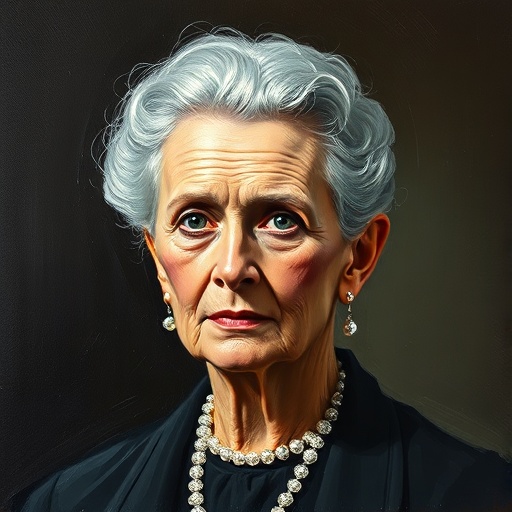
Marie Curie — "Be less curious about people and more curious about ideas."
Be less curious about people and more curious about ideas.
Be less curious about people and more curious about ideas.
Click any product to generate a realistic preview. Up to 3 at a time.
* Initial load can take up to 90 seconds — revising the preview in another color is nearly instant.
"I am not afraid of anything. I am only afraid of not being able to do my work."
"The scientist in his laboratory is not merely a technician, but also a child confronting natural phenomena that impress him as though they were fairy tales."
"We must not forget that when radium was discovered no one knew that it would prove useful in hospitals. The work was one of pure science. And this is a proof that scientific work must not be considere…"
"Life is not easy for any of us. But what of that? We must have perseverance and above all confidence in ourselves. We must believe that we are gifted for something and that this thing must be attained…"
"My husband and I were so closely united by our affection and our common work that we passed almost our whole time together."
Found in 3 providers: deepseek,grok,gemini
3 sources checked
The quote urges people to spend less energy on gossip, personal drama, and social speculation, and instead direct their attention toward concepts, problems, and discoveries. It suggests that examining how the world works yields more lasting value than scrutinizing individual lives. Curiosity aimed at ideas builds knowledge and solves problems, while curiosity aimed at people often fuels rumor, judgment, and distraction that ultimately leaves the inquirer no wiser.
Curie lived this principle. Facing relentless press intrusion, sexist scrutiny, and scandal over her relationship with Paul Langevin, she retreated into her laboratory rather than defend herself publicly. She isolated polonium and radium through years of shed-bound labor, won two Nobel Prizes in different sciences, and refused to patent radium extraction so research could advance. Her entire career embodied an obsession with physical ideas over social standing, reputation, or the gossip that trailed her.
Early 20th-century Europe combined explosive scientific progress with tabloid culture, suffragist struggle, and intense public fascination with personalities. Newspapers hounded Curie after her husband Pierre's death and during the 1911 Langevin affair, nearly costing her the second Nobel. Women in science were rare and constantly judged on character rather than work. Against this backdrop, redirecting curiosity toward ideas was both a personal defense and a cultural prescription for a gossip-saturated age.
AI-generated insights based on extensive research and information for context. Factual errors? Email [email protected].
Your cart is empty