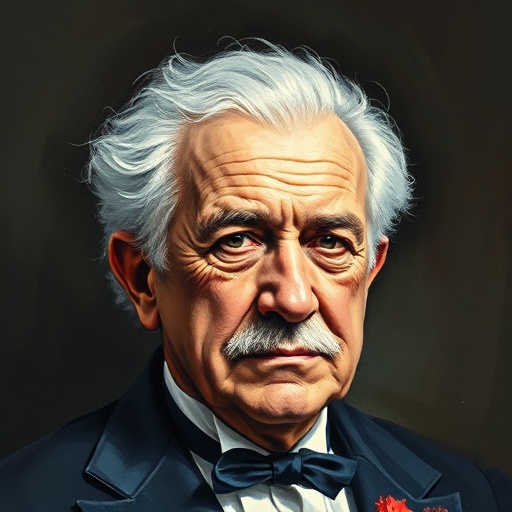
Thomas Edison — "I have friends in the other world. I have had very pleasant conversations with t…"
I have friends in the other world. I have had very pleasant conversations with them. I am rather unorthodox in this matter.
I have friends in the other world. I have had very pleasant conversations with them. I am rather unorthodox in this matter.
Click any product to generate a realistic preview. Up to 3 at a time.
* Initial load can take up to 90 seconds — revising the preview in another color is nearly instant.
"I never had a bad break in my life. I have had a lot of hard ones, but never a bad one."
"I have never seen a man who was afraid of a woman. I have seen men who were afraid of women's tongues. I have seen men who were afraid of women's brains. I have seen men who were afraid of women's str…"
"The greatest invention of all time is the human mind."
"Restlessness is discontent and discontent is the first necessity of progress. Show me a thoroughly satisfied man and I will show you a failure."
"So far as the religion of the day is concerned, it is a damned fake … Religion is all bunk."
Found in 1 providers: grok
1 source checked
The speaker claims to maintain contact with deceased people and finds those conversations genuinely enjoyable. By labeling himself 'unorthodox,' he acknowledges this belief runs against what most expect of him. It expresses openness to spiritual possibility — a refusal to close off questions science can't yet answer — while owning that this stance is unusual and invites skepticism from peers and the public alike.
Late in life Edison claimed to be designing a 'spirit phone' to detect communication from the deceased — stunning for the era's foremost scientific rationalist. He was self-taught, distrusted orthodoxy, and ran independent laboratories outside academia. His curiosity about consciousness and what survives death fit a lifelong pattern of refusing intellectual boundaries. Even his agnosticism was unconventional; he rejected organized religion but took metaphysical questions seriously.
Edison spoke during the 1920s Spiritualist revival, which surged after WWI's catastrophic death toll left millions seeking contact with the lost. Figures like Arthur Conan Doyle publicly championed séances and spirit photography. Simultaneously, scientific institutions were hardening against such claims. Edison's statement landed at this cultural fault line — a titan of invention lending credibility to beliefs the emerging scientific consensus was actively working to discredit.
AI-generated insights based on extensive research and information for context. Factual errors? Email [email protected].
Your cart is empty