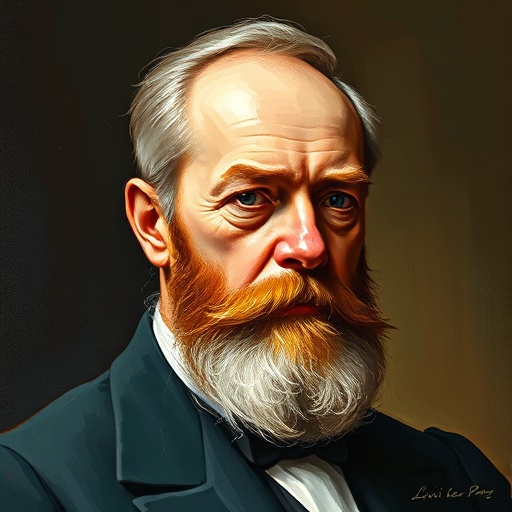
Louis Pasteur — "Without laboratories, men of science are soldiers without arms."
Without laboratories, men of science are soldiers without arms.
Without laboratories, men of science are soldiers without arms.
Click any product to generate a realistic preview. Up to 3 at a time.
* Initial load can take up to 90 seconds — revising the preview in another color is nearly instant.
"The more I study nature, the more I stand amazed at the work of the Creator."
"I have been working so hard that I sometimes forget to eat."
"The Greeks understood the mysterious power of the hidden side of things."
"There are no such things as applied sciences, only applications of science."
"When I approach a child, he inspires in me two sentiments: tenderness for what he is, and respect for what he may become."
Attributed, highlighting the necessity of proper facilities for scientific progress.
Date: Late 19th Century (approx.)
EducationalFound in 1 providers: grok
1 source checked
Scientists cannot do meaningful work without proper facilities, equipment, and resources. Just as a soldier sent into battle unarmed is helpless and unable to fight, a researcher without a laboratory cannot test ideas, run experiments, or generate discoveries. Intelligence and training alone are not enough; science demands physical tools, controlled spaces, and sustained investment. The message is a direct call for funding and infrastructure to support research.
Pasteur built his germ theory and pasteurization breakthroughs inside meticulously equipped labs, where controlled experiments with flasks, microscopes, and cultures let him disprove spontaneous generation and develop vaccines for anthrax and rabies. He constantly lobbied the French government and private donors for better facilities, eventually founding the Pasteur Institute in 1888. His career proved that disciplined lab work, not armchair theorizing, produced results that saved lives and transformed medicine.
In nineteenth-century France, science was shifting from gentleman-amateur pursuits to institutional, state-backed research, but funding lagged behind Germany's well-equipped university labs. France's humiliating defeat in the 1870 Franco-Prussian War intensified fears of falling behind scientifically and militarily. Pasteur, a fierce patriot, spoke this line to pressure leaders into investing in research infrastructure. Industrialization, cholera outbreaks, and livestock epidemics made laboratory science a matter of national survival, not abstract curiosity.
AI-generated insights based on extensive research and information for context. Factual errors? Email [email protected].
Your cart is empty