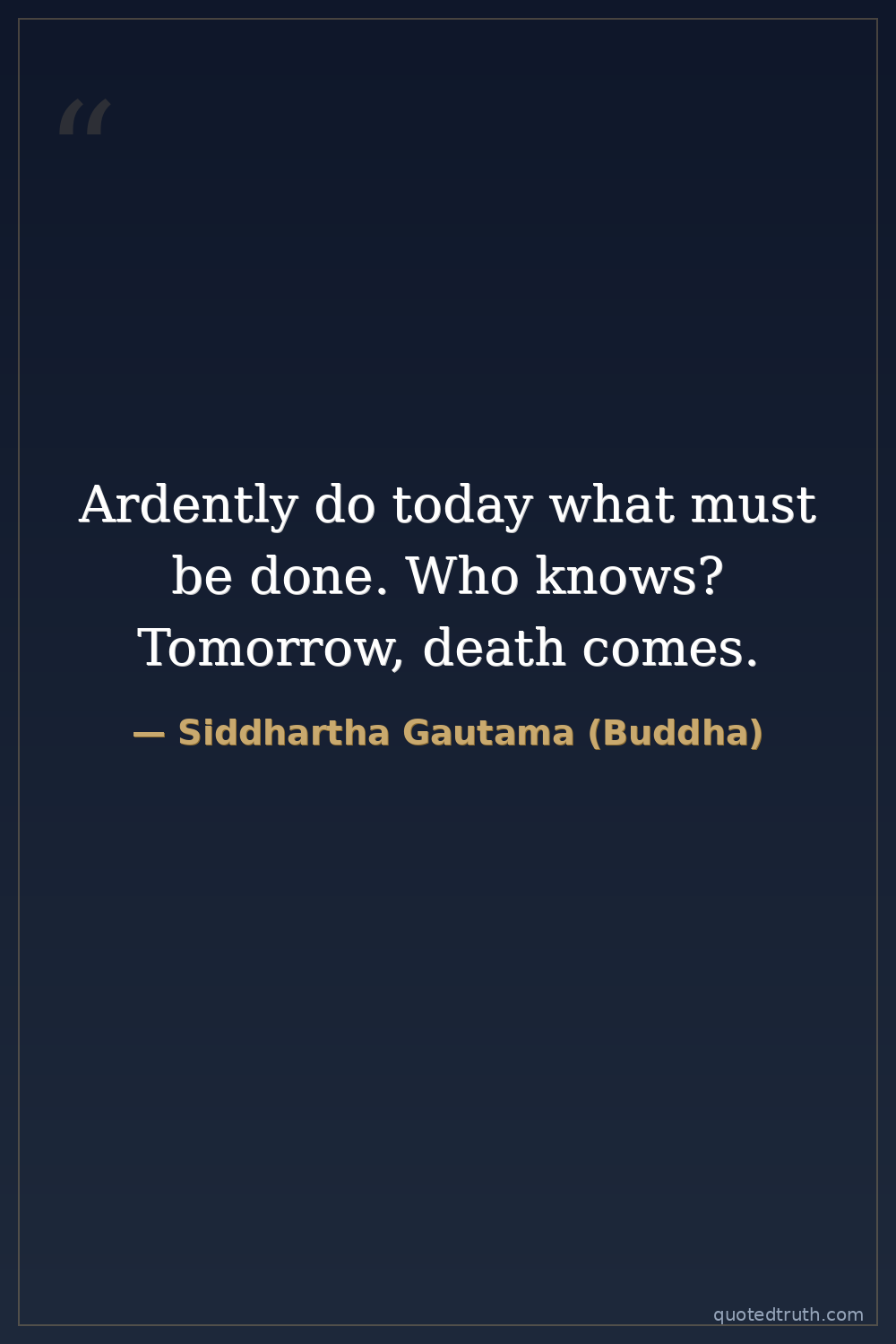
Siddhartha Gautama (Buddha) — "Ardently do today what must be done. Who knows? Tomorrow, death comes."
Ardently do today what must be done. Who knows? Tomorrow, death comes.
Ardently do today what must be done. Who knows? Tomorrow, death comes.
Click any product to generate a realistic preview. Up to 3 at a time.
* Initial load can take up to 90 seconds — revising the preview in another color is nearly instant.
"An idea that is developed and put into action is more important than an idea that exists only as an idea."
"However many holy words you read, however many you speak, what good will they do you if you do not act on upon them?"
"By oneself is evil done; by oneself is one defiled. By oneself is evil left undone; by oneself is one made pure. Purity and impurity depend on oneself; no one can purify another."
"The fragrance of holiness travels even against the wind."
"Just as a mother would protect her only child with her life, even so let one cultivate a boundless love towards all beings."
Found in 1 providers: grok
1 source checked
Do what genuinely needs doing right now, with full focus and energy, instead of postponing it. Tomorrow is not promised to anyone. Death can arrive at any moment, without warning, and no one knows when their time is up. So treat today as the only certain opportunity you have to act on what matters, rather than assuming you will get a second chance to handle it later.
The Buddha left a sheltered palace at twenty-nine after seeing sickness, old age, and a corpse, which shattered his illusion of permanence. Mortality awareness sat at the core of his teaching, and impermanence (anicca) became one of the three marks of existence he preached. He urged disciples to practice diligently rather than wait, famously instructing meditators to contemplate death to sharpen present-moment urgency on the path to liberation.
In 5th-century BCE northern India, life expectancy hovered around thirty, plague and famine were routine, and warring kingdoms like Magadha and Kosala were absorbing smaller republics. Vedic Brahmins promised better rebirths through ritual, but new shramana movements, including Buddhists and Jains, rejected ceremony for direct personal practice. Against that backdrop of sudden death and competing salvation schemes, urging immediate effort over postponed merit-making was a radical reorientation toward lived discipline.
AI-generated insights based on extensive research and information for context. Factual errors? Email [email protected].
Your cart is empty