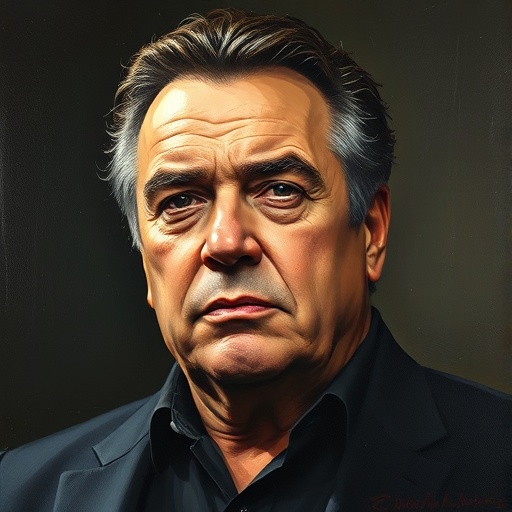
Marlon Brando — "I don't like to be complacent. I think it's dangerous."
I don't like to be complacent. I think it's dangerous.
I don't like to be complacent. I think it's dangerous.
Click any product to generate a realistic preview. Up to 3 at a time.
* Initial load can take up to 90 seconds — revising the preview in another color is nearly instant.
"I don't like to talk about my personal life."
"I think that I'm a good actor, but I'm not a great actor."
"Most of the people in Hollywood are insane."
"The more sensitive you are, the more certain you are to be brutalized, develop scabs, never evolve. Never allow yourself to feel anything, because you always feel too much."
"We couldn't survive a second if we weren't able to act. Acting is a survival mechanism, and it's a social lubricant. And we act to save our lives, actually, every day. People lie constantly every day …"
American actor whose A Streetcar Named Desire (1947) and On the Waterfront (1954) defined Method acting and reshaped 20th-century film performance. Closely associated with James Dean (Method-acting peer and protégé) and Montgomery Clift (Method contemporary and friend). For an intellectual contrast, see Laurence Olivier, British classical-trained actor — Olivier's technical, externally-constructed approach to acting is the precise opposite of the Method's emotional-recall internalism — the canonical 'Method vs classical' binary 20th-century acting pedagogy is organized around. Olivier reportedly told a frustrated Hoffman: 'Try acting, my dear boy'.
Your cart is empty