Martin Luther — "If you want to change the world, pick up your pen."
If you want to change the world, pick up your pen.
If you want to change the world, pick up your pen.
Click any product to generate a realistic preview. Up to 3 at a time.
* Initial load can take up to 90 seconds — revising the preview in another color is nearly instant.
"What then shall we Christians do with this damned, rejected race of Jews? First, their synagogues or churches should be set on fire, and whatever does not burn up should be covered with earth and crus…"
"I am not afraid of a pope or a cardinal, but of a little bird that sings in the tree."
"The greatest blessing of all is to have a good wife."
"What God wills is not right because he ought, or was bound, so to will; on the contrary, what takes place must be right, because he so wills it."
"The Devil is a great artist, but he has no colors."
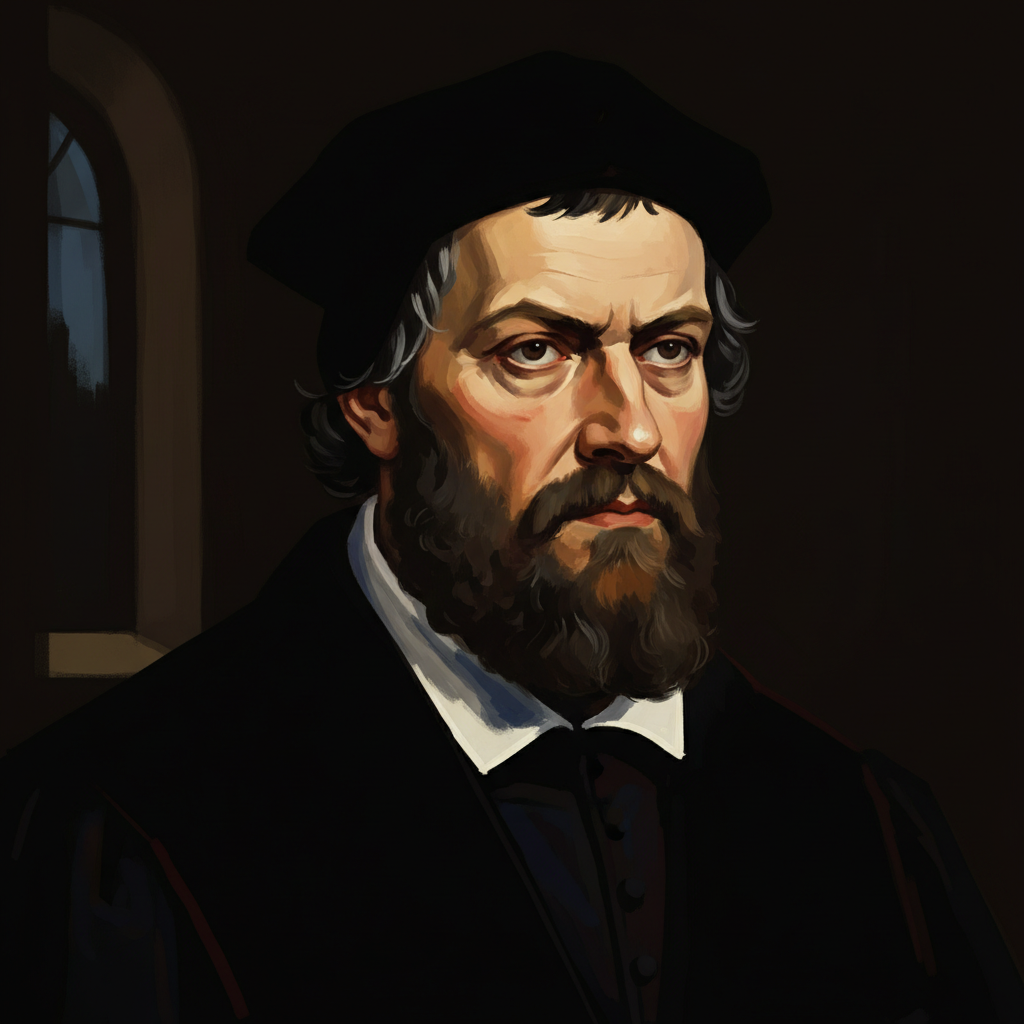
German theologian whose 95 Theses (1517) launched the Protestant Reformation and broke the Catholic Church's monopoly on Western Christianity. Closely associated with Philipp Melanchthon (Lutheran systematizer) and John Calvin (later Reformer who built on Luther's break). For an intellectual contrast, see Pope Leo X, Renaissance pope (1513-1521) — Leo X's indulgence sales triggered Luther's break and Leo excommunicated him in 1521 — Luther's entire Reformation is structured as a direct answer to the indulgence-funded Vatican Leo represented.
Found in 1 providers: deepseek
1 source checked
Real change starts with writing. Ideas, arguments, and stories put onto the page travel further than any single speech or act, reaching people you will never meet and outlasting your own lifetime. If you want to shift how others think, govern, worship, or live, you do not need an army or a throne. You need words, written down, sharpened, and circulated. The pen is the lever that moves culture.
Luther embodied this literally. An obscure Augustinian monk and theology professor, he reshaped Europe not with swords but with writing: the 95 Theses in 1517, pamphlets against indulgences, fierce open letters, and above all his German translation of the Bible, which put scripture into ordinary hands. His quill, not a crown, split the Western Church, redefined conscience, and birthed Protestantism. For Luther, writing was both vocation and weapon.
Luther lived in the early modern period, just after Gutenberg's printing press (c. 1450) turned Europe into the first mass-media society. Pamphlets, broadsheets, and vernacular Bibles spread within weeks across cities and principalities. The Catholic Church's monopoly on scripture and doctrine suddenly faced competition from any literate reformer with a printer. Luther's writings, printed in the hundreds of thousands, rode this technological wave, triggering the Reformation, peasant revolts, and the religious wars that reshaped Europe.
AI-generated insights based on extensive research and information for context. Factual errors? Email [email protected].
Your cart is empty