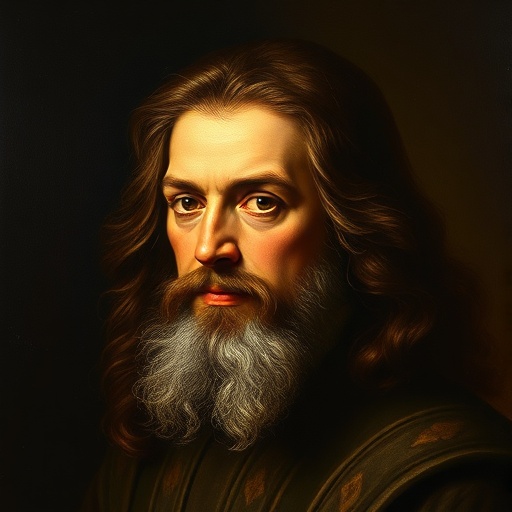
Leonardo da Vinci — "Intellectual passion drives out sensuality."
Intellectual passion drives out sensuality.
Intellectual passion drives out sensuality.
Click any product to generate a realistic preview. Up to 3 at a time.
* Initial load can take up to 90 seconds — revising the preview in another color is nearly instant.
"Iron rusts from disuse; stagnant water loses its purity and in cold weather becomes frozen; even so does inaction sap the vigor of the mind."
"Among the great things which are to be found among us, the Being of Nothingness is the greatest."
"The mind of the painter is a mirror of the world."
"The soul desires to dwell with the body, because without the corporeal instruments, it can neither act nor feel."
"As a well-spent day brings happy sleep, so a life well spent brings happy death."
Found in 1 providers: grok
1 source checked
When you are deeply absorbed in intellectual pursuit — solving problems, creating, discovering — physical desires lose their hold over you. Deep mental engagement naturally suppresses base urges. The mind, when fully ignited by curiosity and the drive to understand or create, becomes so consumed that bodily cravings fade into the background. Passionate thinking is its own form of discipline, not through denial but through displacement.
Da Vinci lived this principle. He filled thousands of notebook pages with anatomy, engineering, botany, and art theory — often forsaking sleep while consumed by a problem. Contemporaries noted his celibate, ascetic lifestyle. His relentless curiosity, from dissecting corpses to designing flying machines to painting the Sistine-era masters, suggests a man whose intellectual obsessions genuinely displaced ordinary appetites. For him this was not philosophy but autobiography.
The Italian Renaissance (15th–16th century) redefined the ideal human as cultivated, learned, and artistically masterful. Humanism elevated reason above mere physical existence, while the Church still framed bodily desire as sin. Da Vinci's statement bridges both worlds — casting intellectual work not as moral obligation but as a natural force powerful enough to crowd out physical urge, aligning with Renaissance ideals of the self-disciplined uomo universale.
AI-generated insights based on extensive research and information for context. Factual errors? Email [email protected].
Your cart is empty