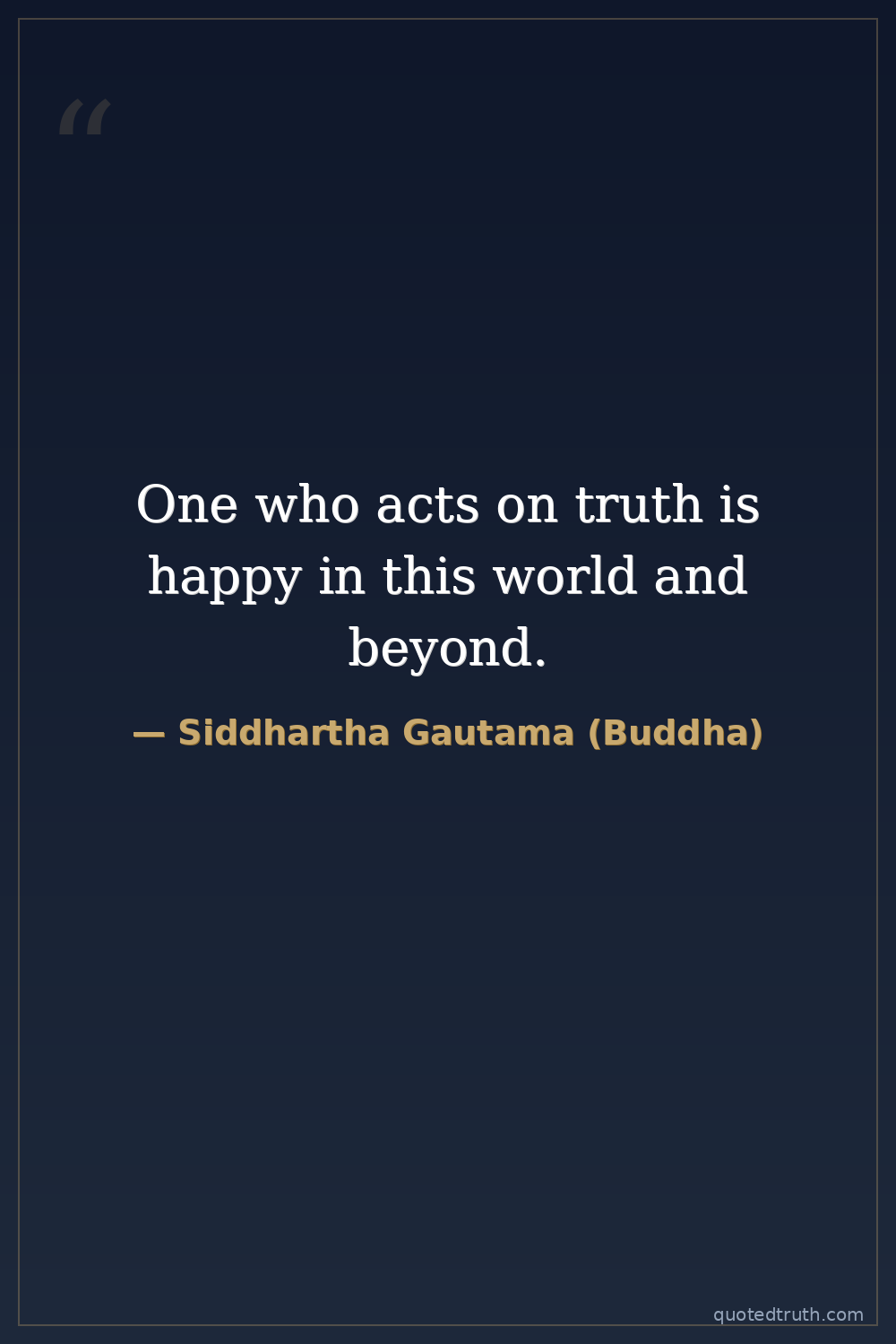
Siddhartha Gautama (Buddha) — "One who acts on truth is happy in this world and beyond."
One who acts on truth is happy in this world and beyond.
One who acts on truth is happy in this world and beyond.
Click any product to generate a realistic preview. Up to 3 at a time.
* Initial load can take up to 90 seconds — revising the preview in another color is nearly instant.
"One who drinks deeply of the Dharma with a clear and open mind, rests well."
"Do not dwell in the past, do not dream of the future, concentrate the mind on the present moment."
"Conquer the angry one by love. Conquer the evil one by good. Conquer the stingy one by generosity. Conquer the liar by truth."
"All conditioned things have the nature of vanishing."
"Conquer anger with non-anger. Conquer badness with goodness. Conquer meanness with generosity. Conquer dishonesty with truth."
Found in 1 providers: grok
1 source checked
Living honestly and aligning your actions with what is true brings lasting contentment, not just temporary pleasure. The person who speaks truthfully and behaves with integrity finds peace in their current life and secures wellbeing in whatever comes after death. Deception and self-delusion create inner conflict and negative consequences, while truthful conduct produces a clear conscience now and favorable conditions later, regardless of what afterlife framework you accept.
The Buddha made Right Speech and Right Action two pillars of his Noble Eightfold Path, teaching that truthfulness was essential to ending suffering. As a prince who abandoned palace luxuries to seek genuine understanding, he rejected comfortable illusions for difficult truths. His concept of karma directly links ethical action in this life to rebirth conditions, making 'happy here and beyond' a literal description of how truthful conduct ripens across existences.
In 5th-century BCE northern India, Vedic Brahminism emphasized ritual sacrifice and caste-bound duty over personal ethics. Competing shramana movements, including Jains and Ajivikas, debated karma, rebirth, and liberation across the Ganges plain. The Buddha's teaching that ordinary truthful conduct, not priestly ceremonies or birth status, determined one's fate was radical, democratizing spiritual progress and challenging the religious monopoly of the Brahmin class during a period of urbanization and philosophical ferment.
AI-generated insights based on extensive research and information for context. Factual errors? Email [email protected].
Your cart is empty