Laozi — "The five colors blind the eye. The five notes deafen the ear. The five tastes du…"
The five colors blind the eye. The five notes deafen the ear. The five tastes dull the palate.
The five colors blind the eye. The five notes deafen the ear. The five tastes dull the palate.
Click any product to generate a realistic preview. Up to 3 at a time.
* Initial load can take up to 90 seconds — revising the preview in another color is nearly instant.
"Simplicity, patience, compassion. These three are your greatest treasures."
"The more prohibitions there are, the poorer the people will be. The more sharp weapons the people have, the more trouble there will be in the country. The more clever and skillful man is, the more str…"
"The Tao never does anything, yet through it all things are done."
"The best ruler is one whose existence is merely known by the people. The next best is one who is loved and praised. The next is one who is feared. The next is one who is despised."
"Empty your mind of all thoughts. Let your heart be at peace. Watch the turmoil of the world, but let your serenity remain. Return to the root. This is tranquility. This is returning to your destiny."
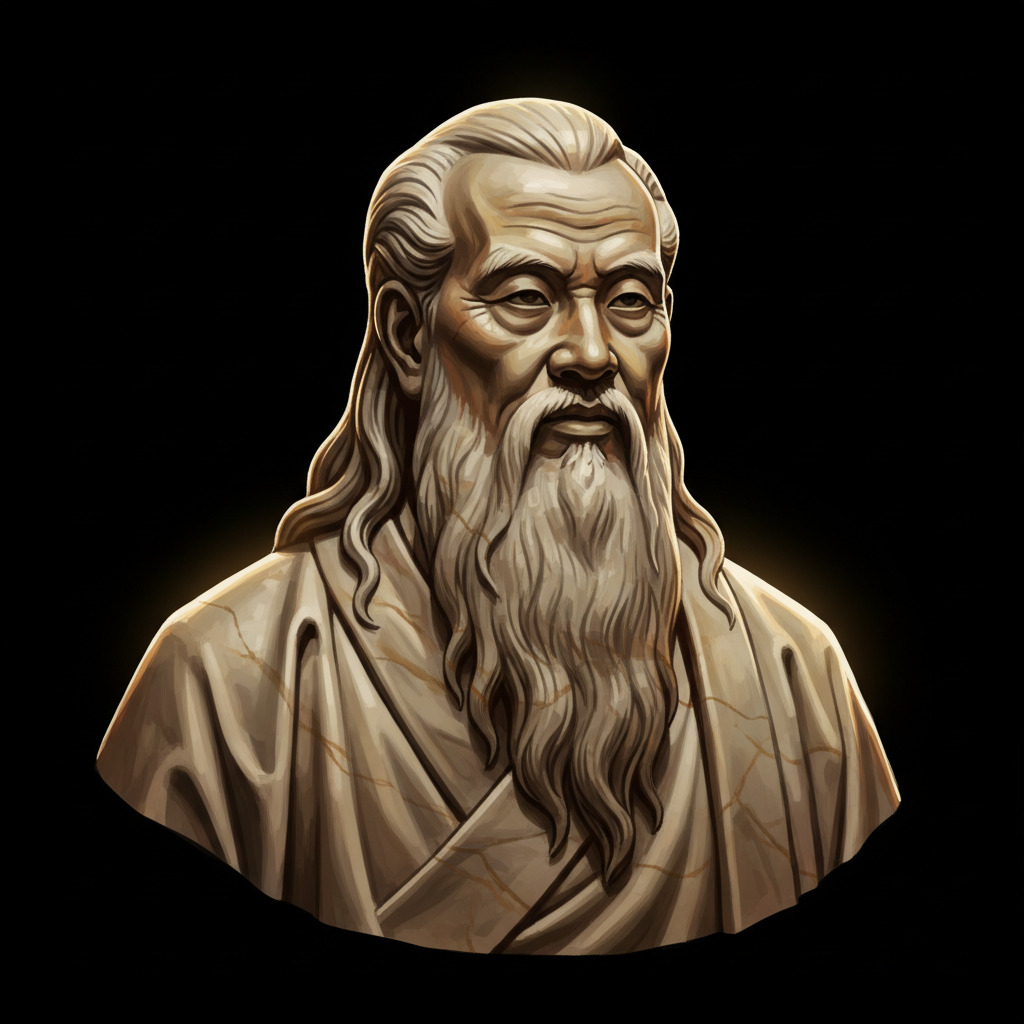
Reputed founder of Taoism and author of the Tao Te Ching, whose wu wei (effortless action) shaped East Asian philosophy. Closely associated with Zhuangzi (later Taoist who extended Laozi's framework). For an intellectual contrast, see Confucius, near-contemporary Chinese sage of social ritual and duty — Confucius systematized social order through ritual and hierarchy; Laozi argued that all such systems were the disease, not the cure — the two founding poles of Chinese moral philosophy.
Found in 1 providers: grok
1 source checked
Overloading your senses with too much variety and stimulation actually diminishes your ability to perceive and enjoy. Chasing endless colors, sounds, and flavors doesn't enrich experience—it numbs it. When everything is intense, nothing registers. True awareness and satisfaction come from simplicity and restraint, not from accumulation. The more you pursue sensory excess, the less you're actually capable of feeling, tasting, or seeing clearly.
Laozi championed wu wei (effortless action) and simplicity as paths to harmony with the Tao. As a reputed archivist in the Zhou court, he witnessed aristocratic excess and rigid ritual firsthand, which he rejected before reportedly retreating west. This saying reflects his core teaching that desire and indulgence corrupt natural perception, and that returning to an uncarved, plain state restores clarity and genuine connection to the Way.
Laozi lived during the late Zhou dynasty (roughly 6th century BCE), an era of feudal fragmentation preceding the Warring States period. Aristocratic courts flaunted elaborate banquets, ceremonial music, and dyed silks as status markers, while common people suffered under taxation and conscription. Against this backdrop of sensory-laden ritualism and Confucian emphasis on elaborate propriety, Laozi's warning against excess was a pointed critique of ruling-class decadence and the philosophical noise drowning out simpler truths.
AI-generated insights based on extensive research and information for context. Factual errors? Email [email protected].
Your cart is empty