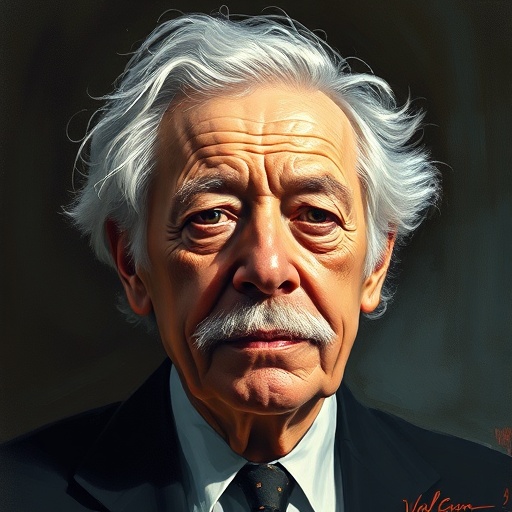
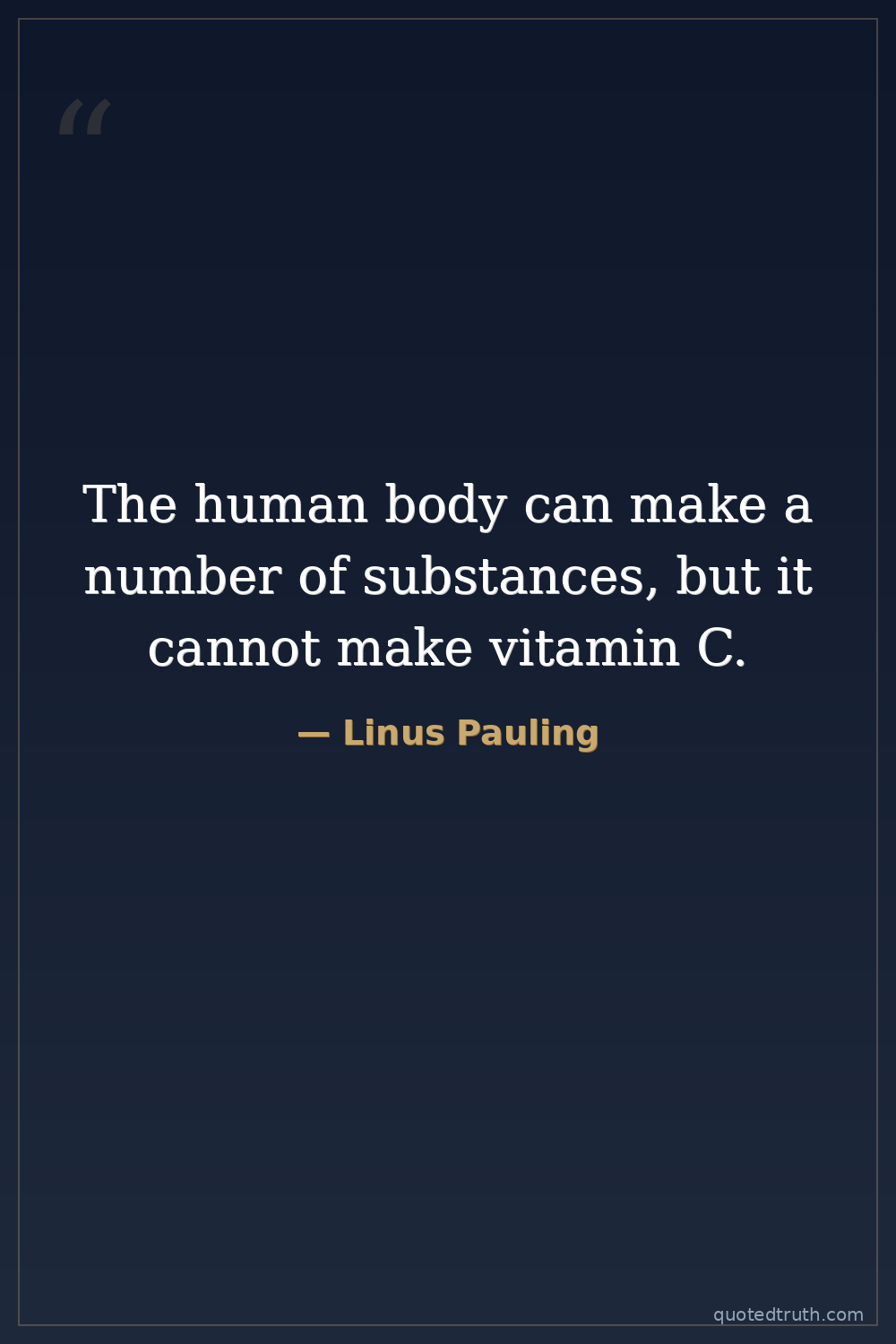
Linus Pauling — "The human body can make a number of substances, but it cannot make vitamin C."
The human body can make a number of substances, but it cannot make vitamin C.
The human body can make a number of substances, but it cannot make vitamin C.
Click any product to generate a realistic preview. Up to 3 at a time.
* Initial load can take up to 90 seconds — revising the preview in another color is nearly instant.
"I believe that the proper dose of vitamin C is 10 grams per day, and that it should be taken in divided doses throughout the day."
"I have never had a bad idea."
"You can't just have a good idea. You have to have a lot of good ideas."
"I'm just a simple chemist."
"I am not afraid of death. I am afraid of not living."
Found in 1 providers: grok
1 source checked
The quote states a biological fact: unlike most animals, humans lack the enzyme needed to synthesize vitamin C internally and must obtain it entirely from food. It highlights a fundamental nutritional dependency — if dietary intake fails, the body cannot compensate. This makes vitamin C an essential nutrient in the strict sense, meaning deficiency (scurvy) is unavoidable without external sources, distinguishing it from compounds the body can manufacture on its own.
Pauling became orthomolecular medicine's most prominent champion after his two Nobel Prizes, taking massive personal vitamin C doses daily and co-writing landmark books arguing megadoses could prevent colds and cancer. This quote reflects his conviction that recognizing vitamin C's biological indispensability was foundational — if the body cannot make it, ensuring adequate and perhaps optimal intake becomes a medical priority. His advocacy, though scientifically contested, drove decades of sustained research into antioxidant nutrition.
Pauling's vitamin C crusade peaked in the 1970s, a decade of surging interest in nutritional medicine, antioxidants, and alternatives to pharmaceutical treatment. Growing public distrust of drug companies fueled enthusiasm for natural remedies. Scurvy had been eradicated in wealthy nations, but Pauling argued conventional recommended doses were dangerously low. His claims sparked fierce scientific debate, defining a pivotal cultural moment in how nutrition science communicates risk, supplementation, and the line between evidence and advocacy.
AI-generated insights based on extensive research and information for context. Factual errors? Email [email protected].
Your cart is empty