John Calvin — "The reprobate, though they have the outward call of the Gospel, yet are not inwa…"
The reprobate, though they have the outward call of the Gospel, yet are not inwardly illuminated by the Spirit.
The reprobate, though they have the outward call of the Gospel, yet are not inwardly illuminated by the Spirit.
Click any product to generate a realistic preview. Up to 3 at a time.
* Initial load can take up to 90 seconds — revising the preview in another color is nearly instant.
"The elect are chosen before the foundation of the world."
"The human race is condemned to everlasting hell for all have sinned and fallen short of the glory of God. In choosing to save some and choosing not to save others, it would appear to be no different t…"
"All are not created on equal terms, but some are preordained to eternal life, others to eternal damnation."
"We are never so much ourselves as when we are in Christ."
"The executioner is a good physician for the church."
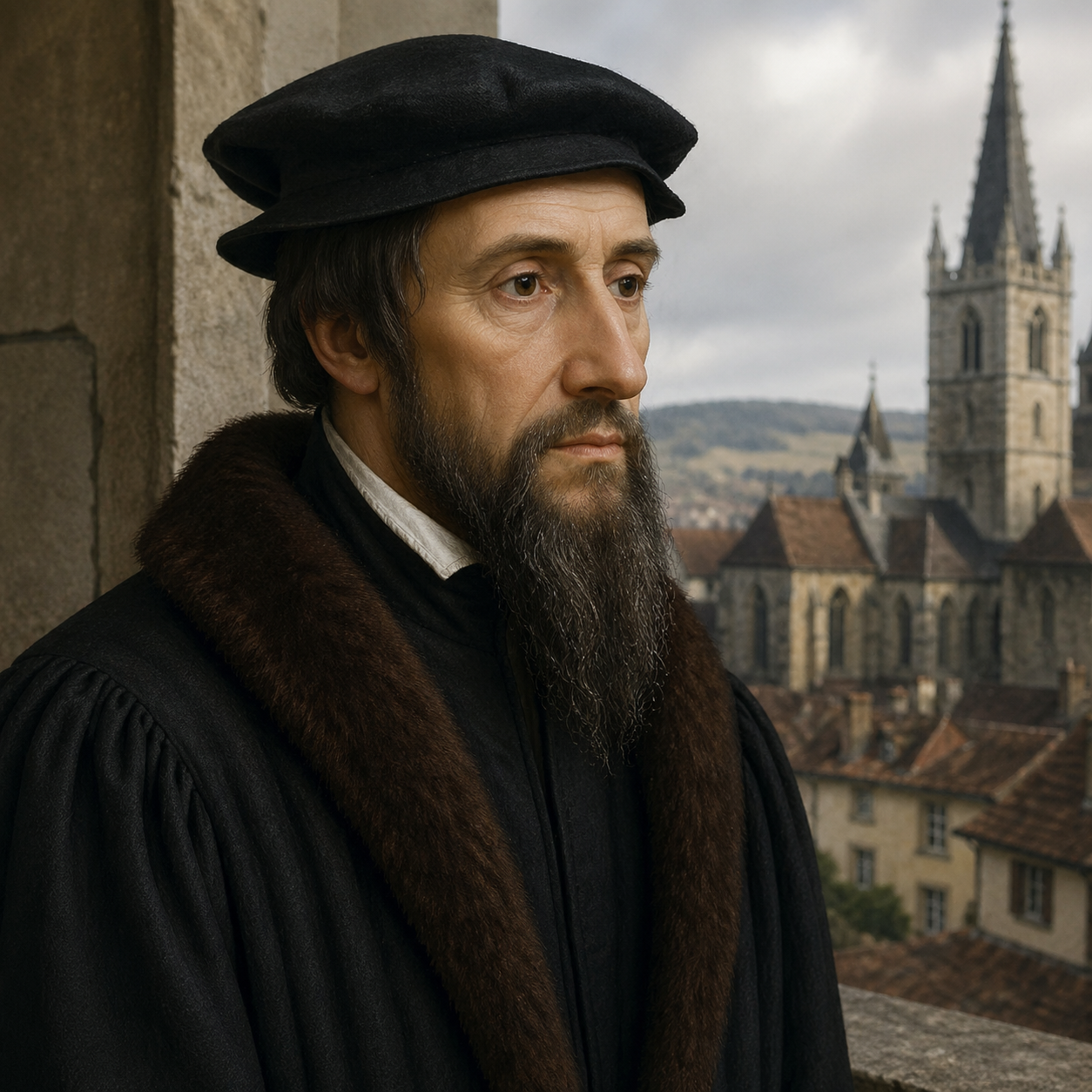
French theologian whose Institutes of the Christian Religion (1536) systematized Protestant Reformed doctrine, including predestination. Closely associated with Martin Luther (Reformation founder, Calvin's predecessor). For an intellectual contrast, see Jacobus Arminius, Dutch Reformed theologian (1560-1609) — Arminius's rejection of strict double-predestination founded Arminianism — the theological tradition modern Methodism, most evangelicalism, and Pentecostalism descend from. The Calvinist-Arminian debate has divided Protestantism for 400 years.
Found in 1 providers: grok
1 source checked
Hearing the Gospel preached publicly is not the same as being spiritually transformed by it. Some people receive religion as an external message — they attend worship, learn doctrine, understand the words — but remain unchanged inside. Calvin argues that genuine spiritual conversion requires God's Spirit to work within a person. Without that internal divine action, even perfect exposure to true teaching produces no real faith or salvation.
Calvin, a trained lawyer turned Reformed theologian, built his entire system around God's absolute sovereignty. His Institutes of the Christian Religion formalized the doctrine of election: God predestines both the saved and the reprobate. As Geneva's chief pastor, Calvin preached daily and watched many hear without changing — confirming his theology. This distinction between external preaching and internal illumination is the heartbeat of his doctrine of irresistible grace, which only the elect receive.
The Reformation had unleashed mass Gospel preaching across Europe. The printing press flooded cities with Scripture and sermons, meaning millions now heard Christianity as never before. Yet religious wars, forced conversions, and state churches made the question urgent: why do some respond genuinely while others merely comply outwardly? Calvin's Geneva was surrounded by Catholic persecution and Protestant fragmentation, making the theological line between authentic faith and mere religious performance a matter of life, death, and eternal destiny.
AI-generated insights based on extensive research and information for context. Factual errors? Email [email protected].
Your cart is empty