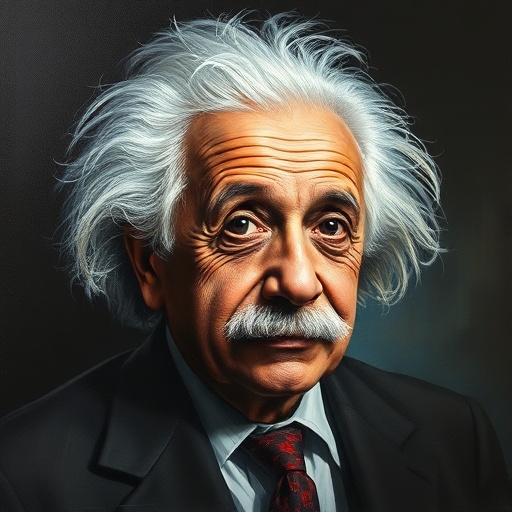
Albert Einstein — "The secret to creativity is knowing how to hide your sources."
The secret to creativity is knowing how to hide your sources.
The secret to creativity is knowing how to hide your sources.
Click any product to generate a realistic preview. Up to 3 at a time.
* Initial load can take up to 90 seconds — revising the preview in another color is nearly instant.
"It has become appallingly obvious that our technology has exceeded our humanity."
"Compound interest is the eighth wonder of the world. He who understands it, earns it... he who doesn't... pays it."
"A man should look for what is, and not for what he thinks should be."
"I am almost ashamed to be living in such peace while all the rest struggle and suffer."
"If A is a success in life, then A equals x plus y plus z. Work is x; y is play; and z is keeping your mouth shut."
Attributed, but often humorously cited without definitive proof.
Date: Undetermined
Art & CreativityFound in 1 providers: grok
1 source checked
True creativity isn't about conjuring ideas from nothing — it's about synthesizing, recombining, and transforming existing knowledge so thoroughly that the original sources become invisible. A creative mind absorbs influences deeply, then produces something that feels original. The 'hiding' isn't deception; it's the alchemy of digestion and transformation that turns borrowed raw material into something genuinely new.
Einstein built his special relativity theory by deeply absorbing Lorentz transformations, Mach's critique of Newtonian mechanics, and Maxwell's electromagnetic equations — then synthesizing them into something revolutionary. He rarely cited contemporaries formally yet stood on enormous intellectual shoulders. His thought experiments transformed existing physics concepts so radically that the debt became invisible beneath the genius of the synthesis.
Early 20th century physics was a ferment of competing ideas — Lorentz, Poincaré, and Mach were all circling relativity's edges before Einstein. Scientific culture prized originality, yet breakthroughs depended heavily on prior work. Einstein's era also saw Cubism and modernism in art making similar moves — reassembling existing forms into startling new configurations, illustrating how creative transformation across disciplines defines the period.
AI-generated insights based on extensive research and information for context. Factual errors? Email [email protected].
Your cart is empty