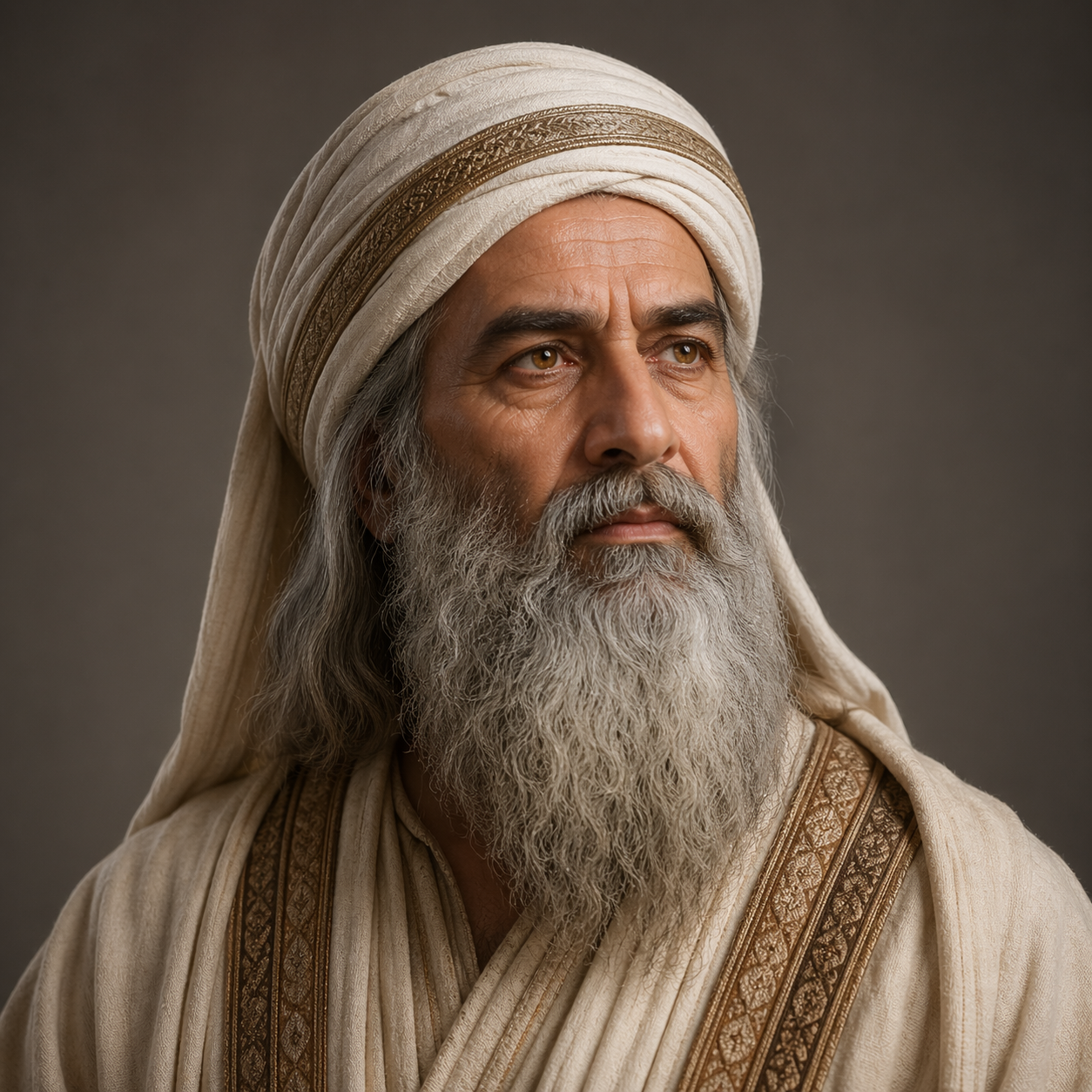
Zoroaster — "The wicked shall be punished, but the righteous shall be rewarded."
The wicked shall be punished, but the righteous shall be rewarded.
The wicked shall be punished, but the righteous shall be rewarded.
Click any product to generate a realistic preview. Up to 3 at a time.
* Initial load can take up to 90 seconds — revising the preview in another color is nearly instant.
"Seek knowledge. And if you can't find it, at least find something interesting to look at."
"He who practices deception, O Mazda, he is the evil one, and he is the one who causes woe."
"The poet of Thy praise, I call myself, O Mazda!"
"May we attain to the state of perfection, O Ahura Mazda."
"The first step to the Good Religion is to become a foe unto the Lie and a friend unto the Truth."
Iranian prophet who founded Zoroastrianism, the first major religion of cosmic dualism between good (Ahura Mazda) and evil (Angra Mainyu). Closely associated with The Buddha (near-contemporary Eastern moral-cosmological revolutionary). For an intellectual contrast, see Friedrich Nietzsche, German philosopher of 'beyond good and evil' — Nietzsche appropriated Zarathustra's name for Thus Spoke Zarathustra (1883) precisely to invert the original's moral cosmology — the historical Zoroaster founded the good-versus-evil framework Nietzsche's character announces the end of.
Found in 1 providers: deepseek
1 source checked
Actions carry consequences. Good people earn reward; harmful people face penalty. It frames morality as a reliable system rather than arbitrary luck, promising that honest, ethical behavior pays off in the end while cruelty, deceit, and harm eventually catch up with those who commit them. The statement expresses a confident belief in cosmic fairness, encouraging listeners to choose integrity even when wrongdoing seems to go unanswered in the short term.
Zoroaster founded one of the earliest religions built around a clear moral dualism between good and evil, truth (asha) and lie (druj). He taught that each soul crosses the Chinvat Bridge after death and is judged by its thoughts, words, and deeds. This saying reflects the core of his prophetic message: a just supreme god, Ahura Mazda, ensures the righteous reach paradise while the wicked fall into torment, placing personal ethical choice at the center of religious life.
Zoroaster preached in ancient Iran, likely between 1500 and 1000 BCE, among tribal societies practicing polytheistic rituals, animal sacrifice, and blood feuds where might often overruled fairness. Priestly classes dominated worship, and moral accountability was tied to clan honor rather than individual conscience. By proclaiming a single wise god who judged each person by their deeds, Zoroaster offered a radical reframing of justice that later influenced Judaism, Christianity, Islam, and Greek philosophical ideas about heaven, hell, and final judgment.
AI-generated insights based on extensive research and information for context. Factual errors? Email [email protected].
Your cart is empty