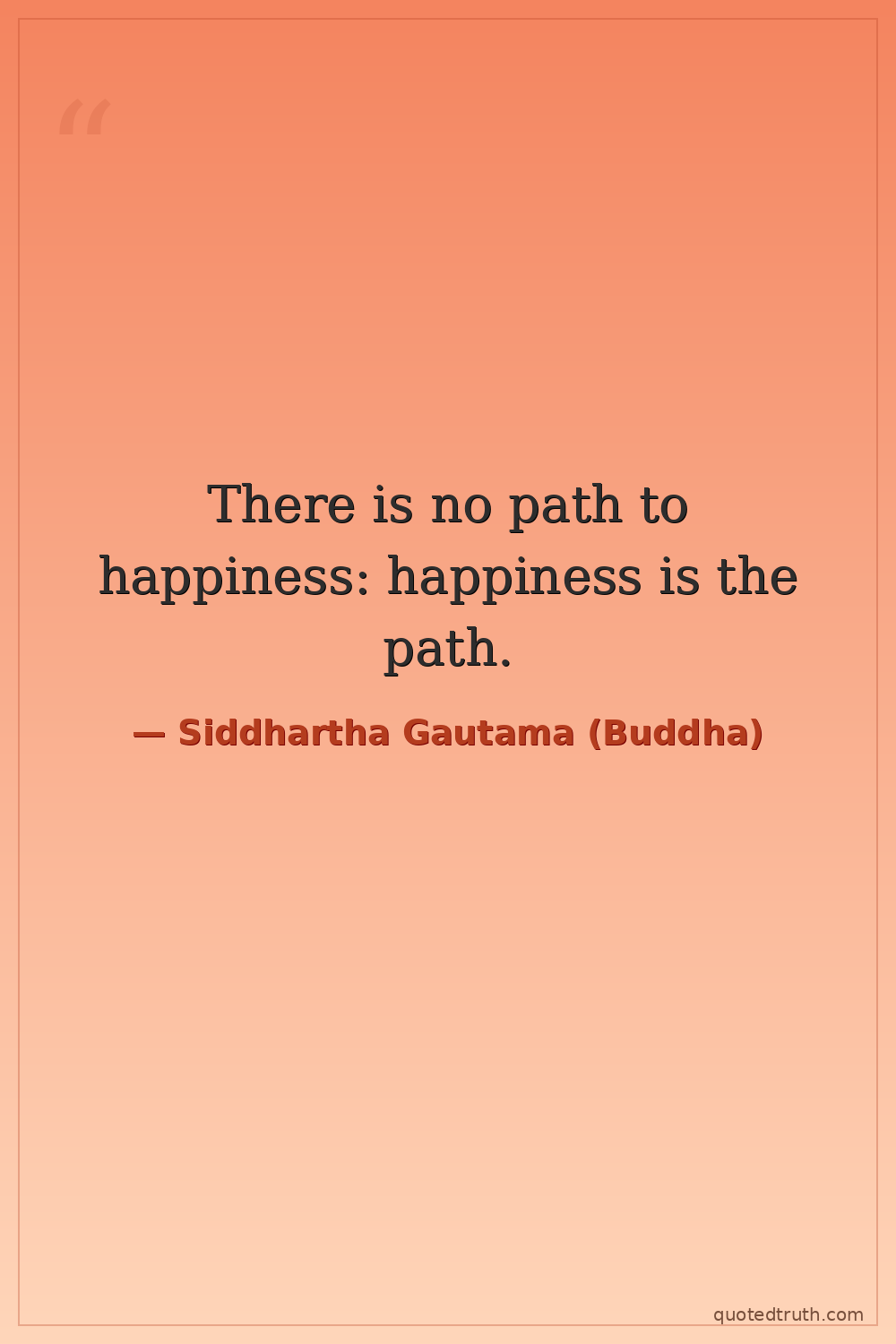
Siddhartha Gautama (Buddha) — "There is no path to happiness: happiness is the path."
There is no path to happiness: happiness is the path.
There is no path to happiness: happiness is the path.
Click any product to generate a realistic preview. Up to 3 at a time.
* Initial load can take up to 90 seconds — revising the preview in another color is nearly instant.
"By oneself is evil done; by oneself is one defiled. By oneself is evil left undone; by oneself is one made pure. Purity and impurity depend on oneself; no one can purify another."
"All conditioned things are impermanent — when one sees this with wisdom, then one turns away from suffering."
"What is the world? It is a fleeting show, a transient dream. What is life? It is a momentary flash, a passing shadow."
"Believe nothing, no matter where you read it, or who said it, no matter if I have said it, unless it agrees with your own reason and your own common sense."
"The greatest gift is to give people your enlightenment, to share it. It has to be the greatest."
A popular modern quote often attributed to Buddha, but not found in the Pali Canon.
Date: c. 5th century BCE
GeneralFound in 2 providers: grok,gemini
2 sources checked
Happiness isn't a destination you reach by completing goals, acquiring things, or fixing your circumstances. It's a way of moving through life right now. If you treat joy as something waiting at the end of struggle, you'll keep postponing it forever. Instead, bring presence, kindness, and contentment into each ordinary step. The walking itself, done with the right mindset, is the happiness you were chasing.
Siddhartha abandoned palace luxury expecting liberation through extreme asceticism, then discovered both extremes failed. His awakening under the Bodhi tree revealed the Middle Way: peace arises from present awareness, not future attainment. This saying mirrors his core teaching that craving future states causes suffering (dukkha), while mindful engagement with the present moment is itself nirvana. He spent 45 years walking and teaching, embodying practice as destination.
In 5th-century BCE northern India, competing sramana movements promised liberation through severe fasting, self-mortification, or elaborate Vedic rituals performed by Brahmin priests. Seekers believed salvation required escaping the body or purchasing merit through sacrifice. Siddhartha's reframing was radical: rejecting both priestly hierarchy and punishing austerity, he taught that awakening was accessible in daily living. This democratized spirituality amid rigid caste structures and ritualized religion dominating the Ganges plain.
AI-generated insights based on extensive research and information for context. Factual errors? Email [email protected].
Your cart is empty