Siddhartha Gautama (Buddha) — "I do not believe in a fate that falls on men however they act; but I do believe …"
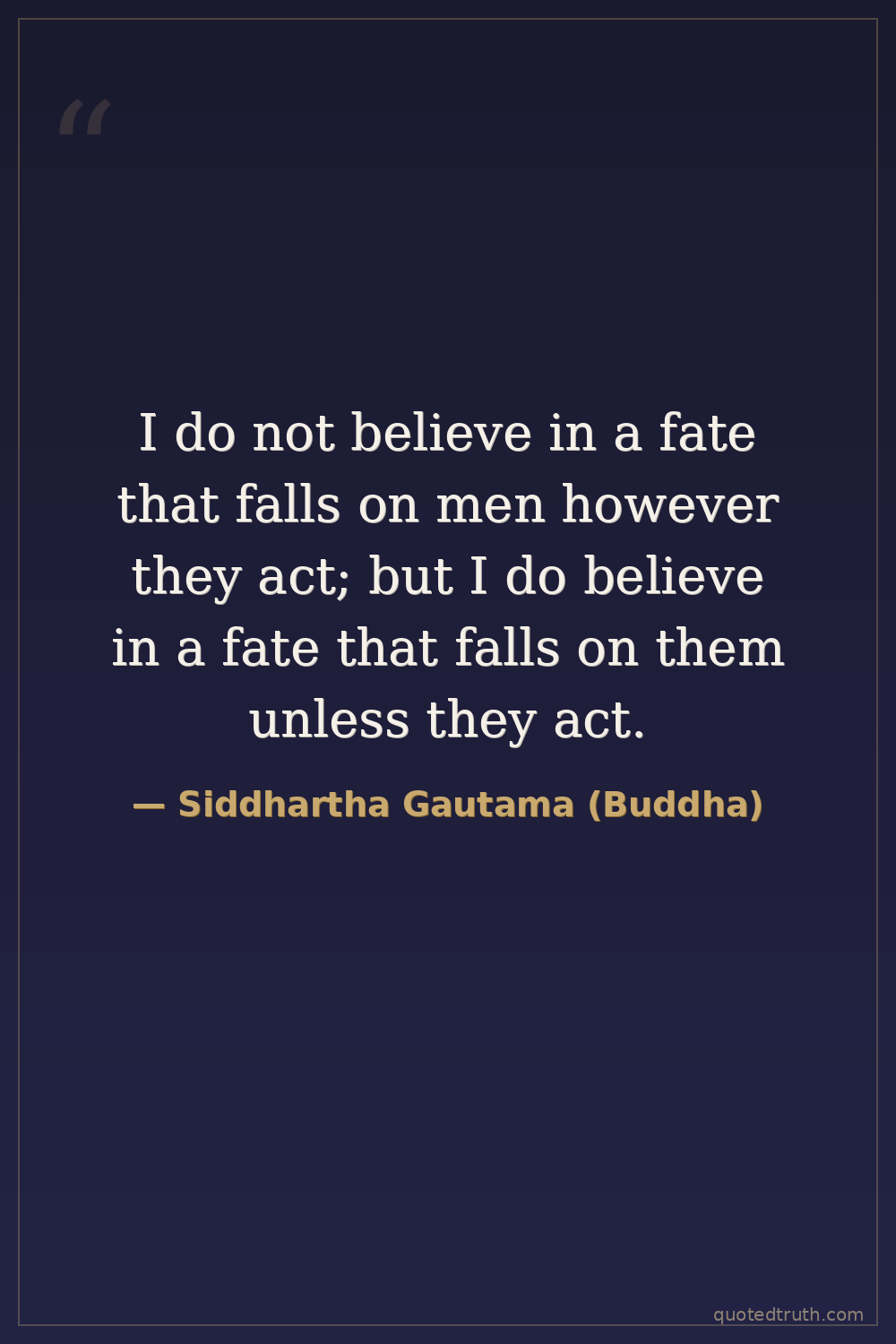
I do not believe in a fate that falls on men however they act; but I do believe in a fate that falls on them unless they act.
I do not believe in a fate that falls on men however they act; but I do believe in a fate that falls on them unless they act.
Click any product to generate a realistic preview. Up to 3 at a time.
* Initial load can take up to 90 seconds — revising the preview in another color is nearly instant.
"There is nothing more dreadful than the habit of doubt. Doubt separates people. It is a poison that disintegrates friendships and breaks up pleasant relations."
"If you light a lamp for someone else, it will also brighten your own path."
"One who drinks deeply of the Dharma with a clear and open mind, rests well."
"Whatever a foe may do to a foe, or a hater to a hater, a wrongly directed mind will do us greater mischief."
"The wise ones who are intent on meditation, who delight in the peace of renunciation, such mindful ones, perfect in wisdom, collect like bees the nectar of flowers."
Found in 1 providers: gemini
1 source checked
Destiny is not something imposed on you regardless of what you do. Passive people who wait for life to happen will end up shaped by circumstances beyond their control. But those who take deliberate action can change their trajectory. The quote rejects helpless fatalism while accepting that inaction itself produces a predictable outcome: you become a victim of whatever forces were already in motion around you.
The Buddha rejected the rigid caste-based fatalism of his society, where birth determined destiny. He abandoned his royal palace at 29, meditated under the Bodhi tree, and taught that liberation comes through effort, not predetermined status. His Eightfold Path is fundamentally active: right intention, right action, right effort. Enlightenment required personal striving, not surrender to karma as fixed doom. Action, not resignation, defines his entire teaching framework.
In 5th-6th century BCE India, Brahmanical orthodoxy taught that caste birth fixed one's spiritual worth, and fatalistic sects like the Ajivikas preached absolute determinism where human effort was meaningless. The Buddha emerged during this sramana movement of wandering ascetics challenging Vedic authority. His insistence on moral causation through deliberate choice directly contradicted the dominant fatalism, offering ordinary people a path to liberation regardless of birth circumstance, which was genuinely revolutionary.
AI-generated insights based on extensive research and information for context. Factual errors? Email [email protected].
Your cart is empty