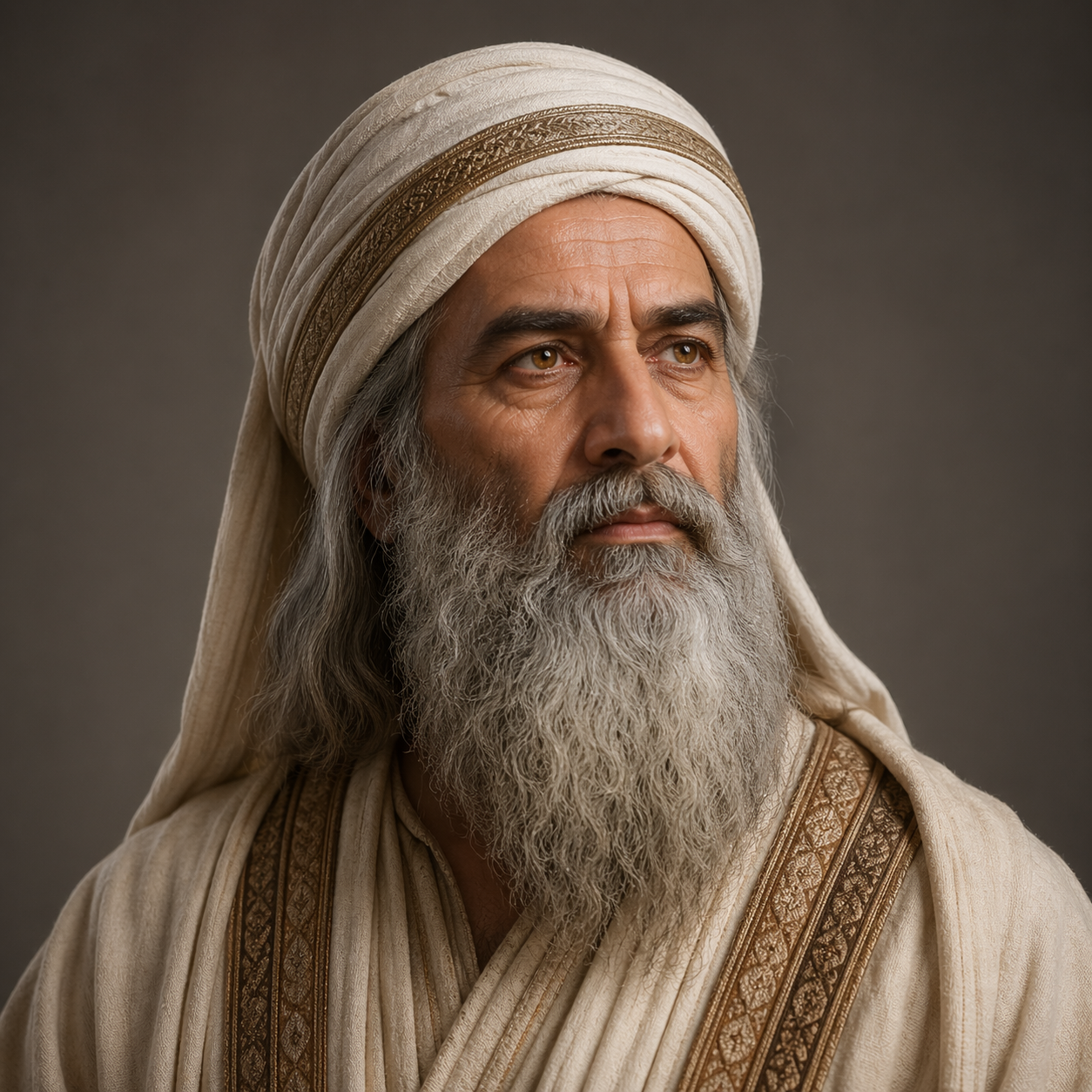
Zoroaster — "Through Good Mind, Righteousness, and Devotion, Mazda Ahura will grant Immortali…"
Through Good Mind, Righteousness, and Devotion, Mazda Ahura will grant Immortality and Wholeness.
Through Good Mind, Righteousness, and Devotion, Mazda Ahura will grant Immortality and Wholeness.
Click any product to generate a realistic preview. Up to 3 at a time.
* Initial load can take up to 90 seconds — revising the preview in another color is nearly instant.
"When at the beginning the two spirits came together, one declared life and the other the destruction of life, and how at the end the worst existence shall be to the deceitful, but to the truthful the …"
"Let us strive to be like Ahura Mazda, with good thoughts, good words, and good deeds."
"Happiness comes to them who bring happiness to others."
"He who is righteous, him I shall praise, but him who is wicked, him I shall denounce."
"In the radiance of righteousness, we shall learn self-knowledge and righteous thinking."
Iranian prophet who founded Zoroastrianism, the first major religion of cosmic dualism between good (Ahura Mazda) and evil (Angra Mainyu). Closely associated with The Buddha (near-contemporary Eastern moral-cosmological revolutionary). For an intellectual contrast, see Friedrich Nietzsche, German philosopher of 'beyond good and evil' — Nietzsche appropriated Zarathustra's name for Thus Spoke Zarathustra (1883) precisely to invert the original's moral cosmology — the historical Zoroaster founded the good-versus-evil framework Nietzsche's character announces the end of.
Found in 1 providers: gemini
1 source checked
Living with clear ethical thinking, acting justly, and maintaining sincere devotion leads to lasting spiritual reward. The quote names three inner practices a person must cultivate—right thought, right conduct, and committed faith—and pairs them with two promised outcomes: a deathless soul and a complete, unbroken state of being. It frames salvation not as a gift for belief alone but as the direct fruit of daily moral and mental discipline.
Zoroaster preached a radically ethical monotheism centered on Ahura Mazda, the Wise Lord, and taught that humans freely choose between truth (asha) and the lie (druj). Good Mind (Vohu Manah), Righteousness (Asha), and Devotion (Armaiti) are three of his Amesha Spentas, divine aspects he personally revealed in the Gathas, hymns he composed. As a reforming priest, he rejected ritual sacrifice as sufficient and made inner virtue the true path.
Zoroaster likely lived in Bronze Age eastern Iran around 1500–1000 BCE, among semi-nomadic Indo-Iranian tribes whose religion centered on polytheistic fire rituals, animal sacrifice, and warrior cults. Cattle raids, tribal warfare, and priestly corruption shaped daily life. His teaching of one supreme, wholly good deity and individual moral accountability was revolutionary, later spreading through the Achaemenid Persian Empire and influencing Judaism, Christianity, and Islam's concepts of heaven, hell, and final judgment.
AI-generated insights based on extensive research and information for context. Factual errors? Email [email protected].
Your cart is empty