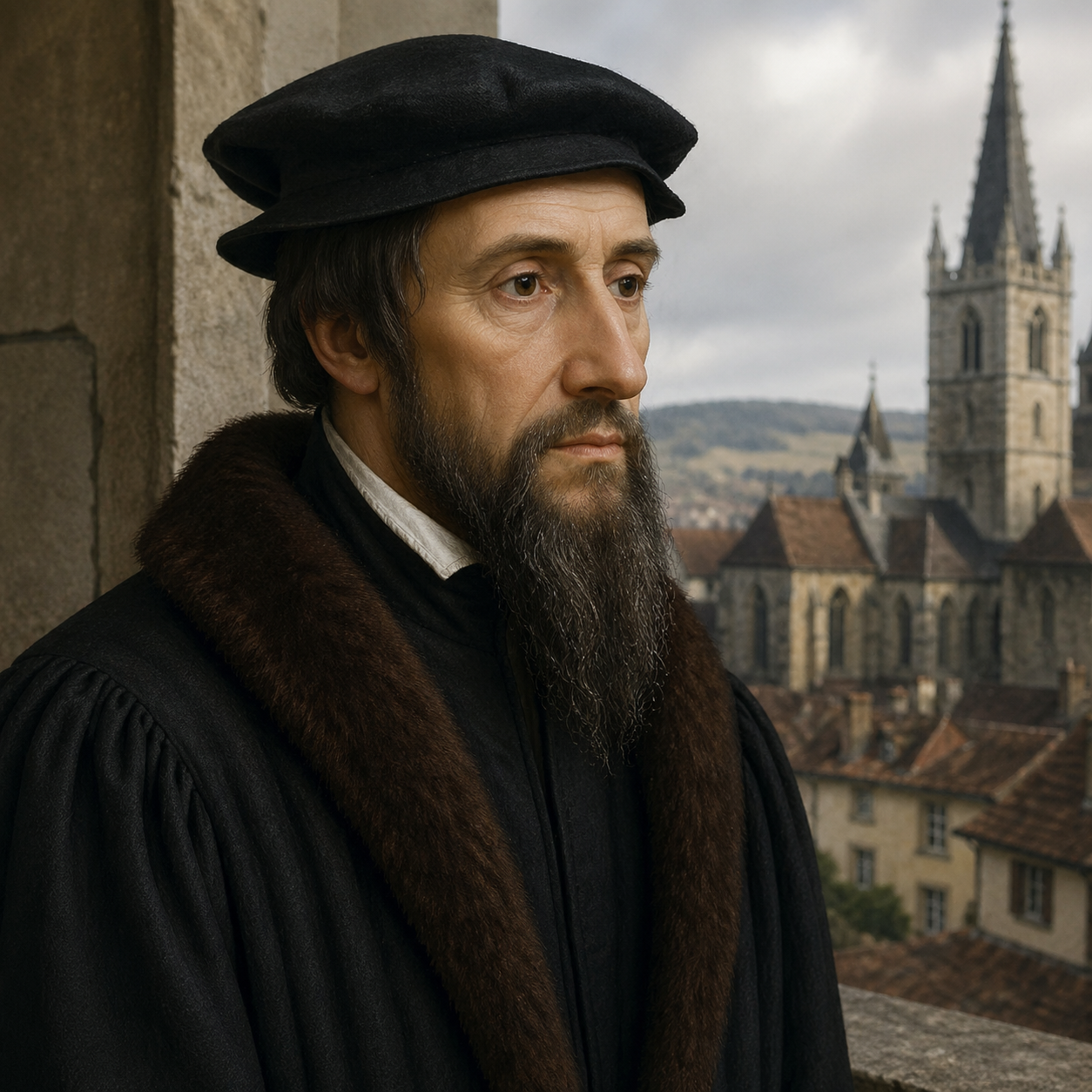
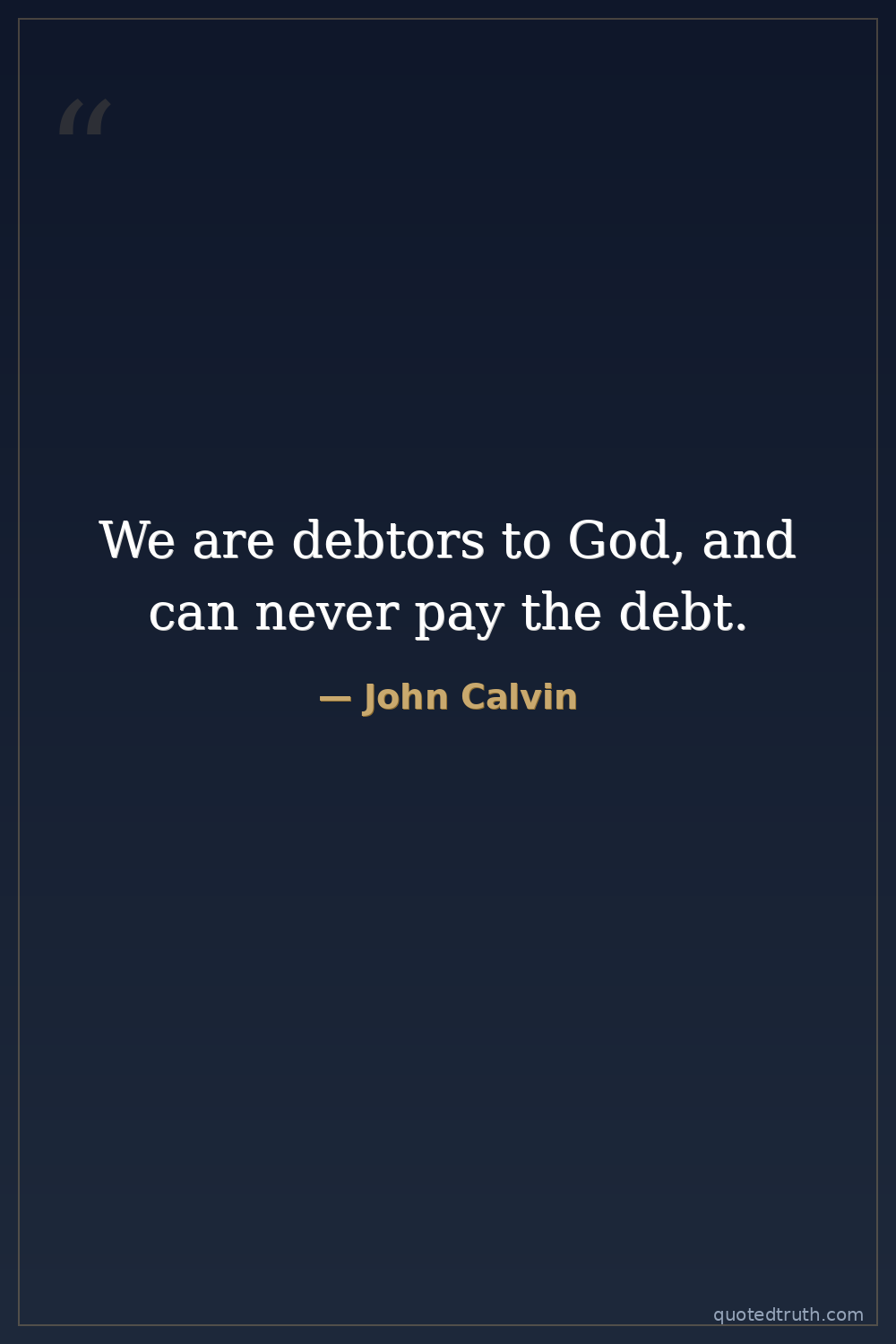
John Calvin — "We are debtors to God, and can never pay the debt."
We are debtors to God, and can never pay the debt.
We are debtors to God, and can never pay the debt.
Click any product to generate a realistic preview. Up to 3 at a time.
* Initial load can take up to 90 seconds — revising the preview in another color is nearly instant.
"All are not created on equal terms, but some are preordained to eternal life, others to eternal damnation; and, accordingly, as each has been created for one or other of these ends, we say that he has…"
"A dog barks when his master is attacked. I would be a coward if I saw that God's truth is attacked and yet would remain silent."
"The human race is condemned to everlasting hell for all have sinned and fallen short of the glory of God. In choosing to save some and choosing not to save others, it would appear to be no different t…"
"The reprobate are vessels of wrath fitted for destruction."
"God has his reasons for electing some and reprobating others, though these reasons are hidden from us."
French theologian whose Institutes of the Christian Religion (1536) systematized Protestant Reformed doctrine, including predestination. Closely associated with Martin Luther (Reformation founder, Calvin's predecessor). For an intellectual contrast, see Jacobus Arminius, Dutch Reformed theologian (1560-1609) — Arminius's rejection of strict double-predestination founded Arminianism — the theological tradition modern Methodism, most evangelicalism, and Pentecostalism descend from. The Calvinist-Arminian debate has divided Protestantism for 400 years.
Found in 1 providers: grok
1 source checked
Humanity owes God everything — existence, righteousness, perfect obedience — yet consistently fails to deliver. The debt is infinite and the debtor bankrupt: no amount of good works, religious devotion, or moral effort can settle what is owed. The only resolution is divine grace freely given, not earned. Human beings are permanently dependent on God's mercy rather than their own merit or religious performance.
Calvin built Reformed theology around total human depravity and sovereign grace, doctrines codified in his Institutes of the Christian Religion. Having trained as a lawyer before converting, he understood debt frameworks precisely. His Geneva theocracy rested on the premise that humans cannot self-reform through effort alone. This quote encapsulates his lifelong rejection of Catholic merit-based salvation and the works-righteousness system he systematically dismantled.
The 16th-century Reformation was a direct confrontation with Catholic teachings on indulgences, penance, and merit — all mechanisms asserting humans could partially repay their spiritual debt to God. Luther's 1517 theses ignited this dispute. Calvin, preaching in the 1530s–1560s, crystallized Reformed opposition around sola gratia. The Council of Trent simultaneously reaffirmed Catholic merit theology, making the question of unpayable debt a live, civilization-defining doctrinal battlefield.
AI-generated insights based on extensive research and information for context. Factual errors? Email [email protected].
Your cart is empty