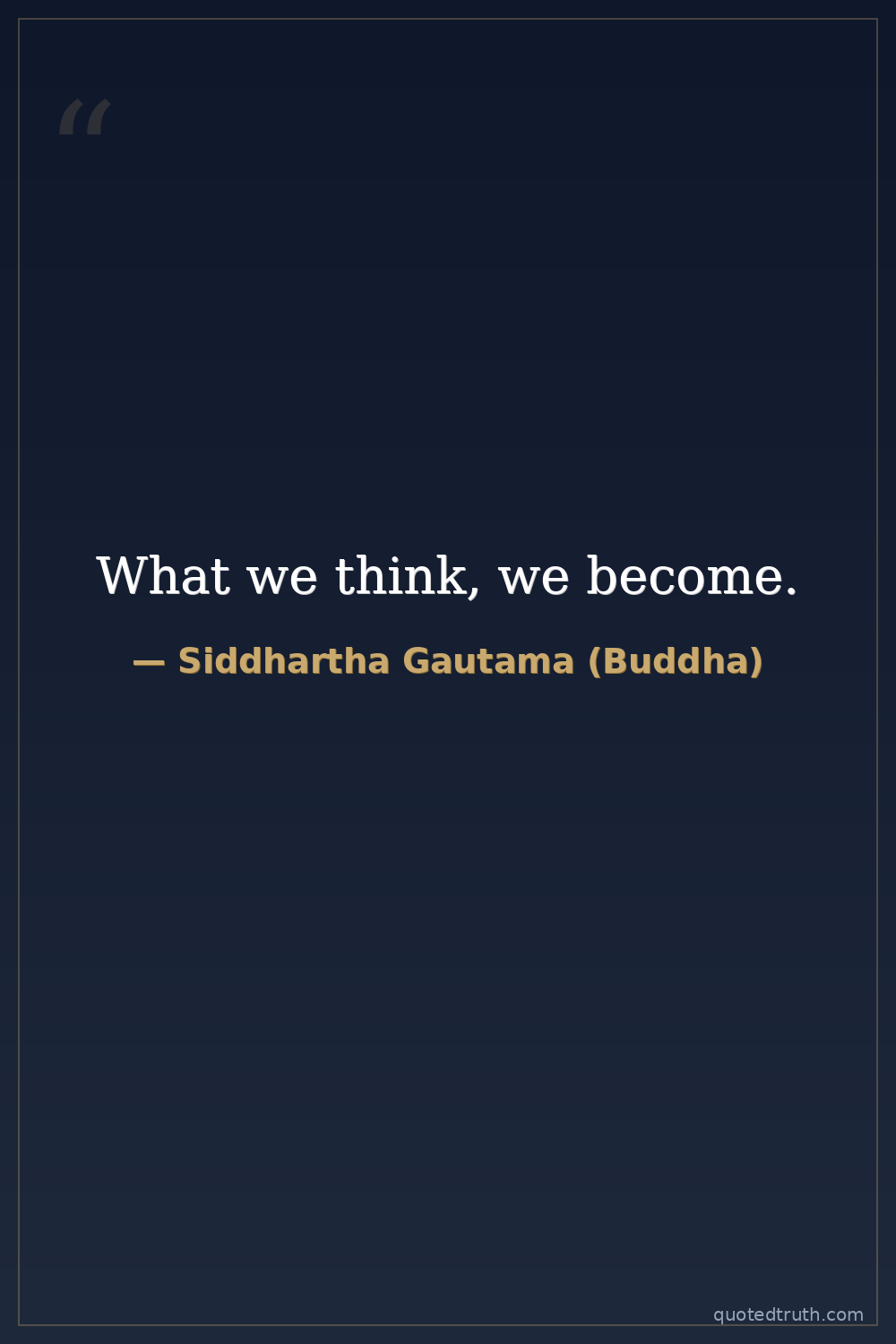
Siddhartha Gautama (Buddha) — "What we think, we become."
What we think, we become.
What we think, we become.
Click any product to generate a realistic preview. Up to 3 at a time.
* Initial load can take up to 90 seconds — revising the preview in another color is nearly instant.
"All conditioned things have the nature of vanishing."
"Irrigators channel waters, fletchers straighten arrows, carpenters bend wood, the wise master themselves."
"The body, monks, is not self. If the body were the self, this body would not lend itself to dis-ease. It would be possible (to say) with regard to the body, 'Let my body be thus. Let my body not be th…"
"Much though he recites the sacred texts, but acts not accordingly, that heedless man is like a cowherd who only counts the cows of others."
"Do not believe anything simply because you have heard it. Do not believe in traditions because they have been handed down for many generations. Do not believe anything because it is spoken and rumored…"
Attributed, often cited in various Buddhist texts and teachings.
Date: c. 5th century BCE
WisdomFound in 1 providers: grok
1 source checked
Your thoughts shape who you are. The patterns you repeat in your mind—whether worry, kindness, resentment, or ambition—gradually become your character and your lived reality. Mental habits are not neutral; they form grooves that steer perception, emotion, and action. Change what you rehearse internally and you change the person you turn into over time, because identity is built from attention and repetition rather than from fixed traits.
The Buddha built his entire path around training the mind. After leaving royal life and awakening under the Bodhi tree, he taught that suffering originates in craving and deluded thinking, and liberation comes through disciplined mental cultivation—mindfulness, right intention, and meditation. His Dhammapada opens with this same theme: mind precedes all states. The quote distills his core insight that inner discipline, not ritual or birth, determines who a person becomes.
Around the 5th century BCE in the Ganges plain, Vedic ritualism and the rigid caste system dominated spiritual life, with priests mediating salvation through sacrifice. A wave of wandering ascetics—shramanas, Jains, Ajivikas—challenged this, asking whether individuals could liberate themselves through personal effort. The Buddha's emphasis on thought shaping destiny was radical: it moved responsibility from gods and caste to the mind itself, empowering ordinary people to transform their lives.
AI-generated insights based on extensive research and information for context. Factual errors? Email [email protected].
Your cart is empty