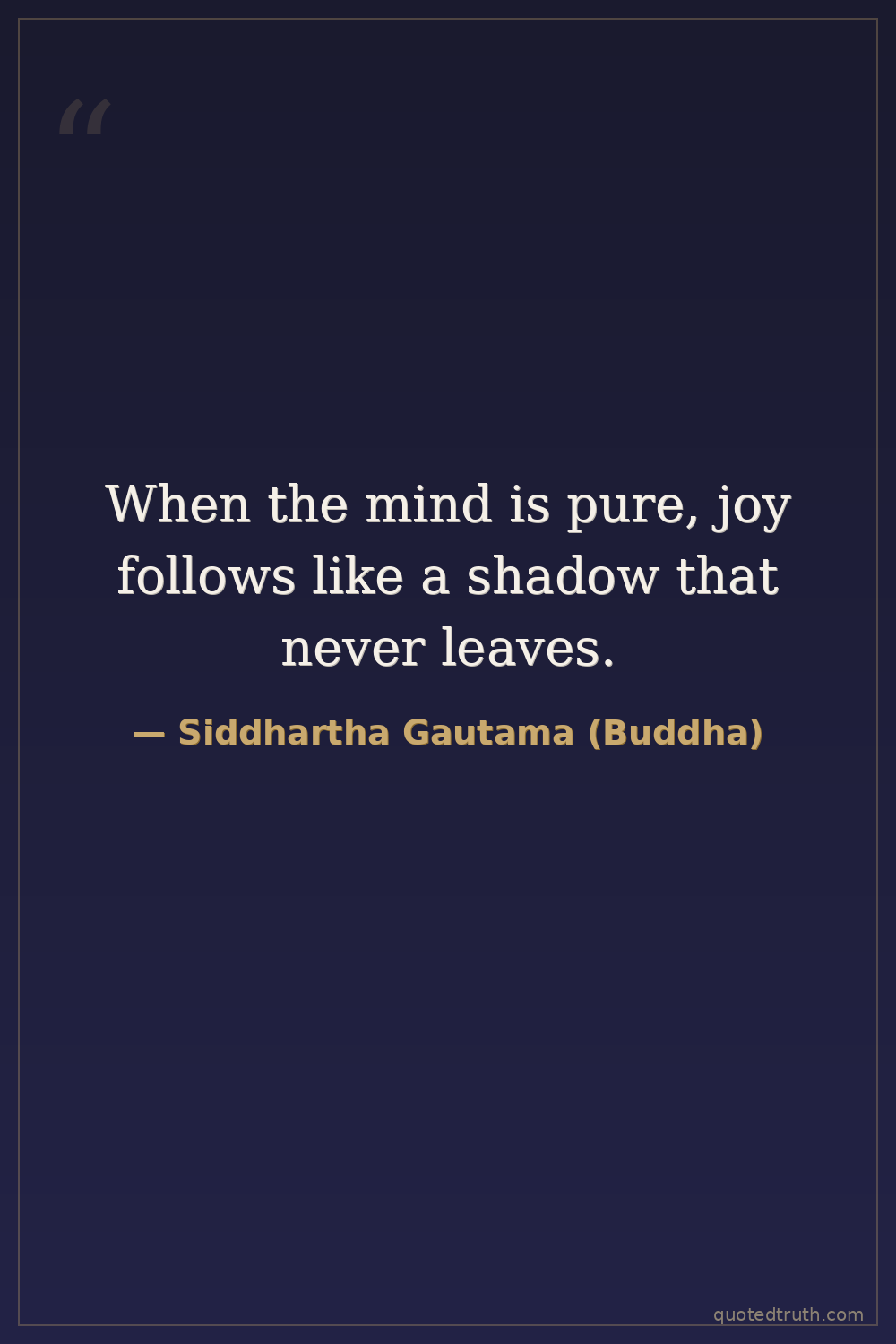
Siddhartha Gautama (Buddha) — "When the mind is pure, joy follows like a shadow that never leaves."
When the mind is pure, joy follows like a shadow that never leaves.
When the mind is pure, joy follows like a shadow that never leaves.
Click any product to generate a realistic preview. Up to 3 at a time.
* Initial load can take up to 90 seconds — revising the preview in another color is nearly instant.
"If a man foolishly does me wrong, I will return to him the protection of my boundless love. The more evil that comes from him, the more good will go from me."
"To conquer oneself is a greater task than conquering others."
"When you realize how perfect everything is, you will tilt your head back and laugh at the sky."
"Senseless talk brings suffering, for it is thrown right back to you."
"Chaos is inherent in all compounded things. Strive on with diligence."
From the Dhammapada, a teaching on the mind and happiness
Date: c. 5th-6th Century BCE
PhilosophicalFound in 1 providers: gemini
1 source checked
A clean, untroubled mind naturally produces lasting happiness. When you let go of greed, anger, and confused thinking, contentment becomes automatic and constant rather than something you have to chase. Just as a shadow silently accompanies a walker without effort, joy quietly accompanies a purified mind everywhere it goes. Inner peace is not a reward earned later but an immediate, inseparable companion of mental clarity.
This reflects the Buddha's central teaching that suffering originates in the mind's defilements, not external circumstances. After abandoning royal luxury and extreme asceticism, Siddhartha discovered under the Bodhi tree that liberation comes from purifying thought itself. His Eightfold Path emphasizes Right Mindfulness and Right Intention, and the Dhammapada opens with this exact principle: mind precedes all states, and happiness shadows the person whose thoughts are clean.
In 5th-century BCE northern India, competing shramana movements challenged Vedic ritualism, debating whether salvation came from sacrifices, caste duty, or severe body mortification. Jains pursued extreme austerity; Brahmins emphasized external purity rites. Siddhartha's claim that inner mental purity alone produces joy was radical, democratizing liberation beyond priests and ascetics. Urbanizing Ganges kingdoms like Magadha and Kosala offered receptive audiences of merchants and seekers disillusioned with ceremonial religion, making this psychological teaching revolutionary.
AI-generated insights based on extensive research and information for context. Factual errors? Email [email protected].
Your cart is empty