Martin Luther — "Their rabbis should be forbidden to teach on pain of loss of life and limb."
Their rabbis should be forbidden to teach on pain of loss of life and limb.
Their rabbis should be forbidden to teach on pain of loss of life and limb.
Click any product to generate a realistic preview. Up to 3 at a time.
* Initial load can take up to 90 seconds — revising the preview in another color is nearly instant.
"He who would be a Christian must be a Jew."
"I am more afraid of my own heart than of the pope and all his cardinals. I have within me the great pope, Self."
"What is worse, the Jews, in their synagogues, curse our Lord Jesus Christ and Mary His mother, and call her a whore, and Christ a mamzer [bastard], that is, a son of a whore."
"The Bible is alive, it speaks to me; it has feet, it runs after me; it has hands, it lays hold on me."
"I am a worm and no man."
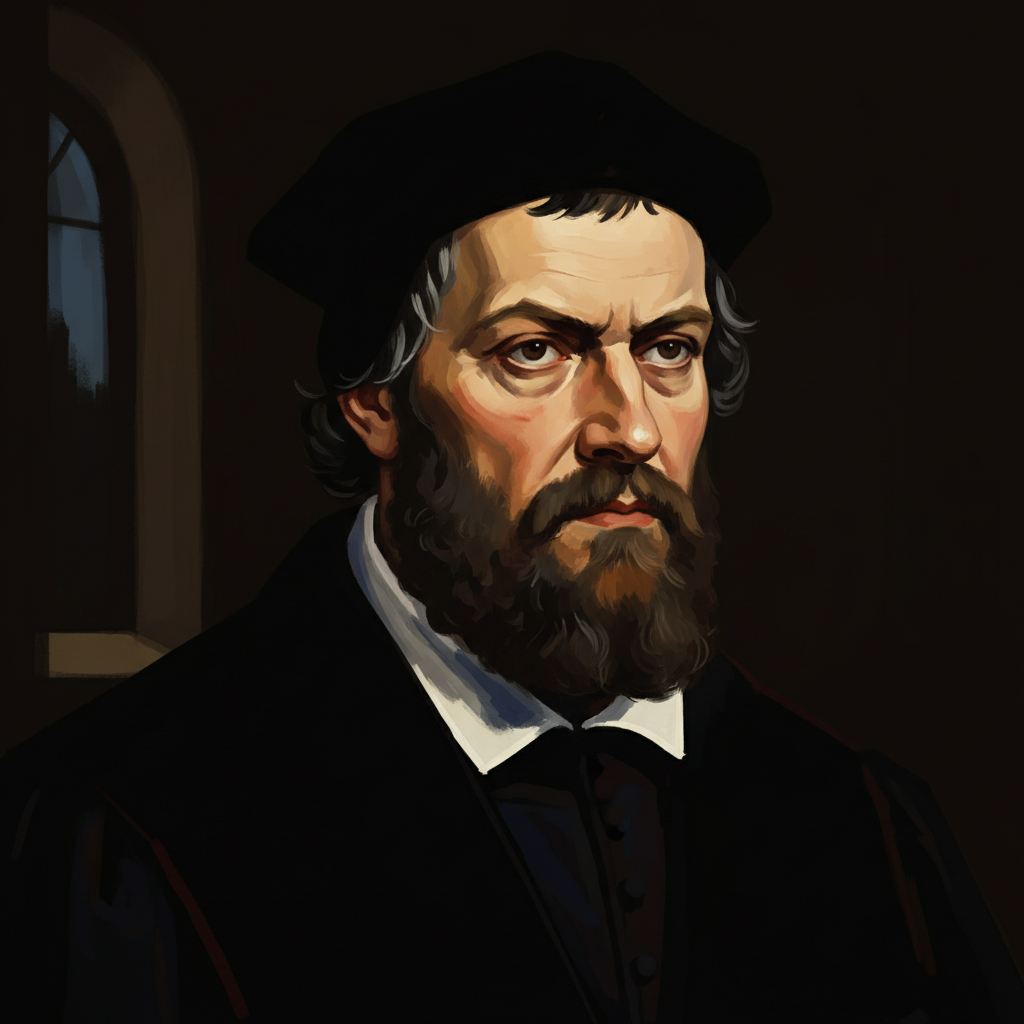
German theologian whose 95 Theses (1517) launched the Protestant Reformation and broke the Catholic Church's monopoly on Western Christianity. Closely associated with Philipp Melanchthon (Lutheran systematizer) and John Calvin (later Reformer who built on Luther's break). For an intellectual contrast, see Pope Leo X, Renaissance pope (1513-1521) — Leo X's indulgence sales triggered Luther's break and Leo excommunicated him in 1521 — Luther's entire Reformation is structured as a direct answer to the indulgence-funded Vatican Leo represented.
Found in 1 providers: gemini
1 source checked
This statement demands that Jewish religious teachers be banned from instructing their communities, with execution or mutilation as the penalty for disobedience. It calls for using state violence to silence Jewish religious transmission entirely, treating the act of teaching Judaism itself as a capital crime. The goal is to sever Jewish continuity by removing those who pass down tradition, language, and scripture to the next generation.
This line comes from Luther's 1543 treatise On the Jews and Their Lies, written in the final years of his life when his early hope of converting Jews to reformed Christianity had soured into bitter rage. The same theologian who championed individual conscience against papal authority here urged princes to burn synagogues, seize Jewish books, and criminalize rabbinic teaching. These writings later became propaganda fuel for Nazi antisemitism four centuries on.
In early-modern Europe, Jews lived under fragile tolerance granted by local princes, often confined to ghettos, barred from guilds, and periodically expelled. Religious dissent was treated as treason, and rulers routinely enforced doctrine through torture and execution. Luther's Reformation had shattered Christian unity, producing wars and competing confessions, each demanding political enforcement. Calling for capital punishment against rabbis fit a world where heresy laws, book burnings, and state-backed religious conformity were standard instruments of governance.
AI-generated insights based on extensive research and information for context. Factual errors? Email [email protected].
Your cart is empty