What it means
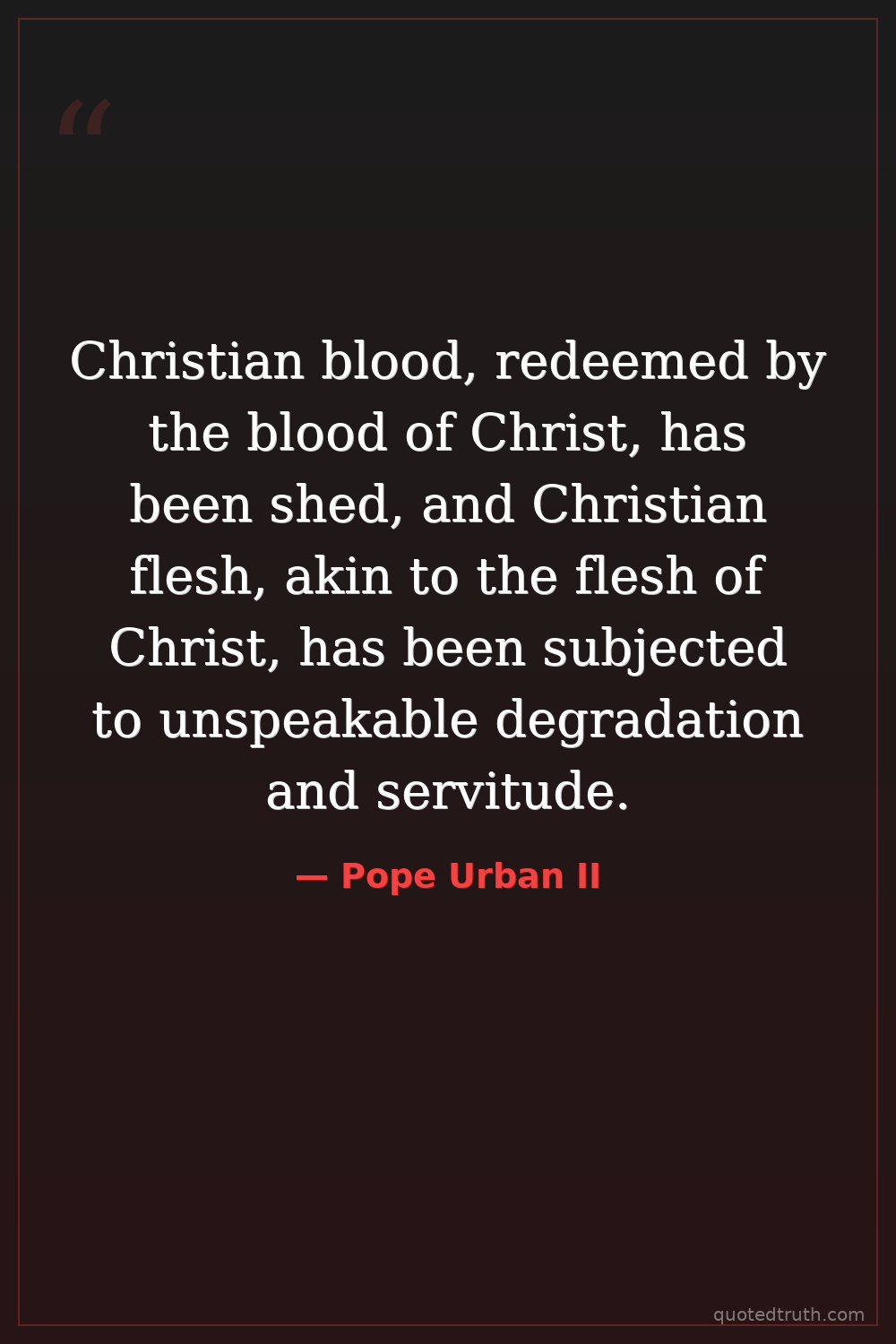
Violence against Christians constitutes a double sacrilege: it harms people spiritually redeemed by Christ's sacrifice and physically akin to Christ's own flesh. By framing Christian suffering in explicitly theological terms, Urban transforms a military-political problem into a cosmic moral emergency. The logic is inescapable — tolerating these atrocities means tolerating an offense against Christ himself, converting passive sympathy into an active, sacred obligation to respond with force.
Relevance to Pope Urban II
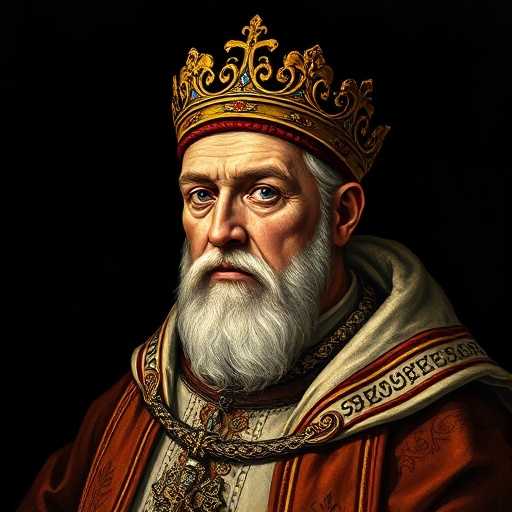
Urban II, formed by Cluniac monastic reform, held the Church to be Christ's living body on earth — a conviction that defined his papacy. He spent years in exile during the Investiture Controversy with Henry IV, defending the Church's sacred inviolability against secular violation. This quote mirrors that lifelong fight: Christian bodies, like Church authority, cannot be profaned without cosmic consequence. At Clermont, he fused his reformist theology with geopolitical crisis, transforming personal conviction into civilizational mobilization.
The era
The Seljuk Turkish victory at Manzikert (1071) shattered Byzantine power, severed pilgrimage routes to Jerusalem, and prompted Emperor Alexios I to beg Rome for military aid. Western Europe's feudal knights generated chronic internal violence with no unifying outlet. Urban's Clermont speech redirected that energy outward. His offer of plenary indulgence — full remission of sins for crusaders — was theologically radical, fusing salvation anxiety with military identity in a way medieval Christendom had never before experienced.
AI-generated insights based on extensive research and information for context. Factual errors? Email [email protected].