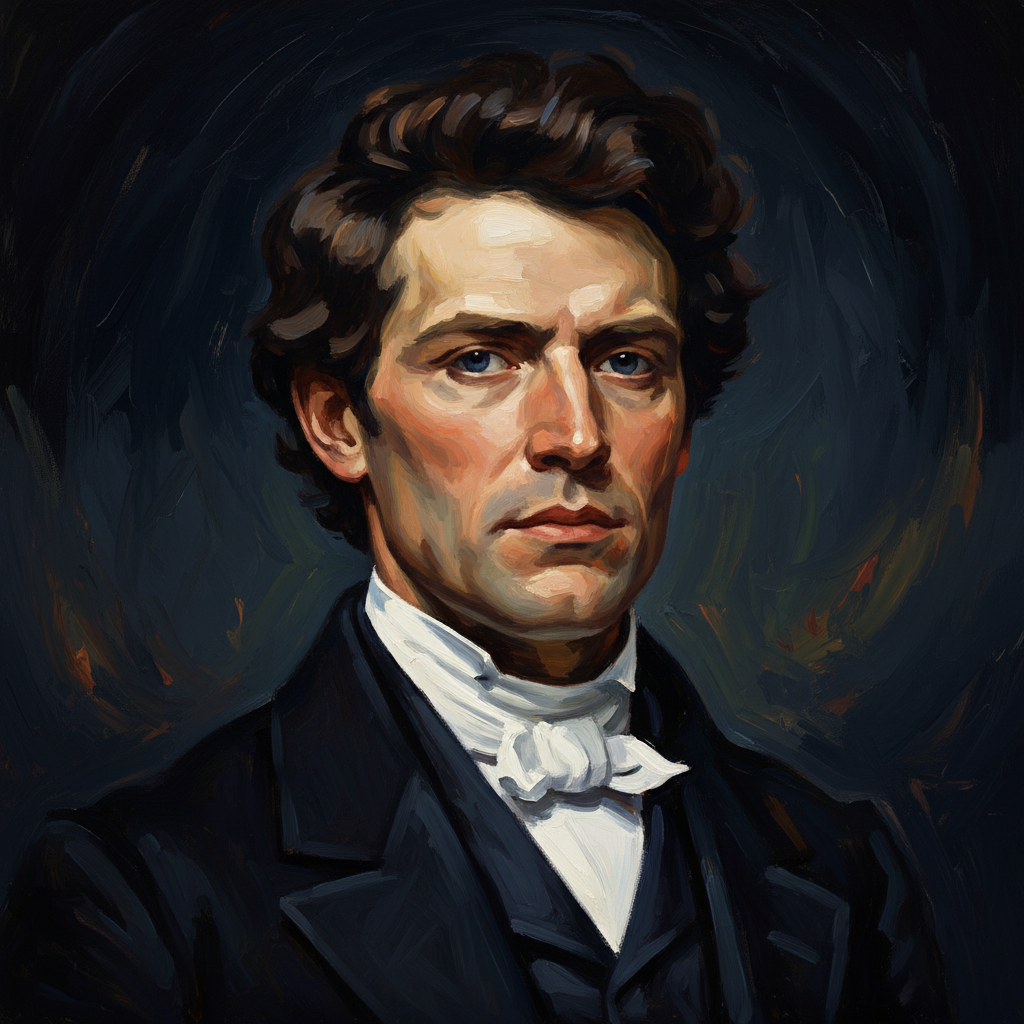
Joseph Smith — "If I had not actually got into this work and been called of God, I would back ou…"
If I had not actually got into this work and been called of God, I would back out. But I cannot back out: I have no doubt of the truth.
If I had not actually got into this work and been called of God, I would back out. But I cannot back out: I have no doubt of the truth.
Click any product to generate a realistic preview. Up to 3 at a time.
* Initial load can take up to 90 seconds — revising the preview in another color is nearly instant.
"I am a friend to the poor, and an enemy to oppression."
"The earth was once a garden, and it will be again. And the Saints will inherit it."
"There are two churches only; the one is the church of the Lamb of God, and the other is the church of the devil; wherefore, whoso belongeth not to the church of the Lamb of God belongeth to that great…"
"I have a right to reveal all things, and to teach all things."
"I am not afraid of man, nor of devils."
Found in 1 providers: deepseek
1 source checked
When facing overwhelming opposition and hardship, the speaker admits the work is so difficult that any rational person might quit. But his certainty about his divine calling makes retreat impossible. His conviction isn't stubbornness but an unshakeable internal knowledge — the kind that overrides fear, logic, or self-preservation. He's not trapped; he's anchored.
Smith founded the Church of Jesus Christ of Latter-day Saints in 1830 amid relentless persecution, mob violence, imprisonment, and eventual assassination in 1844. He was tarred and feathered, driven from Missouri at gunpoint, and watched followers die. This quote captures his defining trait: he never claimed the work was easy, only that he couldn't abandon what he believed God had specifically chosen him to build.
In 1830s–40s America, new religious movements faced intense hostility from established Protestant communities and frontier vigilante justice. Smith's movement was viewed as heretical, politically threatening, and socially disruptive. States like Missouri issued extermination orders against Latter-day Saints. Religious conviction was also a powerful cultural currency — claiming divine mandate was the highest possible justification for persisting against impossible odds in that era.
AI-generated insights based on extensive research and information for context. Factual errors? Email [email protected].
Your cart is empty