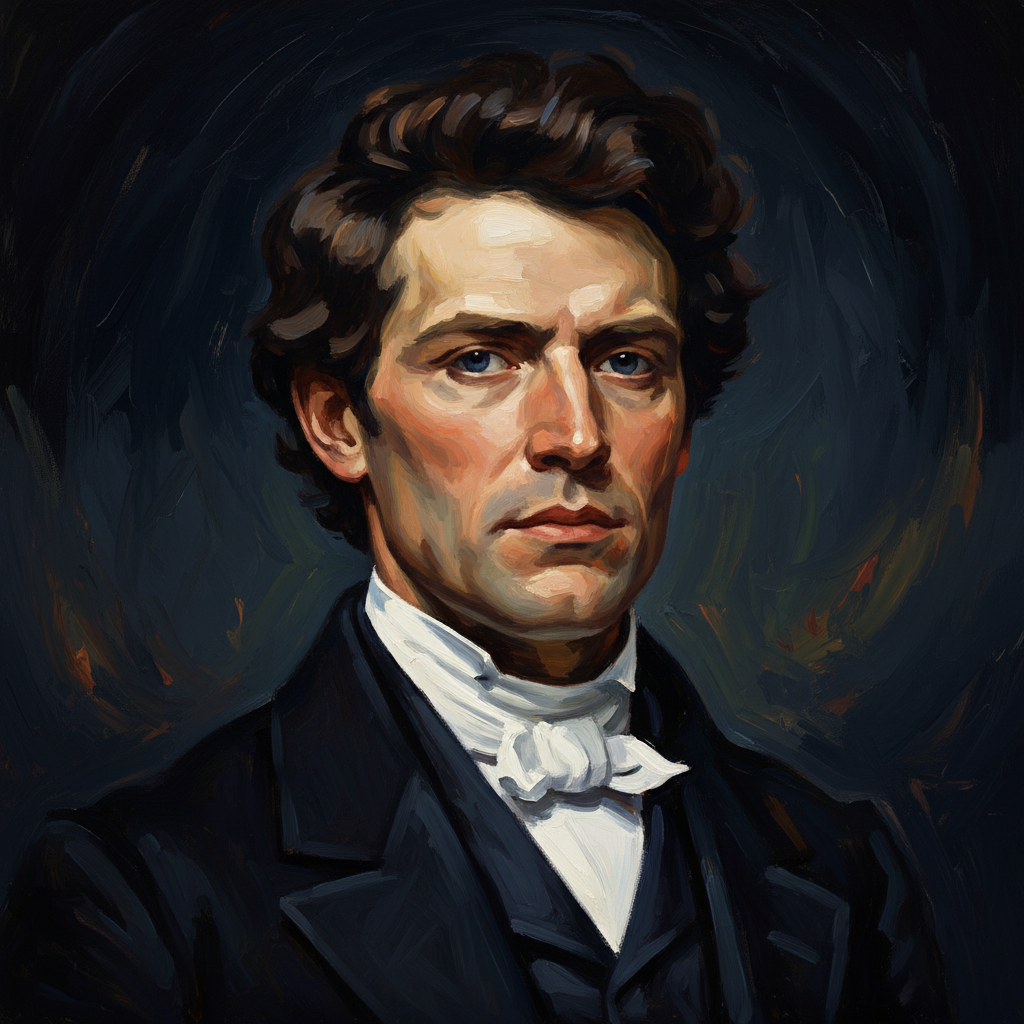
Joseph Smith — "I am not afraid of man, nor of devils."
I am not afraid of man, nor of devils.
I am not afraid of man, nor of devils.
Click any product to generate a realistic preview. Up to 3 at a time.
* Initial load can take up to 90 seconds — revising the preview in another color is nearly instant.
"I calculated to be one of the instruments of setting up the kingdom of Daniel by the word of the Lord, and I intended to lay a foundation that would revolutionize the whole world."
"I have seen the face of God, and I have seen the face of the devil."
"I will refute that idea, and take away the veil, so that you may see."
"And behold, how oft you have transgressed the commandments and the laws of God, and have gone on in the persuasions of men."
"I am a friend to the whole human race."
Found in 1 providers: grok
1 source checked
The quote declares absolute fearlessness against all opposition — human and supernatural alike. It asserts that no earthly persecutor or spiritual adversary can silence or intimidate the speaker. In modern terms: a bold refusal to back down from one's convictions regardless of consequences. It signals total commitment to a cause, placing divine calling above personal safety, social pressure, or any threat that could come from the physical or spiritual world.
Joseph Smith faced relentless persecution throughout his life — mob violence, imprisonment in Liberty Jail in 1838, forced expulsion from Missouri under a literal extermination order, and ultimately assassination in Carthage Jail in 1844. He consistently claimed divine authority despite escalating death threats, continuing to preach and expand his church. His theology centered on direct revelation and spiritual warfare, making fearlessness of both men and devils a lived expression of his prophetic identity, not mere rhetoric.
Joseph Smith's early 19th-century America was shaped by the Second Great Awakening — fierce religious competition, frontier lawlessness, and deep suspicion of new faiths. Anti-Mormon violence was institutionalized: Missouri's Governor Boggs signed an extermination order in 1838. Belief in literal devil-possession and spiritual warfare was mainstream across denominations. Declaring fearlessness of both human mobs and supernatural evil spoke directly to followers navigating real physical danger while also believing they were engaged in a cosmic spiritual conflict.
AI-generated insights based on extensive research and information for context. Factual errors? Email [email protected].
Your cart is empty