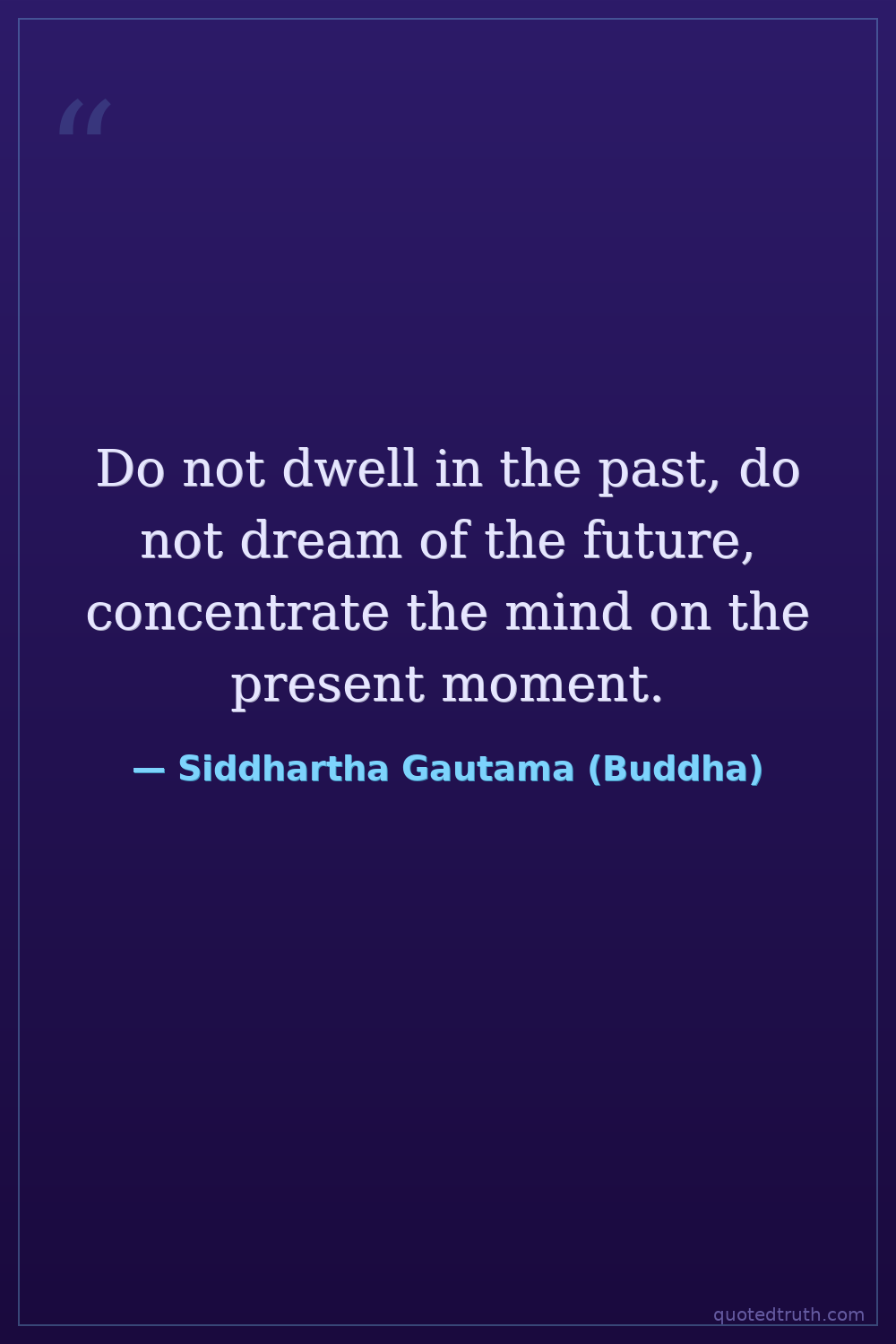
Siddhartha Gautama (Buddha) — "Do not dwell in the past, do not dream of the future, concentrate the mind on th…"
Do not dwell in the past, do not dream of the future, concentrate the mind on the present moment.
Do not dwell in the past, do not dream of the future, concentrate the mind on the present moment.
Click any product to generate a realistic preview. Up to 3 at a time.
* Initial load can take up to 90 seconds — revising the preview in another color is nearly instant.
"You will not be punished for your anger, you will be punished by your anger."
"If anything is worth doing, do it with all your heart."
"Chaos is inherent in all compounded things. Strive on with diligence."
"However many holy words you read, however many you speak, what good will they do you if you do not act on upon them?"
"By oneself is evil done; by oneself is one defiled. By oneself is evil left undone; by oneself is one made pure. Purity and impurity depend on oneself; no one can purify another."
Attributed, often cited in various Buddhist texts and teachings.
Date: c. 5th century BCE
InspirationalFound in 2 providers: grok,gemini
2 sources checked
Stop replaying old memories and stop running imaginary scenarios about what might happen. Both pull your attention away from the only place life actually happens: right now. Regret and anxiety are mental habits that consume energy without changing anything. When you bring your full attention to the current moment—what you are seeing, doing, feeling—you gain clarity, reduce suffering, and respond to reality as it is instead of stories in your head.
The Buddha built his entire teaching around this insight after abandoning palace life and years of extreme asceticism. Sitting under the Bodhi tree, he recognized that craving for past pleasures and future outcomes was the engine of suffering. Mindfulness of the present breath, body, and sensation became the core practice he taught for 45 years, forming the foundation of meditation, the Four Noble Truths, and the Eightfold Path's right mindfulness step.
In 5th–6th century BCE northern India, the Vedic ritual tradition emphasized elaborate future-oriented sacrifices for favorable rebirth, while the caste system fixed people to inherited pasts. Shramana movements, including Jains and wandering ascetics, were challenging this by exploring inner liberation. The Ganges plain was urbanizing under new kingdoms like Magadha, producing wealth, anxiety, and spiritual seeking—fertile ground for a teacher reframing salvation as immediate awareness rather than priestly ceremony or lineage.
AI-generated insights based on extensive research and information for context. Factual errors? Email [email protected].
Your cart is empty