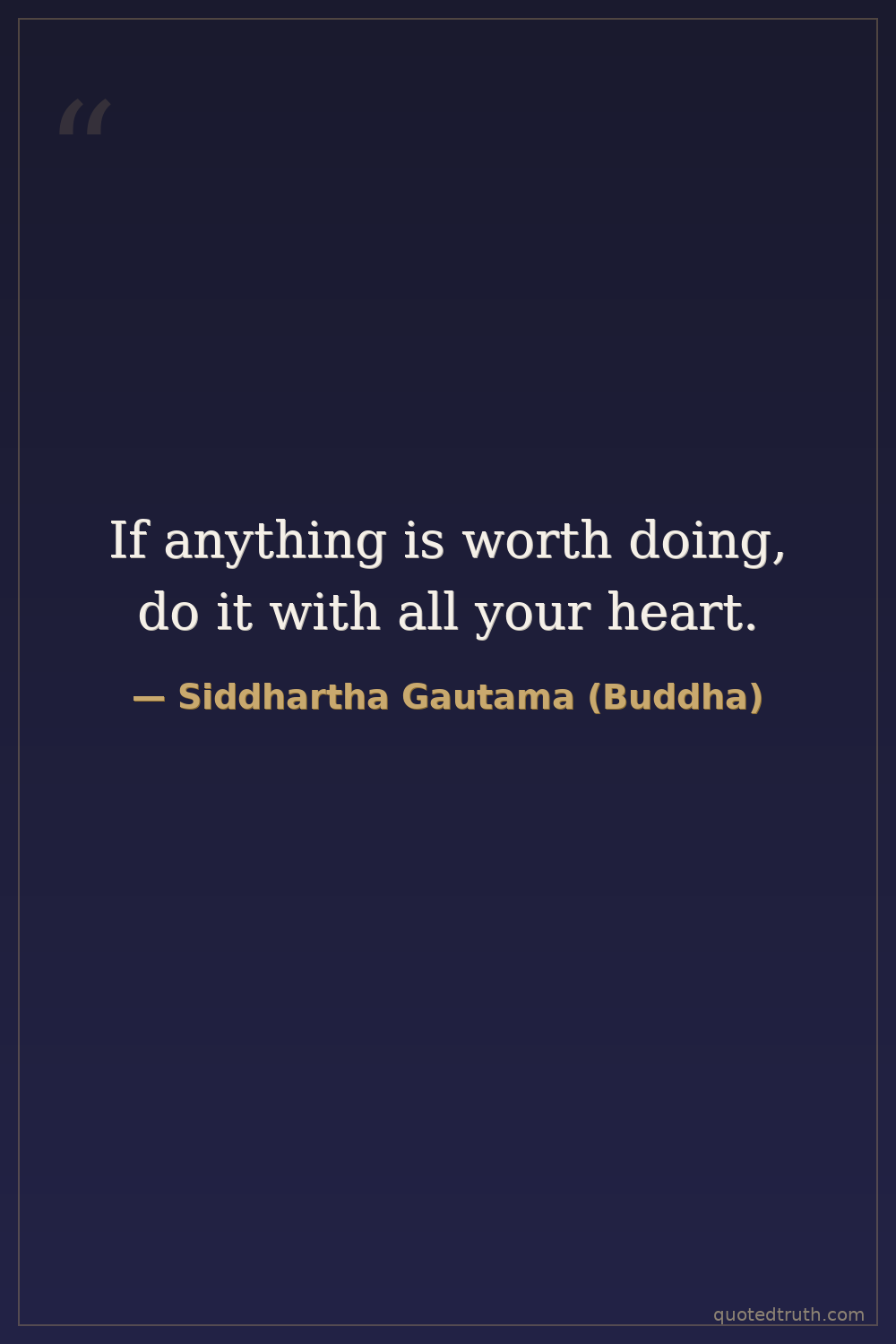
Siddhartha Gautama (Buddha) — "If anything is worth doing, do it with all your heart."
If anything is worth doing, do it with all your heart.
If anything is worth doing, do it with all your heart.
Click any product to generate a realistic preview. Up to 3 at a time.
* Initial load can take up to 90 seconds — revising the preview in another color is nearly instant.
"No one saves us but ourselves. No one can and no one may. We ourselves must walk the path."
"Peace comes from within. Do not seek it without."
"The tongue is a sharp knife... It kills without drawing blood."
"Happiness does not depend on what you have or who you are. It solely relies on how you think."
"It is a man's own mind, not his enemy or foe, that lures him to evil ways."
Found in 1 providers: gemini
1 source checked
Half-hearted effort produces half-hearted results. When you commit to an action, pour your full attention, energy, and sincerity into it rather than going through the motions. Distraction, hesitation, and lukewarm engagement waste both the task and your time. The principle is simple: if something matters enough to begin, it matters enough to engage completely. Total presence transforms ordinary activity into meaningful work and prevents the regret that comes from knowing you held back.
The Buddha built his entire teaching around right effort and mindfulness, two pillars of the Eightfold Path. After abandoning palace luxury at twenty-nine, he pursued awakening with total dedication, sitting beneath the Bodhi tree until enlightenment came. He taught monks to eat, walk, and breathe with complete awareness, treating each act as practice. This saying mirrors his conviction that wholehearted engagement, not scattered striving, is the doorway to liberation and clear understanding.
In sixth-century BCE northern India, the Vedic ritual system emphasized precise external ceremony performed by brahmin priests, while emerging shramana movements questioned whether mechanical observance produced real spiritual fruit. Wandering ascetics experimented with extreme austerities, often performed rigidly without inner engagement. The Buddha's insistence on wholehearted, mindful action challenged both empty ritualism and performative asceticism, offering a middle path where sincerity of intention mattered more than outward form, a radical reframing for his listeners.
AI-generated insights based on extensive research and information for context. Factual errors? Email [email protected].
Your cart is empty