What it means
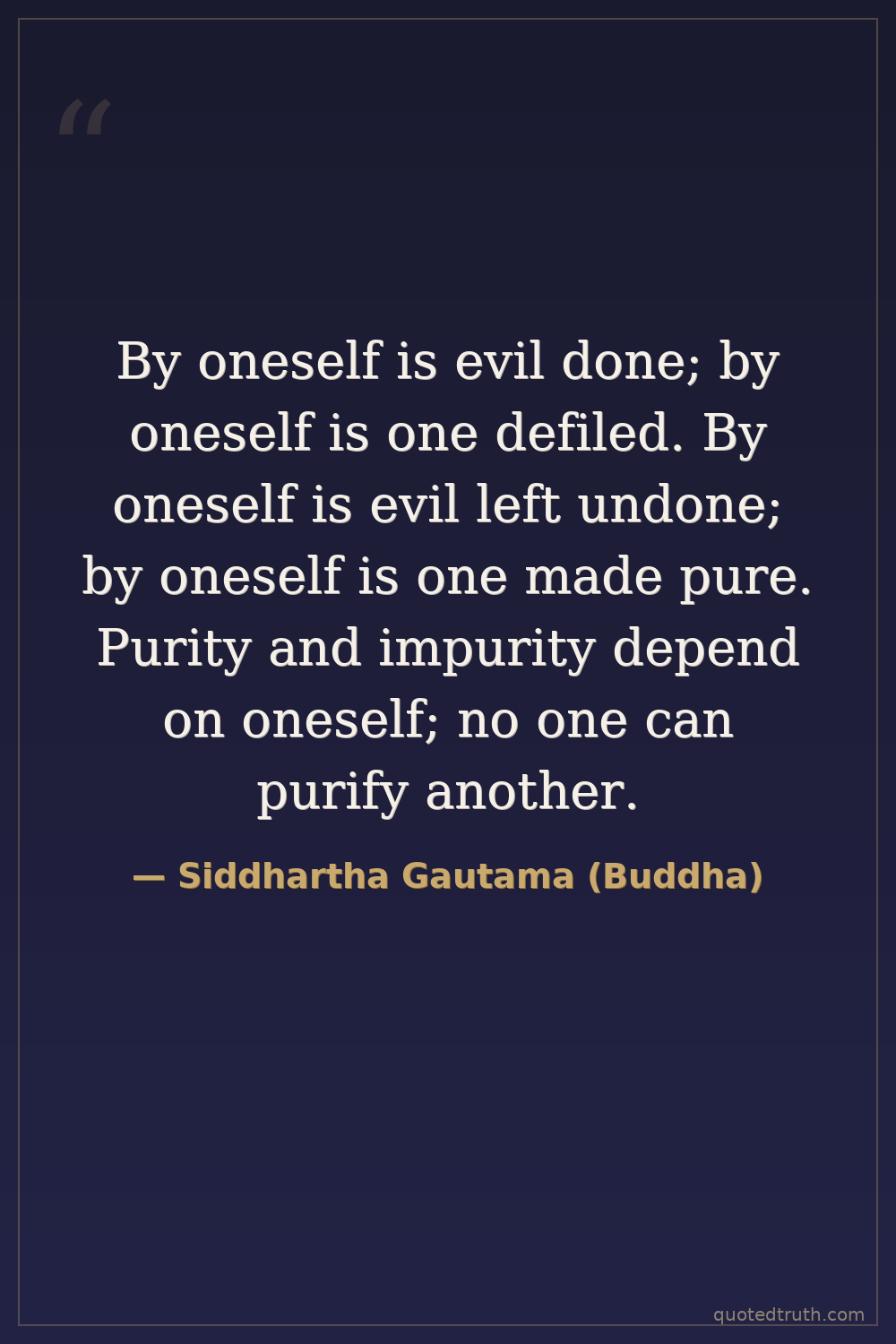
Moral responsibility rests entirely with the individual. Every wrong action you take stains you, and every wrong action you refrain from keeps you clean. No outside force, ritual, teacher, or savior can scrub your conscience or corrupt it for you. Whether you become a better or worse person is decided by your own choices, day after day. You own your character completely.
Relevance to Siddhartha Gautama (Buddha)
The Buddha rejected the Brahmin priesthood's claim that ritual bathing, sacrifice, or caste birth determined spiritual status. After leaving his palace and achieving enlightenment under the Bodhi tree, he taught that liberation came through personal ethical effort, meditation, and insight, not priestly intermediaries. This saying captures his core doctrine of karma and self-reliance, central to his forty-five years of teaching across the Ganges plain.
The era
In 5th-century BCE northern India, Vedic Brahmanism dominated through caste hierarchy and elaborate sacrificial rituals requiring priests. Purity was tied to birth and ceremony. The Buddha emerged during the Shramana movement, a wave of wandering ascetics questioning this system alongside Mahavira and others. Declaring that anyone, regardless of caste, could purify themselves through their own conduct was radically egalitarian and directly challenged the religious economy of his era.
AI-generated insights based on extensive research and information for context. Factual errors? Email [email protected].