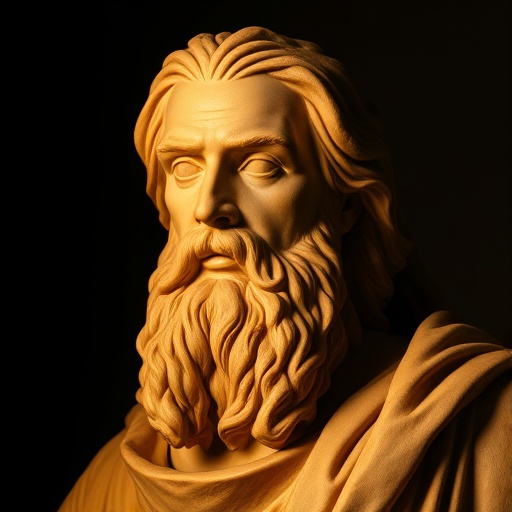
Moses — "Choose life so that you and your descendants may live."
Choose life so that you and your descendants may live.
Choose life so that you and your descendants may live.
Click any product to generate a realistic preview. Up to 3 at a time.
* Initial load can take up to 90 seconds — revising the preview in another color is nearly instant.
"And the children of Israel stripped themselves of their ornaments by the mount Horeb."
"I am not able to bear all this people alone, because it is too heavy for me."
"Man does not live on bread alone but on every word that comes from the mouth of the LORD."
"You shall not follow a majority in wrongdoing."
"You shall not give false testimony against your neighbor."
Deuteronomy 30:19, part of a final address to the Israelites.
Date: c. 13th-15th century BCE (traditional dating)
WisdomFound in 2 providers: grok,gemini
2 sources checked
This saying urges people to actively pick the path that leads to flourishing rather than drifting into habits that destroy them. Life is framed as a decision, not a default. The choice you make does not just affect you—it ripples into your children and their children. Pick the behaviors, values, and commitments that sustain well-being across generations, because what you choose becomes the inheritance you hand down.
Moses delivered this charge at the end of Deuteronomy, after leading the Israelites forty years through the wilderness toward Canaan. As lawgiver, he presented the Torah as a binding covenant with blessings for obedience and curses for abandonment. Having watched an entire generation die before reaching the promised land, he understood that collective choices determine collective fate, and framed survival itself as a moral decision his people had to make deliberately.
Around the 13th century BCE, Ancient Near Eastern peoples lived under polytheistic covenants where rulers imposed treaties on vassals. Moses reframed this structure: the covenant was with one God, and each Israelite personally ratified it. Infant mortality was brutal, tribal extinction was common, and descendants were your only afterlife. Telling a Bronze Age audience to choose life meant choosing a distinct legal, ethical, and religious identity amid surrounding Canaanite cultures that practiced child sacrifice.
AI-generated insights based on extensive research and information for context. Factual errors? Email [email protected].
Your cart is empty