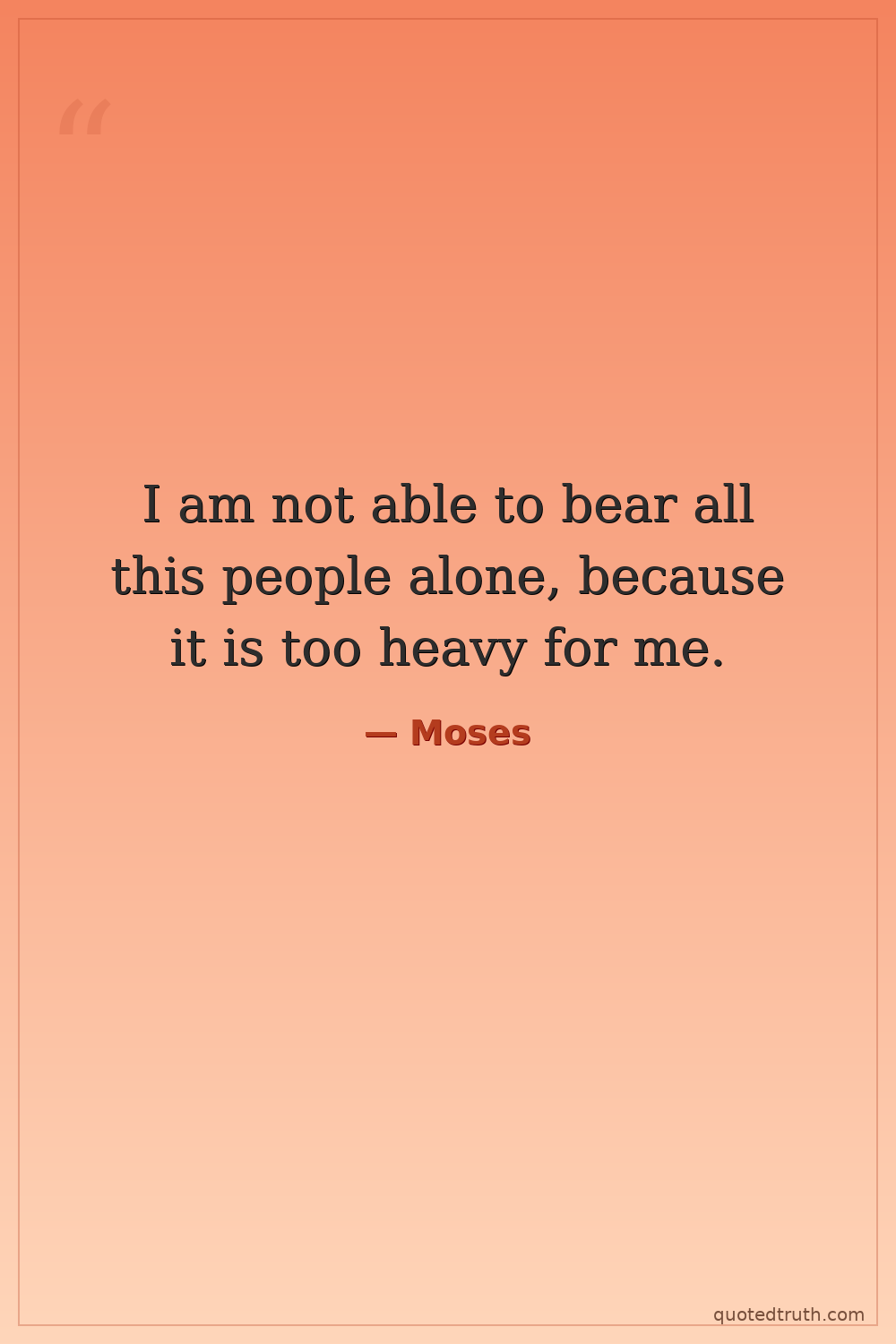
Moses — "I am not able to bear all this people alone, because it is too heavy for me."
I am not able to bear all this people alone, because it is too heavy for me.
I am not able to bear all this people alone, because it is too heavy for me.
Click any product to generate a realistic preview. Up to 3 at a time.
* Initial load can take up to 90 seconds — revising the preview in another color is nearly instant.
"Thou shalt not suffer a witch to live."
"The Eternal God is your dwelling place, and underneath are the everlasting arms."
"You shall not spread a false report."
"O my Lord, send, I pray thee, by the hand of him whom thou wilt send."
"See, I have set before you today life and prosperity, death and destruction."
Numbers 11:14, lamenting to God
Date: c. 13th century BCE (biblical account)
Self-DeprecatingFound in 1 providers: grok
1 source checked
Moses openly admits he cannot single-handedly carry the burden of leading an entire nation. The responsibility of judging disputes, guiding decisions, and meeting everyone's needs has become too heavy for one person. He is asking for help, acknowledging human limits rather than pretending to be superhuman. It is a direct confession that leadership at scale requires shared authority, delegation, and support from others who can absorb part of the weight.
Moses led hundreds of thousands of Israelites out of Egypt through the wilderness, serving as their prophet, judge, and lawgiver simultaneously. His father-in-law Jethro saw him judging the people from morning till evening and warned him he would wear out. This confession directly reflects that crushing workload and led to his appointment of seventy elders to share governance, a foundational moment shaping Jewish judicial tradition and the structure of communal leadership.
In the late Bronze Age, tribal and early national leaders were expected to personally settle disputes, military matters, and religious rulings. There were no bureaucracies, written codes, or courts of appeal; the chief was judge, priest, and general at once. Moses operated during the Israelites' wilderness period after the Exodus, when a former slave population needed constant legal and spiritual direction. Delegating authority to elders was a radical administrative innovation for that ancient Near Eastern setting.
AI-generated insights based on extensive research and information for context. Factual errors? Email [email protected].
Your cart is empty