What it means
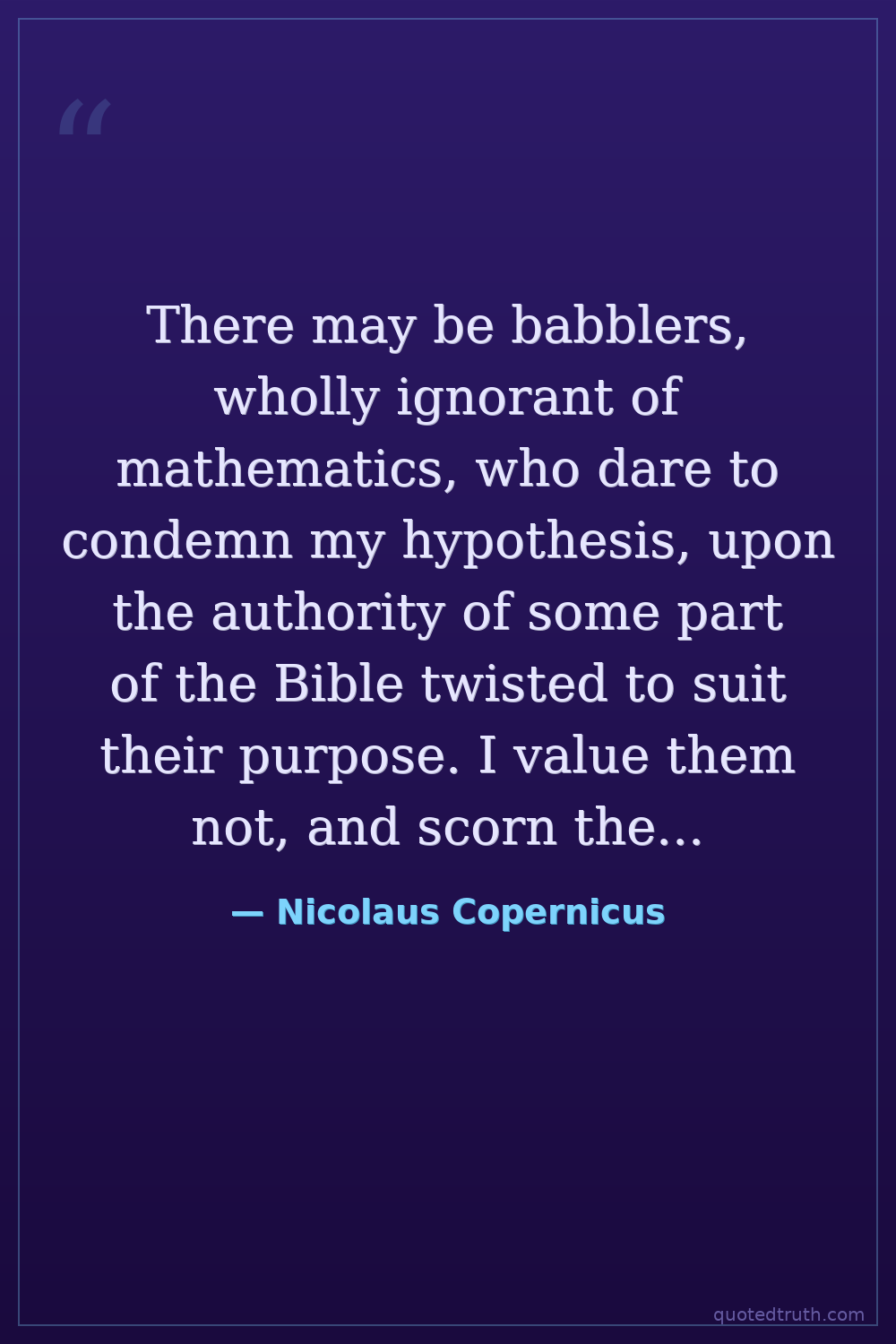
People who lack mathematical knowledge but invoke selectively misread scripture to attack scientific ideas deserve no serious response. True criticism requires understanding the evidence and methods involved. Using religion as a bludgeon against work you cannot evaluate on its own terms is intellectual cowardice. If you haven't grasped the mathematics, your condemnation carries no weight — your judgment is unfounded and your authority borrowed from texts you've distorted.
Relevance to Nicolaus Copernicus
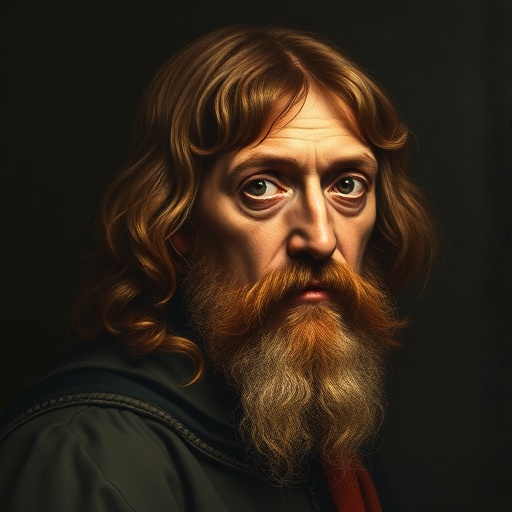
Copernicus spent decades developing the heliocentric model yet hesitated to publish De Revolutionibus (1543) fearing exactly this backlash. Ironically, he was himself a Catholic canon — he wasn't rejecting faith, but insisting mathematics be judged mathematically. He preemptively dedicated the book to Pope Paul III. His contempt was for willful ignorance dressed as piety, not religion itself. A man of both the Church and rigorous science, he refused to let one corrupt the other.
The era
The early sixteenth century saw the Catholic Church as the ultimate arbiter of cosmology, with Ptolemy's Earth-centered universe scripturally endorsed. Meanwhile the Protestant Reformation was fracturing Christianity, and Luther himself dismissed Copernicus by citing Joshua 10:13. Biblical literalism was becoming a weapon in doctrinal wars. Publishing a theory that displaced Earth from the cosmos center risked Church condemnation at a time when Galileo's later persecution showed such fears were entirely justified.
AI-generated insights based on extensive research and information for context. Factual errors? Email [email protected].