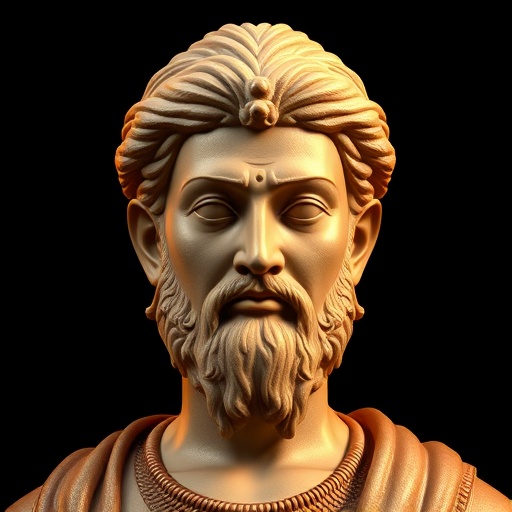
Mahavira — "Attachment is the root of all suffering."
Attachment is the root of all suffering.
Attachment is the root of all suffering.
Click any product to generate a realistic preview. Up to 3 at a time.
* Initial load can take up to 90 seconds — revising the preview in another color is nearly instant.
"The path of purification is the path of liberation."
"The soul is the only thing that is permanent; everything else is impermanent."
"The self is the friend of the self, and the self is the enemy of the self."
"The soul is the only thing that is blissful; everything else is sorrowful."
"The soul is the only reality; the rest is illusion."
24th and last Tirthankara of Jainism, whose teachings of strict ahimsa (non-violence), aparigraha (non-attachment), and karma reshaped ancient Indian religion. Closely associated with The Buddha (near-contemporary moral revolutionary, also reacting against Vedic ritualism). For an intellectual contrast, see Vedic Brahmanical ritual sacrifice, the animal-sacrifice-centered Vedic religion of his era — Mahavira's ahimsa demanded total non-violence, including not eating root vegetables that kill the plant — a maximum-distance ethical move from the Vedic priestly tradition that ritually sacrificed cattle and horses. The two cleanest poles of ancient Indian religious ethics.
Unknown, attributed to Mahavira, similar to Buddhist teachings
Date: circa 5th-6th century BCE
Life & DeathFound in 1 providers: grok
1 source checked
Clinging to people, outcomes, possessions, or identity creates pain because everything changes and eventually disappears. When you desperately hold onto what you love or fear losing what defines you, disappointment becomes inevitable. The solution isn't coldness or withdrawal—it's engaging fully with life while releasing the compulsive grip. Letting go of attachment doesn't erase love or ambition; it frees you from the anguish that comes when the world refuses to stay still.
Mahavira abandoned royal privilege at thirty, renouncing family, property, and eventually clothing to wander India as an ascetic for twelve years. Non-possessiveness—aparigraha—became one of Jainism's five foundational vows. He didn't merely preach detachment; he embodied it, owning nothing and harming nothing. His enlightenment came after radical self-denial, validating his belief that clinging to comfort, status, or even bodily ease perpetuates the karmic cycle that traps souls across lifetimes.
Sixth-century BCE India was witnessing the Axial Age—simultaneous philosophical revolutions across civilizations. Vedic Brahmanism tied social order to ritual, caste, and accumulation of merit through sacrifice and correct conduct. Wealth and status were religiously sanctioned. Mahavira's insistence that attachment itself—not impure ritual—caused suffering was a direct ideological challenge to Brahmanical authority. The growing mercantile class was accumulating unprecedented wealth, making a philosophy of radical non-possessiveness both countercultural and urgently relevant.
AI-generated insights based on extensive research and information for context. Factual errors? Email [email protected].
Your cart is empty