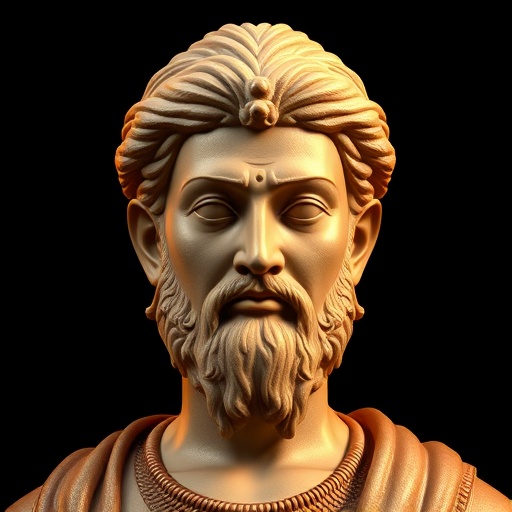
Mahavira — "The path of purification is the path of liberation."
The path of purification is the path of liberation.
The path of purification is the path of liberation.
Click any product to generate a realistic preview. Up to 3 at a time.
* Initial load can take up to 90 seconds — revising the preview in another color is nearly instant.
"Conquer your passions and you will conquer the world."
"Attachment leads to bondage; detachment leads to liberation."
"The first step towards liberation is non-violence."
"The essence of knowledge is to know the self."
"The soul is the only thing that is blissful; everything else is sorrowful."
24th and last Tirthankara of Jainism, whose teachings of strict ahimsa (non-violence), aparigraha (non-attachment), and karma reshaped ancient Indian religion. Closely associated with The Buddha (near-contemporary moral revolutionary, also reacting against Vedic ritualism). For an intellectual contrast, see Vedic Brahmanical ritual sacrifice, the animal-sacrifice-centered Vedic religion of his era — Mahavira's ahimsa demanded total non-violence, including not eating root vegetables that kill the plant — a maximum-distance ethical move from the Vedic priestly tradition that ritually sacrificed cattle and horses. The two cleanest poles of ancient Indian religious ethics.
Found in 1 providers: grok
1 source checked
Cleaning yourself of harmful actions, attachments, and accumulated karma is not separate from achieving true freedom — they are the same journey. Purification means stripping away ego, possessiveness, and violence (in thought, word, and deed), while liberation means escaping the endless cycle of rebirth. The two are inseparable: every act of genuine self-discipline and moral refinement is simultaneously a step toward total spiritual freedom from suffering and rebirth.
Mahavira renounced his royal life at age 30, spending 12 years in extreme asceticism — fasting, silence, enduring hardship — to purge karmic matter from his soul. He achieved Kevala Jnana (omniscience) and became the 24th Tirthankara. His entire life was a lived demonstration that rigorous self-purification through ahimsa, non-attachment, and moral discipline was both the method and the meaning of liberation — exactly what this quote declares.
Mahavira taught in 6th–5th century BCE India, during the Axial Age, when Vedic Brahmanism controlled spiritual authority through ritual sacrifice and priestly hierarchy. Liberation was seen as dependent on correct ritual performance, not personal moral effort. Mahavira's claim that individual purification — not sacrifices or caste birth — unlocks liberation was radical and democratizing, directly challenging a religious establishment that profited from controlling access to the divine through ceremony and inherited status.
AI-generated insights based on extensive research and information for context. Factual errors? Email [email protected].
Your cart is empty