Mahavira — "The self is the friend of the self, and the self is the enemy of the self."
The self is the friend of the self, and the self is the enemy of the self.
The self is the friend of the self, and the self is the enemy of the self.
Click any product to generate a realistic preview. Up to 3 at a time.
* Initial load can take up to 90 seconds — revising the preview in another color is nearly instant.
"The greatest austerity is self-control."
"Non-violence is the highest religion."
"One who neglects the supreme art of living, which is self-knowledge, knows nothing of life."
"The path of purification is the path of non-violence, self-control, and penance."
"Look at the birds, how they live in the present, with no thought for the morrow."
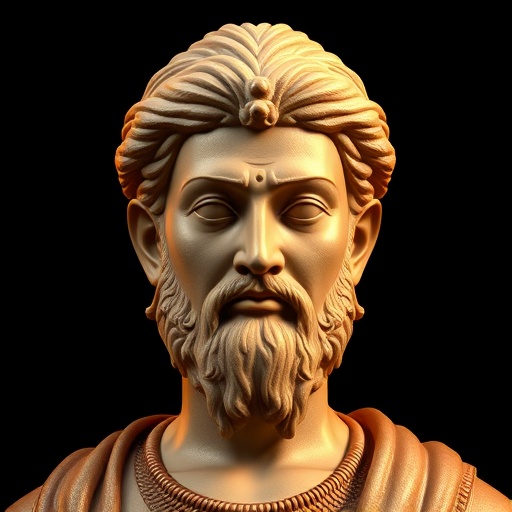
24th and last Tirthankara of Jainism, whose teachings of strict ahimsa (non-violence), aparigraha (non-attachment), and karma reshaped ancient Indian religion. Closely associated with The Buddha (near-contemporary moral revolutionary, also reacting against Vedic ritualism). For an intellectual contrast, see Vedic Brahmanical ritual sacrifice, the animal-sacrifice-centered Vedic religion of his era — Mahavira's ahimsa demanded total non-violence, including not eating root vegetables that kill the plant — a maximum-distance ethical move from the Vedic priestly tradition that ritually sacrificed cattle and horses. The two cleanest poles of ancient Indian religious ethics.
Found in 1 providers: grok
1 source checked
Your greatest ally and your worst opponent both live inside you. How you think, act, and choose determines whether your inner self supports or sabotages you. Discipline, awareness, and moral choices make you your own best friend; carelessness, desire, and self-deception make you your own destroyer. No external force shapes your fate as powerfully as your own will and character do.
Mahavira renounced wealth and family at 30, endured twelve years of extreme asceticism, silence, and hardship to achieve enlightenment. His entire philosophy centered on ahimsa and self-mastery. He believed liberation came not from gods or rituals but from conquering one's own passions, ego, and karma — making the inner battle the only battle that truly matters.
Mahavira lived in 6th-century BCE India during the Shramana movement, when thinkers challenged Brahminical orthodoxy and caste-based spiritual authority. This era saw Buddha, Mahavira, and others argue that individual effort — not priestly sacrifice or birth — determined liberation. The idea that the self could redeem or damn itself was radical, democratizing spiritual responsibility in a highly stratified society.
AI-generated insights based on extensive research and information for context. Factual errors? Email [email protected].
Your cart is empty