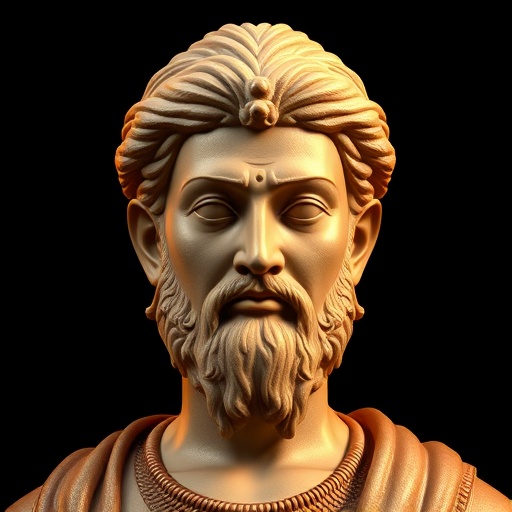
Mahavira — "The greatest austerity is self-control."
The greatest austerity is self-control.
The greatest austerity is self-control.
Click any product to generate a realistic preview. Up to 3 at a time.
* Initial load can take up to 90 seconds — revising the preview in another color is nearly instant.
"The greatest mistake of a man is to think that he is not a man."
"Every living being, great or small, possesses a soul."
"Conquer anger by forgiveness, pride by humility, deceit by straightforwardness, and greed by contentment."
"All men who are ignorant are miserable; all who are wise are happy."
"Respect for all living beings is Jainism."
24th and last Tirthankara of Jainism, whose teachings of strict ahimsa (non-violence), aparigraha (non-attachment), and karma reshaped ancient Indian religion. Closely associated with The Buddha (near-contemporary moral revolutionary, also reacting against Vedic ritualism). For an intellectual contrast, see Vedic Brahmanical ritual sacrifice, the animal-sacrifice-centered Vedic religion of his era — Mahavira's ahimsa demanded total non-violence, including not eating root vegetables that kill the plant — a maximum-distance ethical move from the Vedic priestly tradition that ritually sacrificed cattle and horses. The two cleanest poles of ancient Indian religious ethics.
Found in 1 providers: grok
1 source checked
Real spiritual discipline isn't about physical endurance or ritual — it's about mastering yourself from within. Controlling your impulses, desires, anger, and ego is harder than any physical hardship. Inner restraint over thoughts and urges outweighs every external practice. True self-mastery — governing what you want, say, and feel — is the most demanding and worthwhile form of discipline any person can pursue.
Mahavira spent 12 years in silent, naked asceticism — fasting for weeks, enduring weather and pain without reacting. Yet the Jain doctrine he founded holds that mastering the four passions — anger, pride, deceit, and greed — matters more than physical feats. Having renounced royal life and taken the Five Great Vows, Mahavira lived this conviction: conquering one's inner life, not the body's endurance, defines spiritual liberation.
In 6th-century BCE India, competing ascetic movements practiced extreme physical mortification — prolonged fasting, exposure to harsh elements, motionless standing — believing bodily suffering burned karma. Brahmin priests simultaneously held religious power through elaborate sacrifice rituals. Mahavira's claim that inner self-mastery trumps external hardship challenged both ritual religion and punishment-based asceticism, defining Jainism as a path of disciplined consciousness over competitive bodily suffering during this Axial Age of parallel philosophical revolutions worldwide.
AI-generated insights based on extensive research and information for context. Factual errors? Email [email protected].
Your cart is empty