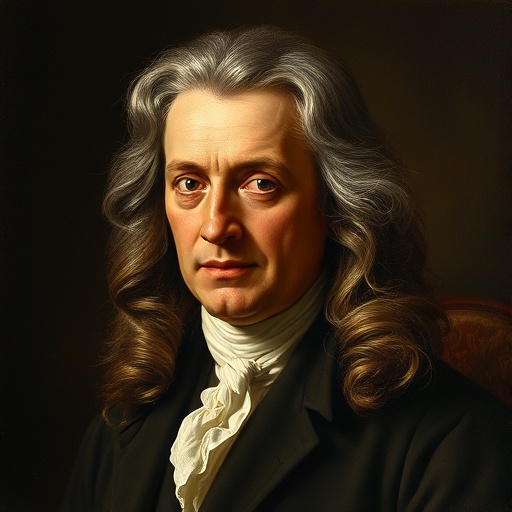
Isaac Newton — "For it is the property of true philosophy to deduce the causes of all natural ef…"
For it is the property of true philosophy to deduce the causes of all natural effects from the simplest possible principles.
For it is the property of true philosophy to deduce the causes of all natural effects from the simplest possible principles.
Click any product to generate a realistic preview. Up to 3 at a time.
* Initial load can take up to 90 seconds — revising the preview in another color is nearly instant.
"What goes up must come down."
"The power of gravity is of such a nature as to penetrate to the very centres of the sun and planets, without suffering the least diminution of its force."
"To me there has never been a higher source of earthly honor or distinction than that connected with advances in science."
"The motions which the planets now have could not spring from any natural cause alone, but were impressed by an intelligent Agent."
"The attractive force of the earth acts to the greatest distance, and is observed in the fall of the moon, which is continually drawn towards the earth."
Found in 1 providers: grok
1 source checked
True science works by finding the fewest, simplest underlying principles that explain the widest range of natural events. Rather than inventing elaborate explanations for each phenomenon separately, good philosophy hunts for minimal root causes whose consequences ripple outward to account for everything. Complexity in nature is an illusion hiding deeper simplicity. The goal is parsimony: one unified framework, not a patchwork of ad hoc stories.
Newton lived this principle: his three laws of motion and one law of universal gravitation unified falling apples, ocean tides, orbiting planets, and pendulum swings into a single mathematical system. His Principia Mathematica (1687) achieved exactly what the quote describes — deriving an enormous range of natural effects from a compact set of axioms. He viewed God's creation as inherently orderly, believing simplicity in principle reflected divine rational design.
The 17th century was fracturing Aristotle's authority. Natural philosophers debated competing frameworks — Descartes' mechanical vortices, alchemical traditions, Leibniz's monads — each multiplying explanatory entities. Newton's era demanded a methodological revolution: replace qualitative, purpose-driven accounts with mathematical laws derivable from minimal assumptions. His quote was a manifesto against hypothesis-stacking, echoing Ockham's razor but weaponizing it for empirical science at the height of the Scientific Revolution.
AI-generated insights based on extensive research and information for context. Factual errors? Email [email protected].
Your cart is empty