What it means
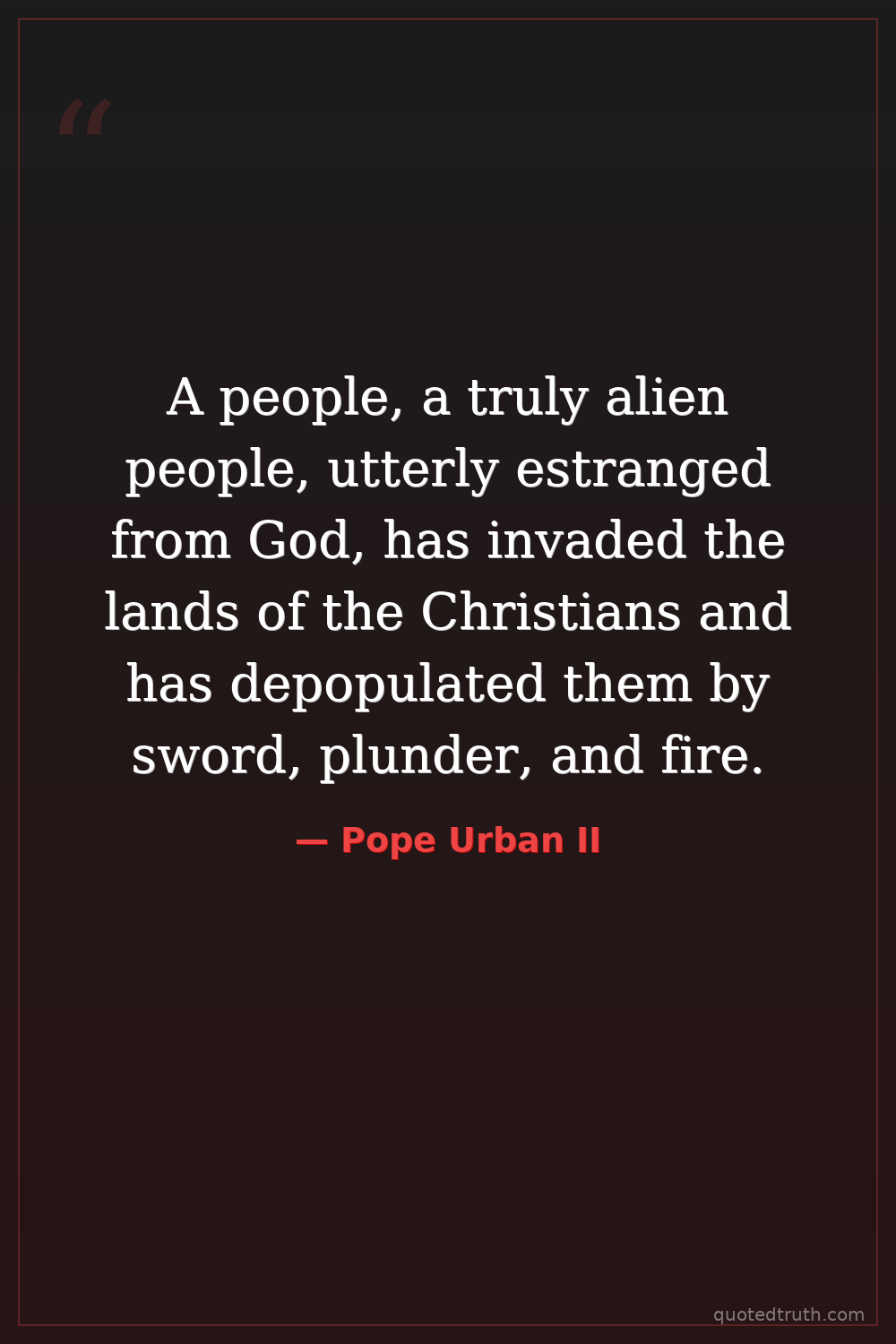
Urban II is describing Muslim forces—specifically Seljuk Turks—as a godless foreign people who have invaded Christian lands and devastated them through warfare, pillaging, and burning. He frames the situation as a religious and civilizational emergency: an alien enemy utterly opposed to Christianity has laid waste to Christian communities. The language is deliberately inflammatory, casting the conflict as a holy war against invaders who have no rightful place among God's people.
Relevance to Pope Urban II
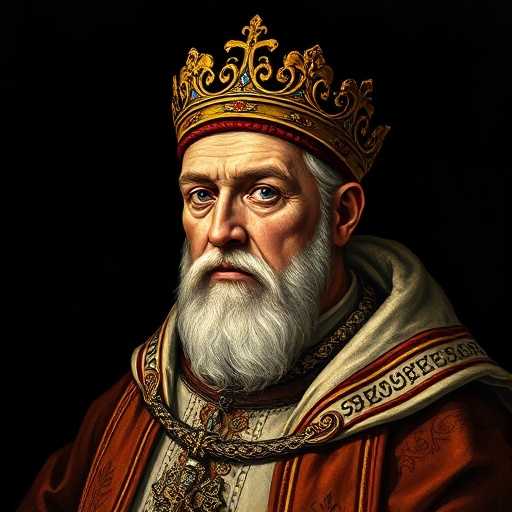
Urban II, a French-born Cluniac monk turned pope, built his papacy on Gregorian reform and strengthening papal authority over secular rulers. His speech at Clermont in 1095 was the culmination of his political theology: Christendom as one unified body under Rome's leadership, obligated to defend itself. The dehumanizing framing—'alien,' 'estranged from God'—reflects his deliberate rhetoric strategy, designed to unify fractious European knights by defining a common enemy and a divine mandate.
The era
The Seljuk Turks had crushed the Byzantine army at Manzikert in 1071, seizing Anatolia and threatening Constantinople. Emperor Alexios I desperately appealed to Rome for aid. Meanwhile, European nobility was mired in constant feudal warfare. Urban saw an opportunity: redirect knightly violence outward, recover Jerusalem from Seljuk control, and potentially reunite Eastern and Western Christianity after the Great Schism of 1054. His Clermont speech ignited a continent and launched the First Crusade.
AI-generated insights based on extensive research and information for context. Factual errors? Email [email protected].