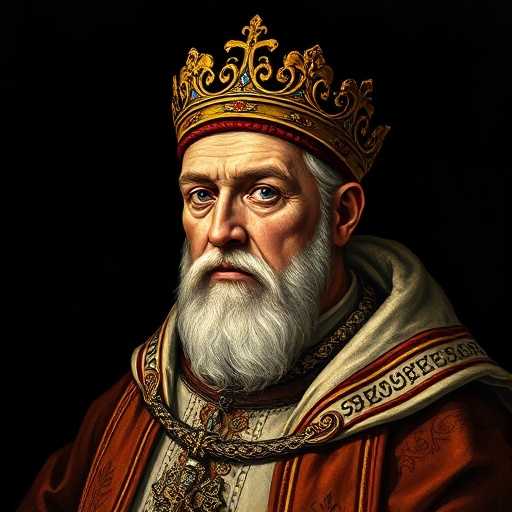
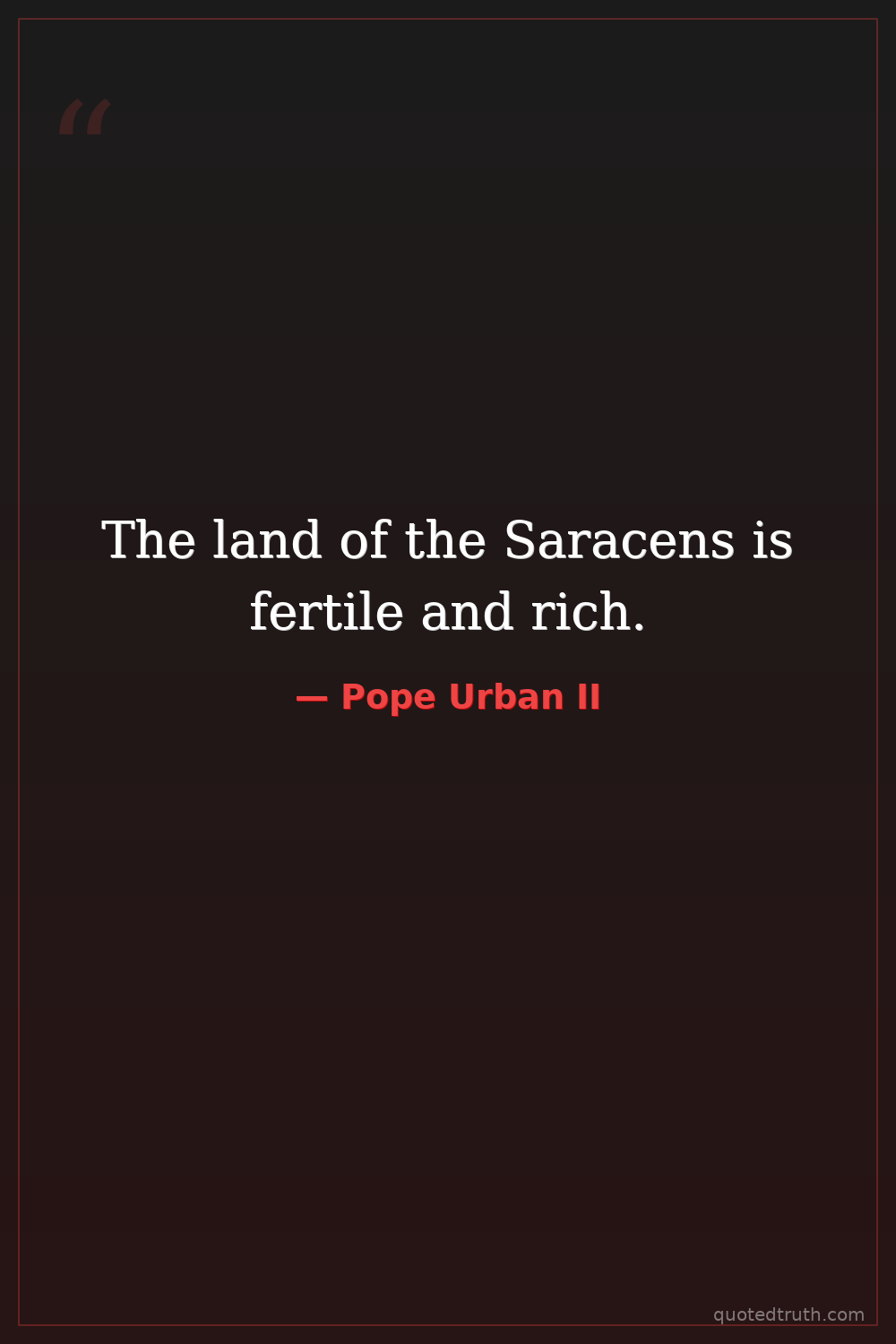
Pope Urban II — "The land of the Saracens is fertile and rich."
The land of the Saracens is fertile and rich.
The land of the Saracens is fertile and rich.
Click any product to generate a realistic preview. Up to 3 at a time.
* Initial load can take up to 90 seconds — revising the preview in another color is nearly instant.
"All who die by the way, whether by land or by sea, or in battle against the pagans, shall have immediate remission of sins."
"You will wear the sign of the cross on your garments, as a pledge of your immovable vow, and you will wear it until you return."
"It is Jesus Christ Himself who leaves His Sepulcher and presents to you His Cross. It will be the sign that will unite the dispersed children of Israel. Raise it to your shoulders and place it on your…"
"The holy city of Jerusalem is now held captive by the enemies of God."
"Let those who have been hired as mercenaries for trivial pay, now earn an eternal reward."
Pope (1088-1099) whose Council of Clermont speech (November 1095) launched the First Crusade — the founding event of nine centuries of Christian-Muslim military conflict. Closely associated with Pope Gregory VII (his predecessor on papal-imperial reform). For an intellectual contrast, see Saladin, Kurdish-Muslim Sultan of Egypt and Syria (1138-1193) — Saladin recaptured Jerusalem in 1187, undoing the First Crusade Urban II launched 92 years earlier. Saladin's chivalrous treatment of Christian prisoners became the canonical Muslim counter-image to Crusader brutality. The cleanest before/after pairing of the Crusades' moral arc.
Speech at the Council of Clermont, as recorded by Robert the Monk
Date: 1095
Social & RacialFound in 1 providers: grok
1 source checked
This land is abundant and worth having — fertile soil, productive resources, real wealth waiting to be claimed. It frames conquest as practical gain, not just sacrifice. The audience is being told the destination rewards the journey, that those who go will find prosperity, not barren wilderness. It reframes holy war as something with earthly payoff alongside spiritual merit.
Urban II was a Cluniac monk and reformist pope who understood that rallying feudal lords required appealing to material ambition, not just piety. When he preached at Clermont in 1095, he deliberately framed the Holy Land as both spiritually imperative and economically rewarding, knowing European nobility needed tangible incentives. This reflects his political acumen — he was mobilizing armies, not just souls.
In 1095 Europe, land was everything — wealth, power, and status flowed from soil ownership. Lesser nobles and younger sons had no inheritance and no prospects. The Crusade offered land in a distant, reportedly rich territory. Meanwhile, Seljuk Turks controlled formerly Byzantine Christian lands, making the 'fertile Saracen land' framing politically potent and economically irresistible to an audience hungry for opportunity.
AI-generated insights based on extensive research and information for context. Factual errors? Email [email protected].
Your cart is empty