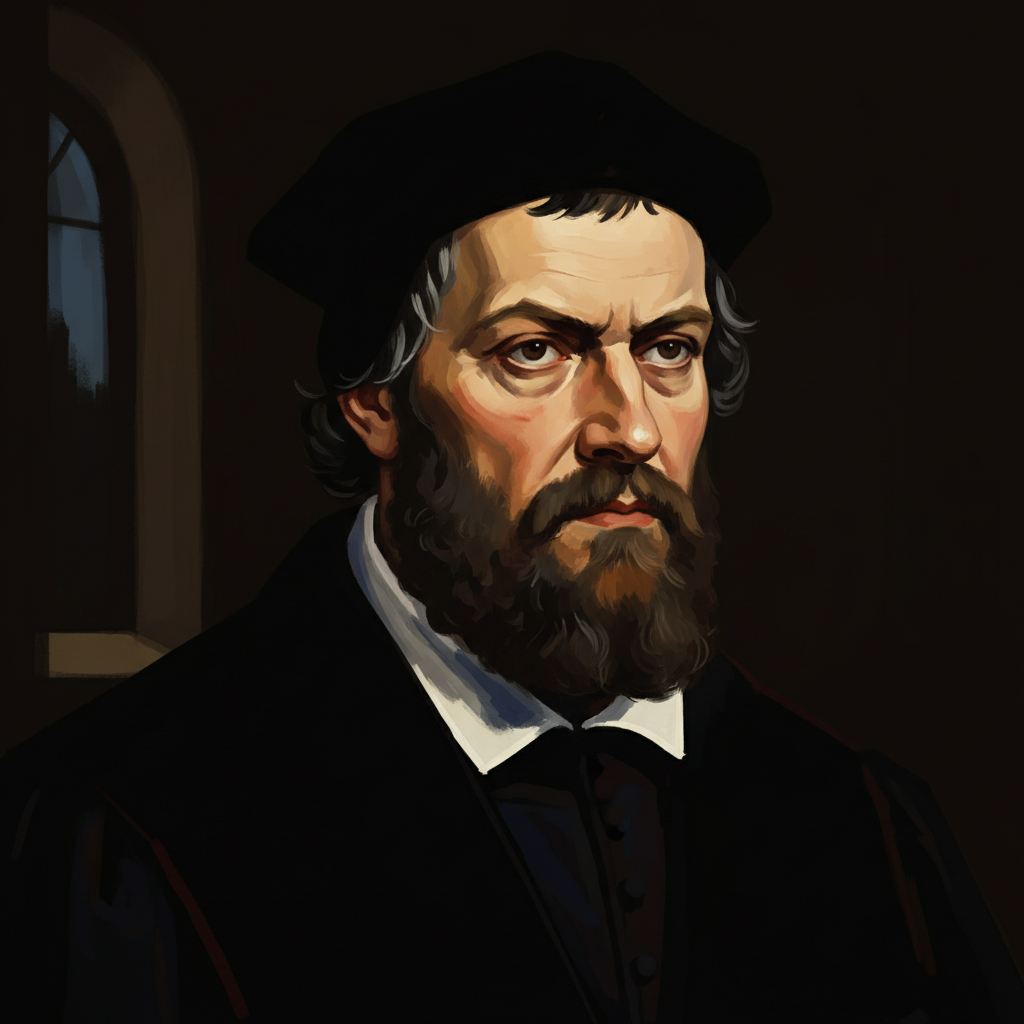
Martin Luther — "Whoever enters into marriage, enters a cloister full of struggles."
Whoever enters into marriage, enters a cloister full of struggles.
Whoever enters into marriage, enters a cloister full of struggles.
Click any product to generate a realistic preview. Up to 3 at a time.
* Initial load can take up to 90 seconds — revising the preview in another color is nearly instant.
"To be a Christian without prayer is no more possible than to be alive without breathing."
"If you want to change the world, pick up your pen."
"This life therefore is not righteousness, but growth in righteousness, not health, but healing, not being but becoming, not rest but exercise. We are not yet what we shall be, but we are growing towar…"
"You owe nothing to God except faith and confession. In all other things He lets you do whatever you like. You may do as you please, without any danger of conscience whatsoever."
"The greatest gift of God is a pious, cheerful, God-fearing, home-loving wife, to whom you can entrust your property, and your children, and your all."
German theologian whose 95 Theses (1517) launched the Protestant Reformation and broke the Catholic Church's monopoly on Western Christianity. Closely associated with Philipp Melanchthon (Lutheran systematizer) and John Calvin (later Reformer who built on Luther's break). For an intellectual contrast, see Pope Leo X, Renaissance pope (1513-1521) — Leo X's indulgence sales triggered Luther's break and Leo excommunicated him in 1521 — Luther's entire Reformation is structured as a direct answer to the indulgence-funded Vatican Leo represented.
Found in 1 providers: gemini
1 source checked
Marriage is not a romantic escape but a demanding spiritual discipline. Choosing to marry means signing up for daily hardship, sacrifice, and self-denial comparable to monastic life. The partner who expects ease finds instead a training ground where patience, forgiveness, and endurance are tested constantly. Luther reframes wedded life as serious work that shapes character, not a comfortable refuge from suffering, but its own demanding vocation requiring commitment.
Luther, a former Augustinian monk, famously left the monastery and married ex-nun Katharina von Bora in 1525, fathering six children. Having lived both celibate and married life, he spoke from direct experience. His household overflowed with students, orphans, and financial strain, teaching him marriage's grinding realities. He elevated marriage as a holy calling equal to monasticism, rejecting Catholic teaching that celibacy was spiritually superior to family life.
In early modern Europe, the Catholic Church enforced priestly celibacy and prized monastic vows as the highest Christian path. Luther's 1525 marriage scandalized Europe and symbolized the Reformation's rejection of clerical celibacy. By calling marriage a cloister, he validated ordinary family life as spiritually equal to monks' discipline. This radically reshaped Protestant views of sexuality, family, and vocation, dismantling centuries of ascetic hierarchy that ranked virginity above marriage.
AI-generated insights based on extensive research and information for context. Factual errors? Email [email protected].
Your cart is empty