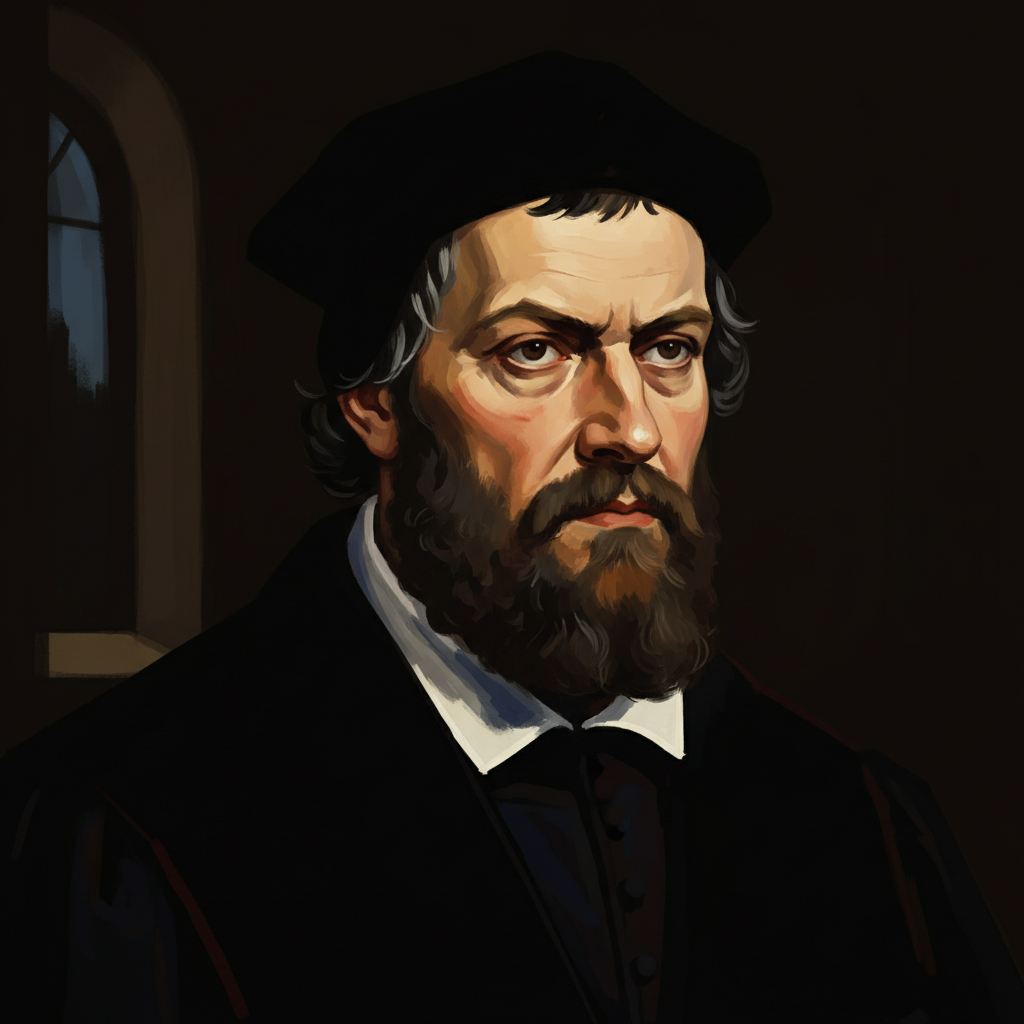
Martin Luther — "The greatest gift of God is a pious, cheerful, God-fearing, home-loving wife, to…"
The greatest gift of God is a pious, cheerful, God-fearing, home-loving wife, to whom you can entrust your property, and your children, and your all.
The greatest gift of God is a pious, cheerful, God-fearing, home-loving wife, to whom you can entrust your property, and your children, and your all.
Click any product to generate a realistic preview. Up to 3 at a time.
* Initial load can take up to 90 seconds — revising the preview in another color is nearly instant.
"The more you read the Bible, the more you will love it; the more you love it, the more you will read it."
"For I know One who suffered and made satisfaction on my behalf. His name is Jesus Christ, Son of God, and where He is there I shall be also!"
"The Jews are a heavy burden, a plague, a pestilence, a sheer misfortune for our country."
"A flail, an ax, a hoe, a spade be put into their hands so young, strong Jews and Jewesses could earn their bread in the sweat of their brow."
"The dog is the most faithful of animals and would be much esteemed were it not so common. Our Lord God has made His greatest gifts the commonest."
German theologian whose 95 Theses (1517) launched the Protestant Reformation and broke the Catholic Church's monopoly on Western Christianity. Closely associated with Philipp Melanchthon (Lutheran systematizer) and John Calvin (later Reformer who built on Luther's break). For an intellectual contrast, see Pope Leo X, Renaissance pope (1513-1521) — Leo X's indulgence sales triggered Luther's break and Leo excommunicated him in 1521 — Luther's entire Reformation is structured as a direct answer to the indulgence-funded Vatican Leo represented.
Found in 1 providers: grok
1 source checked
Luther is saying the most valuable blessing a man can receive is a devout, good-natured, morally grounded wife who loves her household. Such a partner is trustworthy enough that you can hand over everything you own, the raising of your children, and your entire future to her care without worry. In plain terms, a faithful spouse who anchors the home is worth more than any material wealth.
Luther left monastic celibacy to marry former nun Katharina von Bora in 1525, and their household became a model for Protestant clergy marriage. Katharina managed their large Wittenberg estate, finances, brewery, and six children while Luther traveled and wrote. He repeatedly praised her in his Table Talk, calling her his 'Lord Katie,' and this quote mirrors the domestic partnership he personally championed against Rome's celibacy mandate.
In early modern Europe, Catholic doctrine required priestly celibacy and ranked virginity above marriage spiritually. Luther's Reformation (post-1517) radically revalued marriage as a divine calling equal to or greater than monasticism. Reformers dissolved convents, married former nuns, and elevated the household as the primary site of Christian formation. Economic survival also depended on a capable wife managing property, servants, and children during an age of plague, war, and no social safety net.
AI-generated insights based on extensive research and information for context. Factual errors? Email [email protected].
Your cart is empty