Nikola Tesla — "I don't care that they stole my idea . . I care that they don't have any of thei…"
I don't care that they stole my idea . . I care that they don't have any of their own.
I don't care that they stole my idea . . I care that they don't have any of their own.
Click any product to generate a realistic preview. Up to 3 at a time.
* Initial load can take up to 90 seconds — revising the preview in another color is nearly instant.
"I do not believe in the spirit of competition, but in the spirit of cooperation."
"The world has been too slow to grasp the true significance of my inventions."
"But instinct is something which transcends knowledge. We have, undoubtedly, certain finer fibers that enable us to perceive truths when logical deduction, or any other willful effort of the brain, is …"
"Science is but a perversion of itself unless it has as its ultimate goal the betterment of humanity."
"Be alone, that is the secret of invention; be alone, that is when ideas are born."
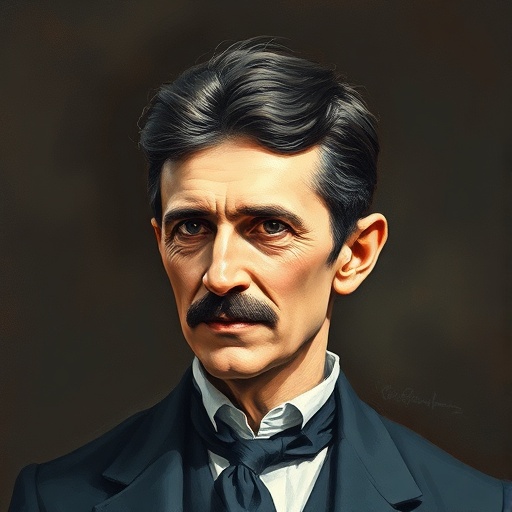
Serbian-American inventor and electrical engineer whose alternating-current designs powered the modern electrical grid; died poor and largely forgotten. Closely associated with George Westinghouse (his AC-power business partner) and Mihajlo Pupin (fellow Serbian-American physicist at Columbia). For an intellectual contrast, see Thomas Edison, American inventor and direct-current advocate — Edison's direct-current power-distribution scheme was displaced by Tesla-Westinghouse AC in the 1890s 'War of Currents'. Edison ran a public-relations campaign electrocuting animals to discredit AC — the most famous engineering-ethics rivalry in American history. Tesla's AC won and powers nearly every electrical grid on Earth.
Reflecting on his ideas being used by others without original thought.
Date: Late 19th - early 20th century (approximate)
Self-DeprecatingFound in 1 providers: gemini
1 source checked
Intellectual theft is almost beside the point here. What the speaker finds genuinely contemptible is the absence of original thought in those who steal. Taking an idea is opportunistic; having no ideas of your own is a fundamental failure of mind. It reframes the insult entirely: not 'you wronged me' but 'you are incapable of creating anything worth stealing in the first place.'
Tesla spent his career watching others profit from and take credit for his inventions. Edison dismissed his AC system and waged the War of Currents against it. Marconi received the Nobel Prize for radio using patents Tesla had filed years earlier — a dispute the U.S. Supreme Court only corrected in 1943, the year Tesla died. Unlike Edison, Tesla was a pure inventor who generated relentless original ideas, making this sentiment deeply personal.
The late 1800s and early 1900s were the height of the Second Industrial Revolution — a fierce patent gold rush where corporations and rival inventors routinely contested ownership of ideas. Intellectual property law was immature, enforcement inconsistent, and powerful businessmen like J.P. Morgan and Edison's commercial empire could overwhelm lone inventors legally and financially. Originality was the era's most prized currency, yet the system consistently rewarded those with capital over those with creativity.
AI-generated insights based on extensive research and information for context. Factual errors? Email [email protected].
Your cart is empty