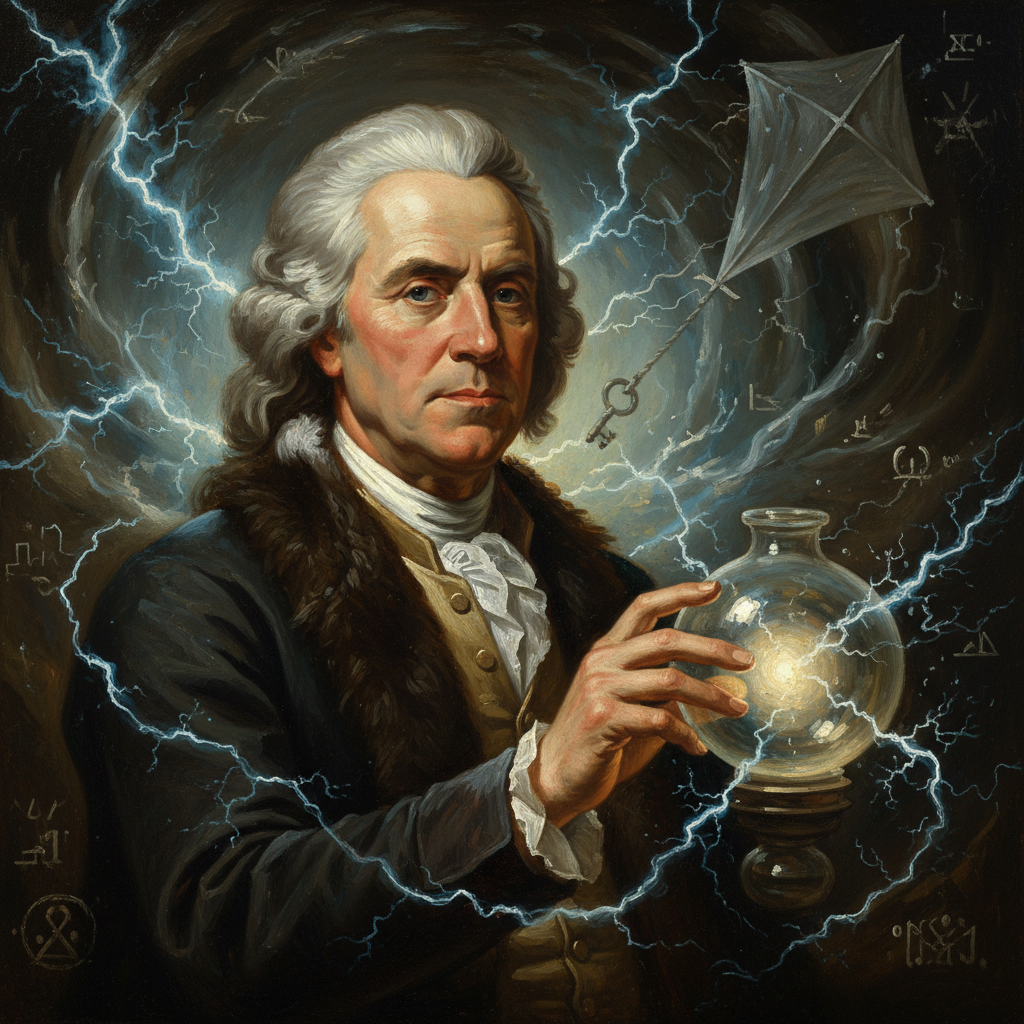
Benjamin Franklin — "He that has a Trade, has an Office of Profit and Pleasure."
He that has a Trade, has an Office of Profit and Pleasure.
He that has a Trade, has an Office of Profit and Pleasure.
Click any product to generate a realistic preview. Up to 3 at a time.
* Initial load can take up to 90 seconds — revising the preview in another color is nearly instant.
"God heals, and the doctor takes the fees."
"Creditors have better memories than debtors."
"Search others for their virtues, thy self for thy vices."
"I should have no objection to a repetition of the same life from its beginning, only asking the advantages authors have in a second edition to correct some faults of the first."
"Fish and visitors stink after three days."
Polymath Founding Father, diplomat, and Poor Richard's Almanack author who helped draft the Declaration of Independence and the Constitution. Closely associated with John Adams (fellow Founder, Massachusetts statesman) and Thomas Jefferson (fellow Declaration drafter). For an intellectual contrast, see Thomas Hutchinson, last royal governor of colonial Massachusetts — Franklin leaked Hutchinson's loyalist correspondence to Boston in 1772 to inflame revolutionary sentiment — Hutchinson represented the colonial-aristocrat crown-loyalty that Franklin's revolution was organized to dismantle.
Found in 1 providers: grok
1 source checked
Having a skilled trade or craft gives you both financial income and genuine personal satisfaction — equivalent to holding any prestigious position. The word 'Office' deliberately elevates trade to the level of a formal post or profession. The pairing of 'Profit and Pleasure' argues that skilled work isn't just about money; it provides purpose and enjoyment too. In modern terms: a marketable skill is both a reliable paycheck and a source of daily fulfillment.
Franklin started as a printer's apprentice at age 12, learning a trade before becoming one of America's most influential figures. His printing business in Philadelphia made him wealthy and gave him the platform to publish Poor Richard's Almanack. He consistently championed hard work, practical skill, and self-reliance as paths to independence. This quote mirrors his own biography: trade gave him both profit enough to retire early and lifelong intellectual pleasure.
In 18th-century colonial America, skilled trades were the primary engine of social mobility for ordinary people. The economy ran on craftsmen — printers, blacksmiths, cobblers, weavers — not corporations or white-collar professions. Class distinctions were real but porous; a skilled tradesman could achieve independence and respectability. Franklin's era celebrated the industrious self-made man, and the Protestant work ethic framed profitable, pleasurable labor as both morally virtuous and a sign of divine favor.
AI-generated insights based on extensive research and information for context. Factual errors? Email [email protected].
Your cart is empty