What it means
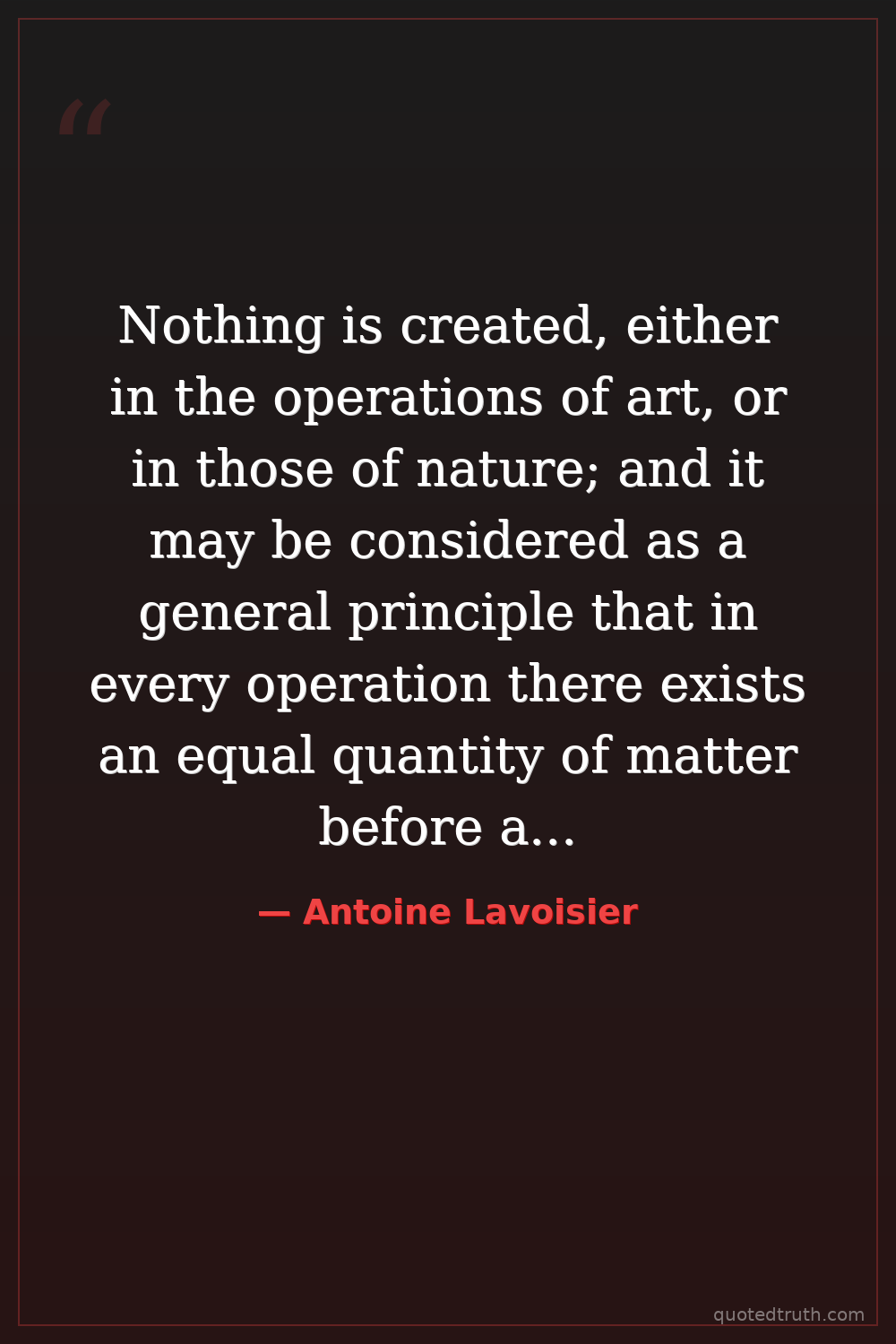
Matter cannot appear from nothing or vanish into nothing. Whether humans are performing a chemical procedure or nature is running its own processes, the total amount of stuff stays the same before and after. Things change form, combine, or break apart, but the underlying quantity of material is always conserved. This is the core idea of what we now call the law of conservation of mass.
Relevance to Antoine Lavoisier
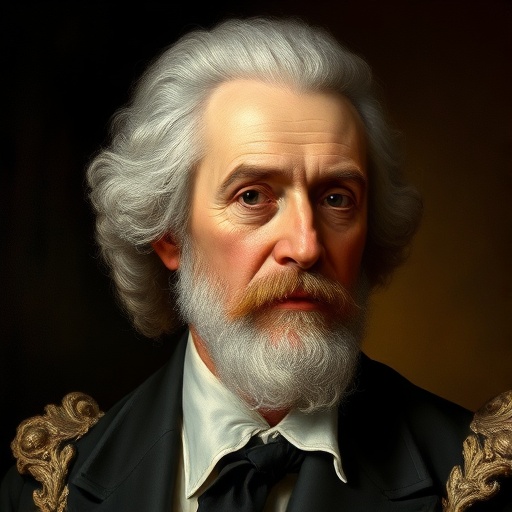
Lavoisier built modern chemistry on exactly this principle. By weighing reactants and products on precise balances, he overturned phlogiston theory and showed combustion was oxygen combining with matter, not a mystery substance escaping. His meticulous quantitative experiments, recorded with his wife Marie-Anne, made mass conservation the bedrock of chemical analysis. This quote distills his lifelong conviction that chemistry must be a rigorous, measurable science grounded in the bookkeeping of matter.
The era
In the late 1700s, chemistry was emerging from alchemy into a quantitative discipline. Phlogiston theory dominated until Lavoisier's experiments displaced it. The Enlightenment prized measurement, reason, and systematic classification, and Lavoisier helped reform chemical nomenclature alongside Fourcroy and Berthollet. He worked as a tax collector for the Ferme generale, which funded his lab but cost him his life at the guillotine in 1794 during the Reign of Terror of the French Revolution.
AI-generated insights based on extensive research and information for context. Factual errors? Email [email protected].