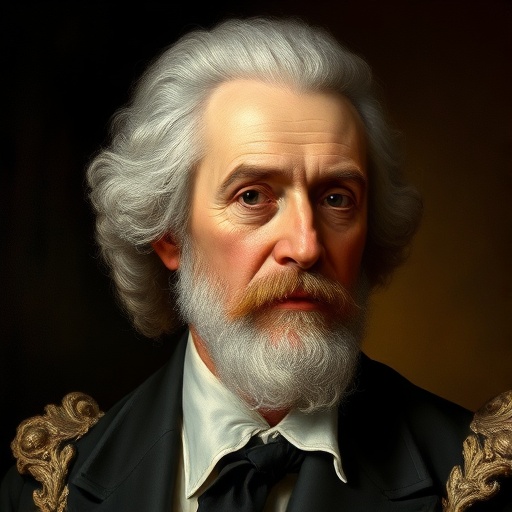
Antoine Lavoisier — "The value of a discovery consists not in its novelty, but in its truth."
The value of a discovery consists not in its novelty, but in its truth.
The value of a discovery consists not in its novelty, but in its truth.
Click any product to generate a realistic preview. Up to 3 at a time.
* Initial load can take up to 90 seconds — revising the preview in another color is nearly instant.
"To invent is to choose."
"The chemist, like the artist, must have a vivid imagination, but it must be controlled by reason."
"It is almost possible to predict one or two days in advance, within a rather broad range of probability, what the weather is going to be; it is even thought that it will not be impossible to publish d…"
"The operations of nature are always simple, and she avoids all unnecessary complexity."
"The desire to do good is the most powerful motive of all."
Found in 1 providers: grok
1 source checked
What makes a discovery genuinely valuable isn't how surprising or unprecedented it is, but whether it accurately reflects reality. Novelty grabs attention, but truth endures. A finding that correctly describes how the world works—even if unglamorous—matters far more than any spectacular but flawed claim. It's a call for intellectual honesty: rigor and accuracy should drive science, not the thrill of being first or sensational.
Lavoisier demolished the long-dominant phlogiston theory—widely accepted but fundamentally wrong—and replaced it with oxygen-based combustion chemistry. He pioneered rigorous quantitative measurement, insisting chemistry rest on verifiable, reproducible fact. His law of conservation of mass wasn't celebrated for novelty; it transformed science because it was provably true. He spent his career subordinating inherited speculation to careful experiment, embodying precisely the principle that accuracy and truthfulness outweigh the prestige of mere novelty.
In the late 18th century, the Enlightenment demanded reason and evidence over ancient authority, yet scientific culture was fiercely competitive—priority disputes over who discovered something first were common and reputationally decisive. Alchemical traditions and bold speculative theories like phlogiston still commanded respect. Lavoisier's insistence on truth over novelty was a deliberate counter to this environment, particularly in pre-Revolutionary France where dramatic claims attracted public acclaim and intellectual celebrity mattered as much as accuracy.
AI-generated insights based on extensive research and information for context. Factual errors? Email [email protected].
Your cart is empty