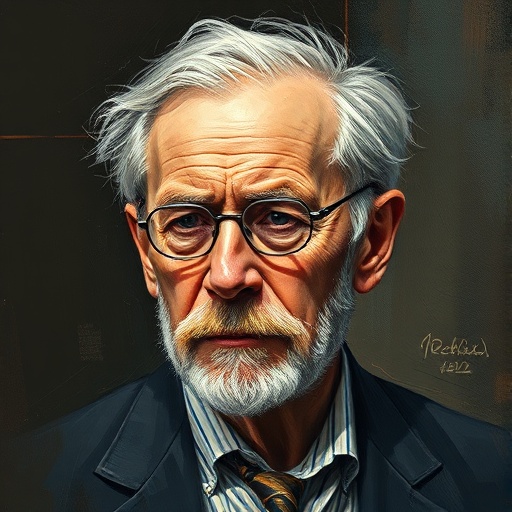
Erwin Schrodinger — "We are part of the world, and the world is part of us."
We are part of the world, and the world is part of us.
We are part of the world, and the world is part of us.
Click any product to generate a realistic preview. Up to 3 at a time.
* Initial load can take up to 90 seconds — revising the preview in another color is nearly instant.
"The more precisely the position is determined, the less precisely the momentum is known in this instant, and vice versa."
"We are thus faced with the following dilemma: either the cells of the organism contain a highly efficient 'memory' for all the details of previous events, or they are, in some mysterious way, able to …"
"I consider the idea of a personal God as being very childish. We must give up this idea."
"The world is not 'out there' independent of our consciousness. It is a construction of our minds."
"The only constant in life is change."
Austrian physicist who shared the 1933 Nobel for the wave equation that bears his name and the famous cat thought-experiment. Closely associated with Werner Heisenberg (matrix-mechanics rival who reached the same physics by different math) and Albert Einstein (his pen-pal on quantum interpretation). For an intellectual contrast, see Niels Bohr, Danish physicist and architect of the Copenhagen interpretation — Schrödinger's cat thought-experiment was specifically designed to ridicule Bohr's 'observer-dependent reality' reading of quantum mechanics — Schrödinger thought the Copenhagen interpretation was absurd; the cat was meant as reductio ad absurdum.
Found in 1 providers: grok
1 source checked
The boundary between observer and observed is an illusion. Humans are not separate spectators watching an external universe — we are woven into it, built from the same atoms, shaped by the same physical laws, embedded in the same continuum of cause and effect. The world shapes us through environment, biology, and gravity; we shape it through consciousness, intention, and the act of measurement itself. Separation between self and world is cognitive convenience, not physical truth.
Schrödinger's wave mechanics showed particles exist as probability waves spread through space, and the act of observation collapses that wave — making the observer inseparable from the observed. His 1944 book What is Life? argued living organisms obey quantum laws, bridging biology and physics. He was deeply shaped by Vedantic philosophy, which holds individual consciousness and universal reality are ultimately one — a conviction that directly underlies this statement.
Schrödinger worked during the 1920s–1940s quantum revolution, which dismantled the Newtonian picture of a clockwork universe of separate, independent objects. The Copenhagen interpretation established that observers cannot be removed from experiments. Einstein's relativity had dissolved absolute space and time. Philosophers and physicists debated what reality means when observation participates in creating it. The devastation of two World Wars also shattered any illusion of human separateness from the world's upheaval.
AI-generated insights based on extensive research and information for context. Factual errors? Email [email protected].
Your cart is empty