What it means
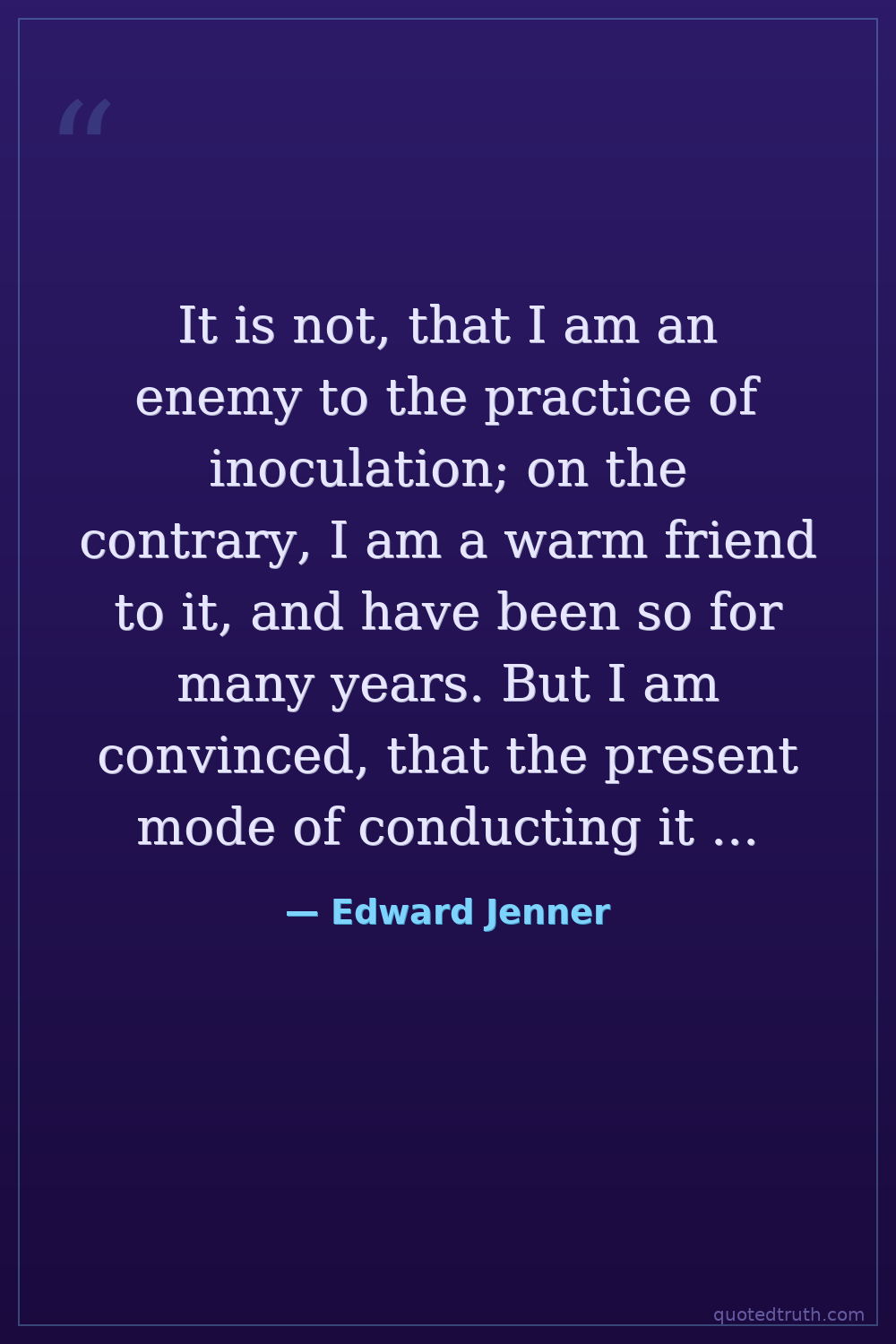
The speaker isn't opposed to inoculation — he's actually been a longtime advocate. But he argues the current method carries unnecessary risks and shortcomings. His point is that something can be sound in principle yet flawed in practice, and that honest criticism of a method you support is how progress happens. He's carving out a reformer's position: not rejection, not blind endorsement, but commitment to making the practice genuinely safer.
Relevance to Edward Jenner
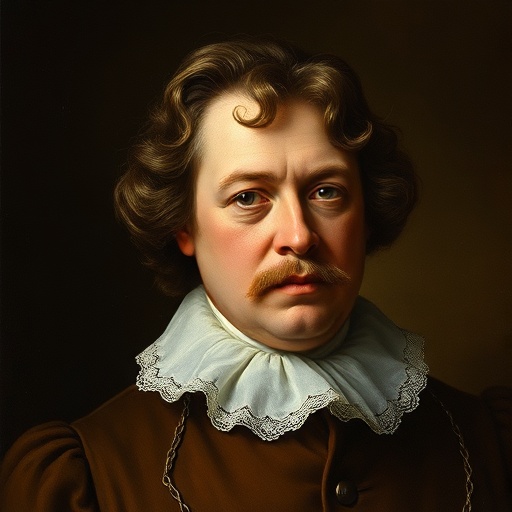
Jenner trained under surgeon John Hunter, who taught him to experiment rather than speculate. As a country doctor in Gloucestershire, he spent decades observing that milkmaids exposed to cowpox appeared immune to smallpox. His support for inoculation was real, but his scientific instincts pushed him toward a safer path. This quote captures his character precisely: measured, evidence-driven, loyal to the goal of disease prevention rather than to any particular technique achieving it.
The era
Variolation — deliberately infecting patients with live smallpox material — had been practiced in Britain since the 1720s, introduced from Ottoman Turkey via Lady Mary Wortley Montagu. It reduced mortality but carried genuine dangers: recipients could develop full smallpox, die, or spread it to others. By the 1790s, debate over its risks was sharp among physicians. Jenner wrote at the cusp of transformation — his cowpox experiments would soon offer a far safer alternative, vindicating exactly this critique.
AI-generated insights based on extensive research and information for context. Factual errors? Email [email protected].