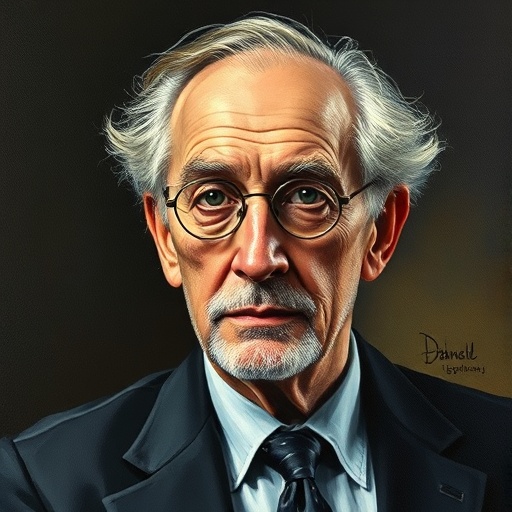
Francis Crick — "One of the most striking features of the universe is that it is so empty."
One of the most striking features of the universe is that it is so empty.
One of the most striking features of the universe is that it is so empty.
Click any product to generate a realistic preview. Up to 3 at a time.
* Initial load can take up to 90 seconds — revising the preview in another color is nearly instant.
"A theory that fits all the facts is bound to be wrong, as some of the facts will be wrong."
"The idea of a soul is a myth."
"The universe is a strange place."
"The central dogma of molecular biology."
"If, for example, a certain protein consistently appears in the urine of schizophrenics, one would be foolish not to take notice."
Found in 1 providers: grok
1 source checked
Despite the cosmos spanning billions of light-years, matter and energy are extraordinarily sparse — stars, planets, and galaxies occupy a vanishingly small fraction of space, while most of existence is vacuum. The counterintuitive reality is that something rather than nothing is the exception. The universe's overwhelming emptiness makes the concentration of matter into complex structures like galaxies, planets, and life all the more remarkable and improbable.
Crick began as a physicist, trained in radar research during WWII before pivoting to molecular biology. After co-discovering DNA's double helix with Watson in 1953, he spent decades at the Salk Institute studying consciousness. His worldview was rigorously materialist — life arises from physics and chemistry, not vital forces. This quote echoes that sensibility: the universe's emptiness makes the spontaneous self-organization of matter into molecules like DNA, and ultimately into life, all the more astonishing.
Crick's most productive years spanned the 1950s through 1990s, when cosmology radically expanded humanity's grasp of cosmic scale. The Big Bang theory solidified in the 1960s after Penzias and Wilson detected background radiation, the Space Race made void viscerally real, and astronomers mapped galaxy filaments separated by enormous empty voids. Particle physics also showed matter itself is mostly empty space. These discoveries made the universe's emptiness a measurable scientific fact, not mere philosophical musing.
AI-generated insights based on extensive research and information for context. Factual errors? Email [email protected].
Your cart is empty