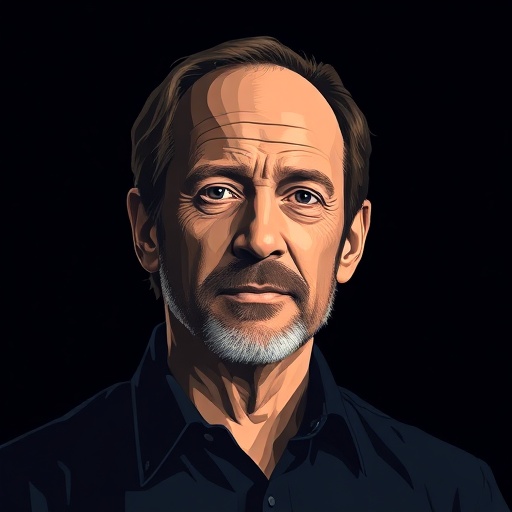
Tim Berners-Lee — "The web is not just for looking up information. It's for connecting people, coll…"
The web is not just for looking up information. It's for connecting people, collaborating, and creating new things.
The web is not just for looking up information. It's for connecting people, collaborating, and creating new things.
Click any product to generate a realistic preview. Up to 3 at a time.
* Initial load can take up to 90 seconds — revising the preview in another color is nearly instant.
"The web is too important to be left in the hands of a few powerful companies. We need to democratize it."
"The web is a tool for democracy, but it can also be used for dictatorship."
"I wish I had done more to make the web more resilient to abuse."
"The web is a place for everyone."
"I want the web to be a place where everyone can thrive, where everyone can learn, and where everyone can contribute."
British computer scientist who invented the World Wide Web at CERN in 1989 and founded the W3C, championing open web standards. Closely associated with Vint Cerf (TCP/IP co-creator and 'father of the internet') and Marc Andreessen (Mosaic browser creator and Netscape co-founder). For an intellectual contrast, see Mark Zuckerberg, Facebook (Meta) founder — Zuckerberg's walled-garden Facebook is the canonical contemporary opposite of Berners-Lee's open-web vision; Berners-Lee's Solid project and 'recapture the web' essays are explicitly written as a rebuttal to the platform-monopoly model Facebook pioneered.
Found in 1 providers: grok
1 source checked
The web's purpose extends beyond passive information retrieval. It is fundamentally a platform for human connection, joint effort across distances, and the generation of entirely new ideas, products, and communities. It is an active medium where people participate rather than merely consume, transforming how society communicates, works together, and builds things that could not exist without shared digital infrastructure.
Berners-Lee invented the web in 1989 at CERN specifically to solve a collaboration problem among scientists sharing research. He deliberately made it royalty-free so anyone could build on it. His W3C leadership and later Web Foundation advocacy focused on openness and accessibility, not commerce. His vision was always participatory: the original WorldWideWeb browser could both read and edit pages.
Berners-Lee developed the web during the early 1990s when the internet existed but remained largely academic and government-controlled. As the commercial web emerged mid-decade, critics and corporations framed it primarily as a distribution channel for content. His statement pushed back against passive consumption models, anticipating Web 2.0 social collaboration, open-source movements, and the participatory culture that defined the 2000s internet.
AI-generated insights based on extensive research and information for context. Factual errors? Email [email protected].
Your cart is empty