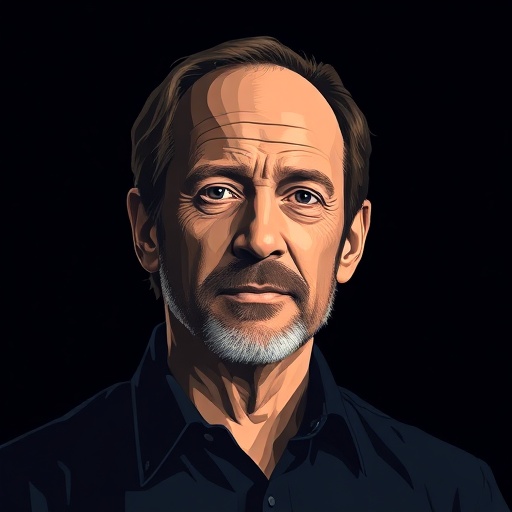
Tim Berners-Lee — "I want the web to be a place where everyone can thrive, where everyone can learn…"
I want the web to be a place where everyone can thrive, where everyone can learn, and where everyone can contribute.
I want the web to be a place where everyone can thrive, where everyone can learn, and where everyone can contribute.
Click any product to generate a realistic preview. Up to 3 at a time.
* Initial load can take up to 90 seconds — revising the preview in another color is nearly instant.
"I never thought the web would grow to be this big. It's amazing."
"The web was supposed to be a tool for liberation, but it's becoming a tool for oppression."
"The original idea of the web was that it should be a collaborative space where you can communicate through sharing information."
"Solid is a platform that will allow users to store their data in a personal online data store, and then grant access to that data to different applications."
"We need to protect the web from censorship and surveillance. It's a vital tool for freedom of expression."
British computer scientist who invented the World Wide Web at CERN in 1989 and founded the W3C, championing open web standards. Closely associated with Vint Cerf (TCP/IP co-creator and 'father of the internet') and Marc Andreessen (Mosaic browser creator and Netscape co-founder). For an intellectual contrast, see Mark Zuckerberg, Facebook (Meta) founder — Zuckerberg's walled-garden Facebook is the canonical contemporary opposite of Berners-Lee's open-web vision; Berners-Lee's Solid project and 'recapture the web' essays are explicitly written as a rebuttal to the platform-monopoly model Facebook pioneered.
Found in 1 providers: grok
1 source checked
The statement expresses a vision of the internet as an open, equitable space that benefits all people rather than a privileged few. It calls for universal access where users can grow, gain knowledge, and actively shape the platform instead of passively consuming it. The emphasis on thriving, learning, and contributing reframes the web as a participatory commons centered on human flourishing, education, and shared creation rather than profit, gatekeeping, or one-way broadcast.
Berners-Lee invented the World Wide Web in 1989 at CERN and famously chose not to patent it, releasing the protocols royalty-free so anyone could build on them. He founded the W3C to keep web standards open and later launched the Web Foundation and Solid project to fight surveillance capitalism and return data control to users. This quote distills his lifelong conviction that the web must remain a public good empowering ordinary people, not a closed corporate enclosure.
By the 2010s and 2020s, Berners-Lee's original open web was fracturing under platform monopolies, algorithmic gatekeeping, misinformation, and pervasive tracking. A handful of giants captured attention, advertising, and user data, while billions remained offline or digitally marginalized. Net neutrality fights, GDPR, and debates over AI training data underscored anxieties about who controls the network. His call to thrive, learn, and contribute pushes back against that consolidation, echoing renewed movements for digital rights, decentralization, and universal connectivity.
AI-generated insights based on extensive research and information for context. Factual errors? Email [email protected].
Your cart is empty