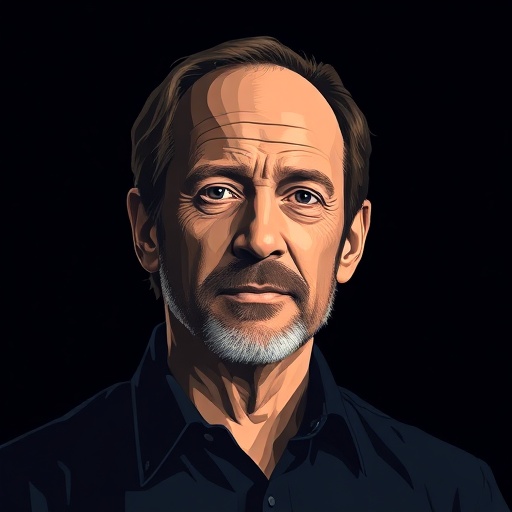
Tim Berners-Lee — "I wish I had done more to make the web more resilient to abuse."
I wish I had done more to make the web more resilient to abuse.
I wish I had done more to make the web more resilient to abuse.
Click any product to generate a realistic preview. Up to 3 at a time.
* Initial load can take up to 90 seconds — revising the preview in another color is nearly instant.
"The web is not just a technology; it's a social construct. We need to think about its social implications."
"The web is a collaborative project, and we all have a role to play in its future."
"I'm optimistic that Solid can help to fix the web and make it a better place for everyone."
"The web should be a place where everyone can participate equally."
"The web is a global public good. We need to protect it."
British computer scientist who invented the World Wide Web at CERN in 1989 and founded the W3C, championing open web standards. Closely associated with Vint Cerf (TCP/IP co-creator and 'father of the internet') and Marc Andreessen (Mosaic browser creator and Netscape co-founder). For an intellectual contrast, see Mark Zuckerberg, Facebook (Meta) founder — Zuckerberg's walled-garden Facebook is the canonical contemporary opposite of Berners-Lee's open-web vision; Berners-Lee's Solid project and 'recapture the web' essays are explicitly written as a rebuttal to the platform-monopoly model Facebook pioneered.
Found in 1 providers: grok
1 source checked
The speaker regrets not building stronger safeguards against misuse into their creation from the start. They acknowledge that what they made, though intended for good, became a vehicle for harm—misinformation, surveillance, manipulation, abuse—and wish they had anticipated these dangers and engineered protections against them before releasing it into the world.
Berners-Lee invented the World Wide Web in 1989 at CERN, releasing it freely without patent. He spent subsequent decades through the World Wide Web Consortium and his Contract for the Web campaigning to fix structural harms he didn't foresee: algorithmic radicalization, data exploitation, and platform monopolization. This regret is central to his public mission in later career.
Berners-Lee made this reflection amid growing 2010s-2020s reckoning with tech's social harms—Cambridge Analytica, election interference, cyberbullying epidemics, and surveillance capitalism. Policymakers worldwide began regulating platforms as society absorbed the web's dark externalities, making a founder's candid regret both culturally resonant and historically significant.
AI-generated insights based on extensive research and information for context. Factual errors? Email [email protected].
Your cart is empty