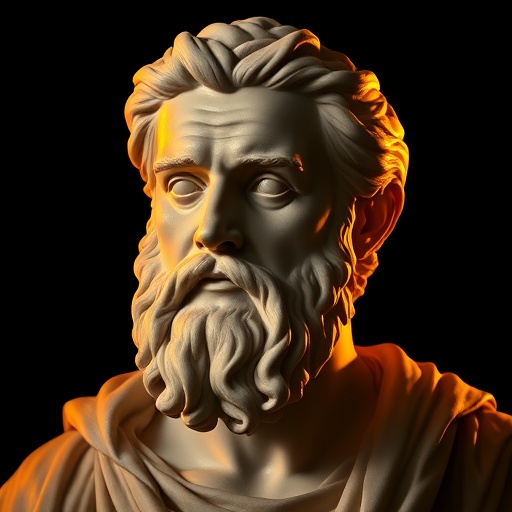
Hippocrates — "He who wishes to be a surgeon should go to war."
He who wishes to be a surgeon should go to war.
He who wishes to be a surgeon should go to war.
Click any product to generate a realistic preview. Up to 3 at a time.
* Initial load can take up to 90 seconds — revising the preview in another color is nearly instant.
"If a man takes a bath, and has a fever, and afterward he has a chill, that is bad."
"The soul is the same in all living creatures, although the body of each is different."
"The greatest medicine of all is to teach people how not to need it."
"It is well to be up before daybreak, for such habits contribute to health, wealth, and wisdom."
"The art of healing comes from nature, not from the physician."
Found in 1 providers: grok
1 source checked
Practical, high-volume experience under extreme conditions is the only real teacher for a surgeon. War produces catastrophic injuries at a pace and complexity impossible to replicate in civilian life, forcing rapid decisions, improvisation, and technical skill under pressure. Classroom learning and routine cases cannot prepare you for the hardest challenges. True surgical mastery comes from immersion in the worst possible circumstances, where every lesson is paid for in lives.
Hippocrates built medicine on rigorous clinical observation, rejecting supernatural explanations in favor of what physicians could directly witness and learn. He lived during the Peloponnesian War and treated wounded soldiers, gaining firsthand exposure to severe trauma. His Hippocratic Corpus includes detailed surgical texts on wounds and fractures. This quote perfectly mirrors his core belief: experience is the supreme teacher, and the physician who avoids difficult cases will never develop real skill.
Fifth-century Greece was defined by near-constant warfare — the Persian invasions and the decades-long Peloponnesian War between Athens and Sparta produced staggering casualties. Battlefield medicine was primitive: surgeons removed arrows, drained wounds, and amputated limbs without anesthesia or knowledge of infection. War was also the primary context in which medicine proved its worth publicly, competing against temple priests and faith healers to establish rational, observation-based healing as a credible profession.
AI-generated insights based on extensive research and information for context. Factual errors? Email [email protected].
Your cart is empty