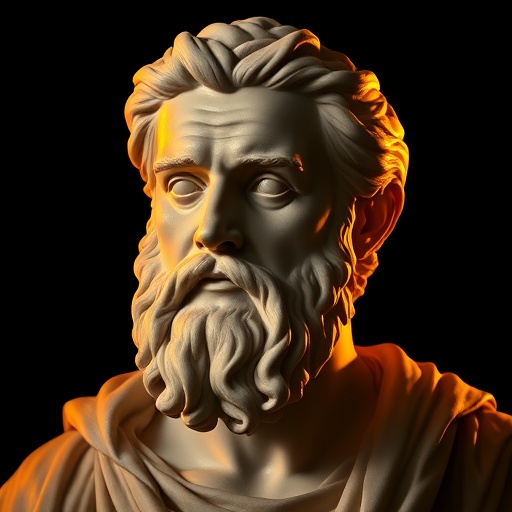
Hippocrates — "The physician treats, but nature heals."
The physician treats, but nature heals.
The physician treats, but nature heals.
Click any product to generate a realistic preview. Up to 3 at a time.
* Initial load can take up to 90 seconds — revising the preview in another color is nearly instant.
"The patient must combat his disease along with the physician."
"The powers of drugs are not in the drugs themselves, but in the patient."
"The healthy man does not think about his health."
"Those by nature overweight, die earlier than the slim."
"Wherever the art of medicine is loved, there is also a love of humanity."
A statement on the role of the physician as an aid to natural healing processes.
Date: c. 460-370 BCE
Nature & WorldFound in 2 providers: gemini,grok
2 sources checked
Doctors can apply treatments, medications, and procedures, but the body's own biological systems do the actual repair work. Medicine creates conditions for recovery; it doesn't replace the body's innate healing processes. A physician's role is supportive and facilitative, removing obstacles and providing tools, while the organism itself restores balance, fights infection, regenerates tissue, and returns to health.
Hippocrates founded rational medicine by rejecting supernatural explanations for disease, insisting illness had natural causes and natural cures. This quote embodies his empirical philosophy: observe the body, understand its tendencies, work with physiology rather than against it. His Hippocratic Corpus repeatedly emphasizes primum non nocere—first do no harm—reflecting trust in nature's restorative power over aggressive intervention.
In ancient Greece, disease was widely attributed to divine punishment or demonic forces, treated through prayer and temple rituals at Asclepian sanctuaries. Hippocrates lived during the 5th-4th centuries BCE, contemporaneous with Socrates and Plato, when Greek rationalism was challenging mythological explanations. Asserting that nature heals was a radical secular declaration, separating medicine from religion and establishing clinical observation as the foundation of healing practice.
AI-generated insights based on extensive research and information for context. Factual errors? Email [email protected].
Your cart is empty